
Why Is Proper Electrical Grounding Important?
Electrical grounding provides a safe, controlled path for excess or fault current to flow harmlessly into the earth, rather than through your home’s structure, appliances, or through a person. Without proper grounding, a fault in your wiring or an appliance can energize metal surfaces and create a serious shock or fire hazard. Grounding is one of the fundamental safety principles of modern electrical systems and one of the most important things a licensed electrician evaluates during any inspection.
How Grounding Works
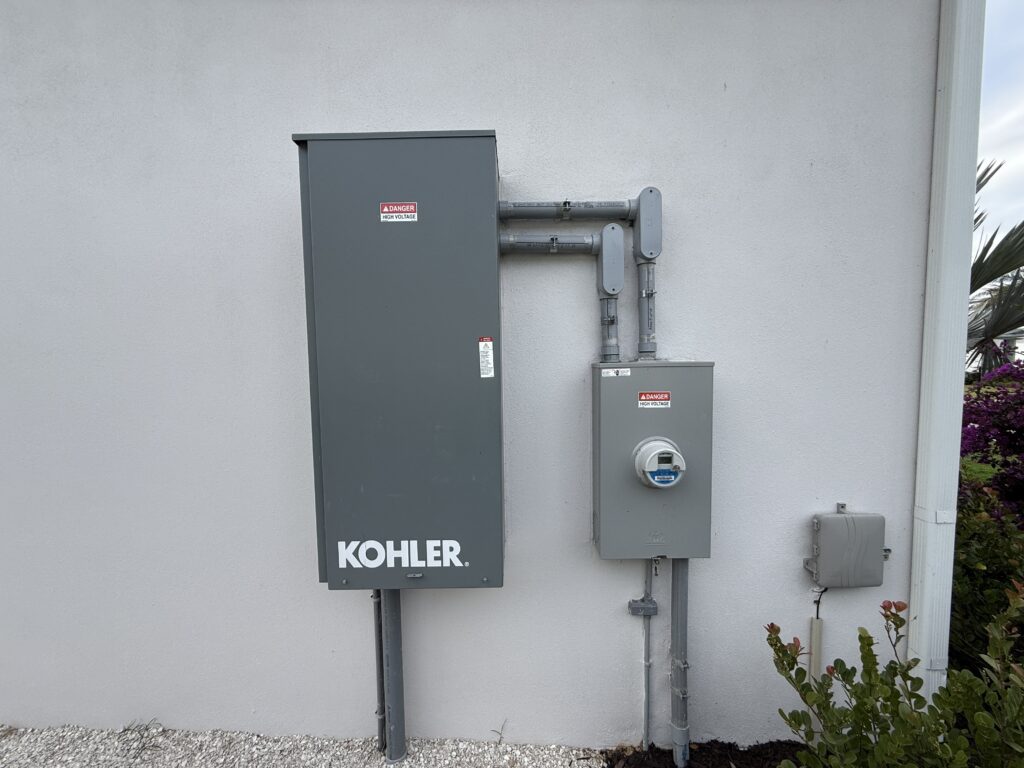
In a well-grounded home, every metal component that could potentially become energized — appliance housings, electrical panel enclosures, conduit — is connected to a grounding system that routes fault current safely into the earth. The earth itself serves as a reference point for the entire electrical system, keeping voltages stable and predictable. When a fault occurs, current flows to ground rather than accumulating in a dangerous location.
System Grounding vs. Equipment Grounding
System Grounding
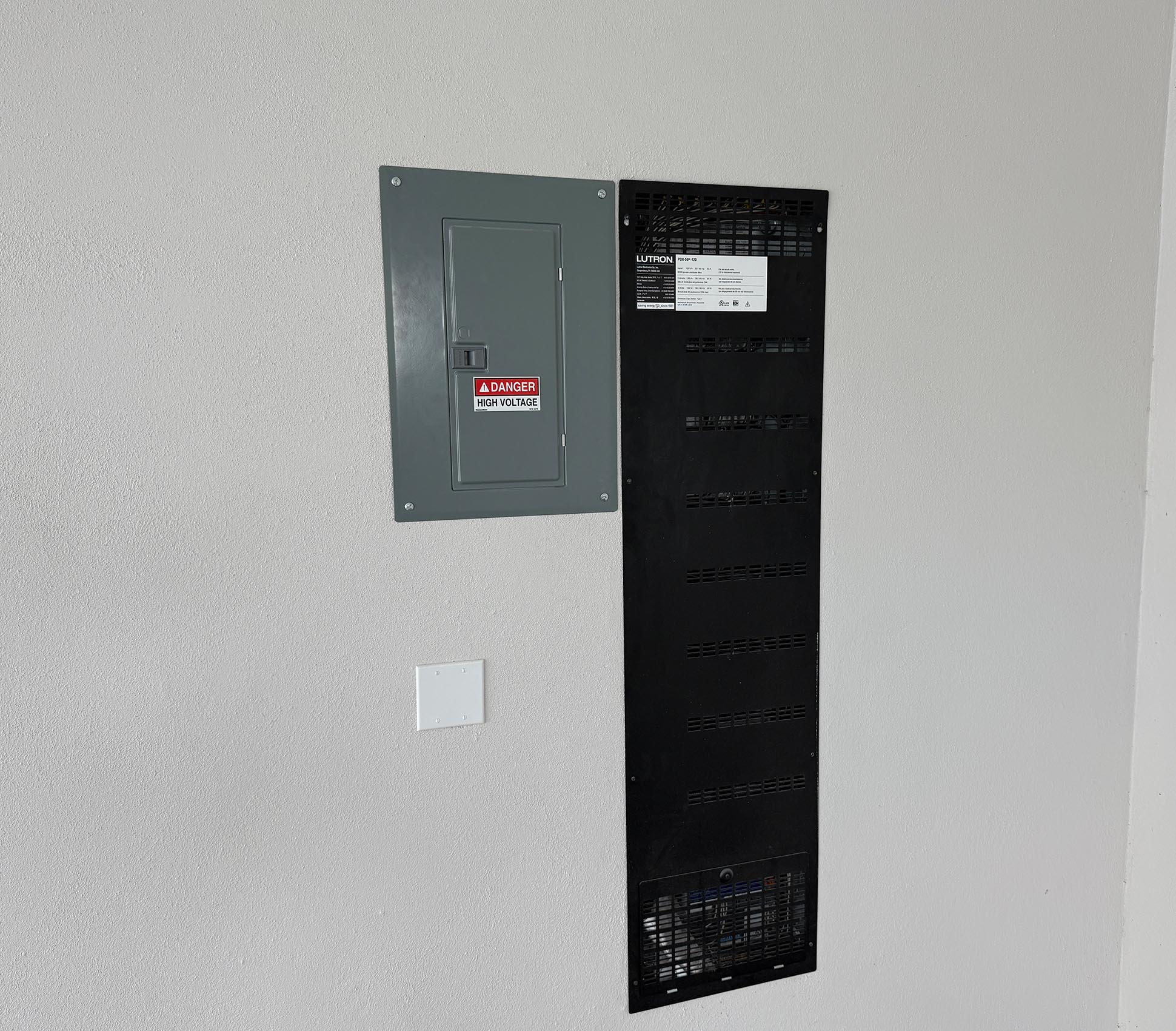
System grounding connects one conductor of the electrical supply — the neutral wire — to the earth, establishing a reference voltage point. This keeps the electrical system’s voltages stable and predictable relative to ground, which is essential for protective devices like breakers and GFCIs to function correctly.
Equipment Grounding
Equipment grounding connects the metal frames and enclosures of appliances, fixtures, and electrical equipment to the grounding system. This ensures that if a fault energizes a metal appliance case, the current flows safely to ground rather than through whoever touches the appliance. It is the reason why a fault in a well-grounded appliance trips a breaker rather than shocking its user.
What Happens in an Ungrounded Home
The solution for ungrounded wiring varies. Running an equipment ground wire to all outlets is the code-compliant approach. In some cases, GFCI outlets can be used as an alternative where running a ground wire is impractical, provided they are labeled as having no equipment ground. A licensed electrician can assess your specific situation and recommend the appropriate path.

Grounding and Lightning Protection in Florida
Florida is the lightning capital of the United States — Lee and Collier counties experience some of the highest lightning strike frequencies in the country during the summer rainy season. While a grounding system alone is not a lightning protection system, proper grounding is critical for whole-home surge protection to function effectively. Surge protectors divert surge energy to ground — if your ground path is deficient, so is your surge protection.
How to Know If Your Home Is Properly Grounded
When to Call Mabry Brothers
If your home has two-prong outlets throughout, if you have received a report of grounding deficiencies from a home inspection, or if you want to verify that your grounding system is adequate for whole-home surge protection, contact Mabry Brothers for an electrical evaluation. We serve Fort Myers, Estero, Bonita Springs, Naples, Sanibel Island, and Captiva Island.
Recent Customer Reviews
EXCELLENTTrustindex verifies that the original source of the review is Google. Germayne T. was very professional, courteous, and extremely efficient replacing two ceiling fans for us. Will definitely use Mabry and Germaine again.Posted on GoogleTrustindex verifies that the original source of the review is Google. Just had a biannual service done to my AC, amazing work by Kirk, on time, professional, and efficient!!!Posted on GoogleTrustindex verifies that the original source of the review is Google. Our A/C system wasn’t cooling. Kirk was over to fix it in less than 2 hrs. Very friendly & efficient. Found 2 small leaks. Got system cooling. Went over all options & charges before proceeding. Very satisfied.Posted on GoogleTrustindex verifies that the original source of the review is Google. Amazing professional service! I had smoke detectors falsely alarming and when I called in the morning, Scott immediately had a tech rerouted to address the alarms. Germaine arrived with 15 minutes of my call. He was AWESOME! Knowledgeable, polite and so personable. 5 star🌟 . And that is what we have found with all Mabry Brothers service techs!!!!Posted on GoogleTrustindex verifies that the original source of the review is Google. I love using these guys when I need an electrician. Their prices are fair, service is always fast and on time, and they communicate really well. Today Germayne T came out to install an EV charger at our home. He was on time, worked hard trenching ~80’, and got creative to help minimize the amount of exposed PVC. His connections look great, and the charger is working perfectly. As I said, I really like working with Mabry, and I think you will too.Posted on GoogleTrustindex verifies that the original source of the review is Google. My AC randomly went out in the late afternoon and I thought it had to do with the battery on the thermostat or the filter needing to be changed but it ended up being 84 degrees in my house in the middle of the night and Kirk was able to get to me within an hour of me calling to fix my issue which happened to be the capacitor. He spotted the issue within 10 minutes, thank you so much!!!Posted on GoogleTrustindex verifies that the original source of the review is Google. Company was very responsive. Germayne was knowledgeable, efficient, and cleaned up after work. Very professional! I highly recommend Mabry Brothers for your electrical needs.Posted on GoogleTrustindex verifies that the original source of the review is Google. I was very pleased with the service call. Kirk arrived on time, was professional and knowledgeable about the problems we were having with our air conditioner. He explained in detail what was happening and the steps needed to correct them. I highly recommend Mabry Brothers.Posted on GoogleTrustindex verifies that the original source of the review is Google. We needed an outdoor low voltage circuit installed! Emailed Scott for a quote with quick turnaround and Martin showed up and did excellent install work! Can highly recommend Mabry Brothers from this first experience and will use again!Posted on GoogleTrustindex verifies that the original source of the review is Google. Troy from Mabry Brothers is extremely professional and truly knows 100% what he’s doing. He is very responsible and takes the time to explain every step of the process, including every part that needs to be replaced. After calling several different companies, nobody was able to repair my generator and I only ended up wasting money. Troy was the only one who actually solved the problem quickly, and now my generator is working perfectly just in time for the upcoming storms. I highly recommend Troy and Mabry Brothers to anyone looking for honest, knowledgeable, and reliable service.
Frequently Asked Questions
Need Service in Southwest Florida?
The licensed electricians and HVAC technicians at Mabry Brothers have served Fort Myers, Estero, Bonita Springs, Naples, Sanibel Island, and Captiva Island since 1995.
Call (239) 482-1122. or complete the form below to schedule service today.

