
Why Is My Air Conditioner Making a Loud Noise?
A properly operating air conditioning system makes some noise. The compressor hum, the fan moving air, the sound of airflow through the ductwork, these are normal operating sounds that fade into the background of daily life in a Southwest Florida home. What is not normal is when those sounds change, when something new appears in the acoustic profile of the system that was not there before. In most cases, a new sound from an AC system is an early warning that something is developing, and catching it early is almost always less costly and less disruptive than responding to a complete failure.
We hear from homeowners throughout Fort Myers, Naples, Estero, Bonita Springs, and the Islands regularly who describe sounds that have been getting gradually louder or more frequent. The pattern is usually that the sound started subtle and the homeowner hoped it would resolve on its own. It rarely does. When you notice something new, note what it sounds like, where it seems to be coming from, whether it happens at startup, shutdown, or during continuous operation, and share that with us when you call. That information helps us come prepared.
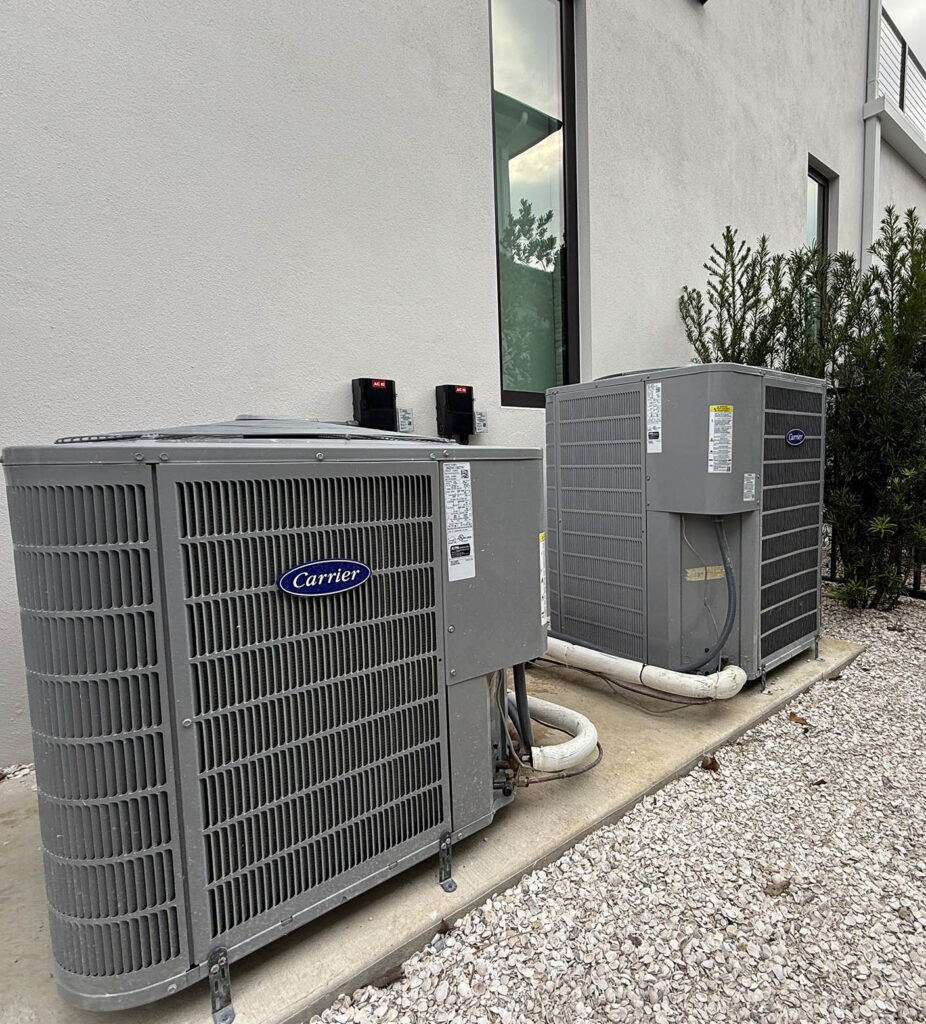
Grinding or Screeching Sounds
Grinding or metal-on-metal screeching is the sound of bearing failure, and it is one that warrants prompt attention. Bearings are present in the blower motor inside the air handler and in the condenser fan motor in the outdoor unit. When a bearing begins to fail, it produces a grinding or screeching sound that worsens progressively until the motor seizes. A seized motor does not simply stop working quietly. It can trip breakers, damage associated components, and in some cases cause overheating.
Replacing a failing motor before the bearing seizes completely is significantly simpler and less disruptive than replacing a motor that has been damaged further by running to failure. If you hear grinding or screeching from either the indoor or outdoor unit, stop running the system and call our office.
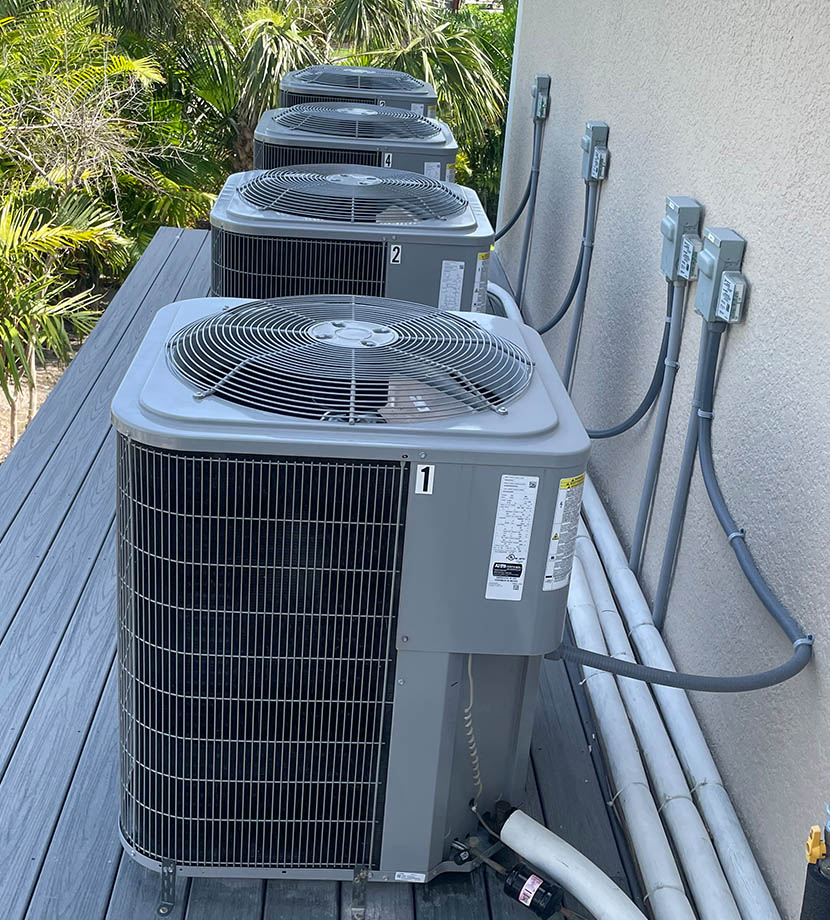
Banging or Clanking
Turn the system off and call us. This is a repair that needs to happen before the unit is run again, not one that can be monitored to see if it gets better.
Hissing or Bubbling
Both of these sounds indicate the system needs refrigerant system attention. Our technicians carry electronic leak detection equipment and can locate the specific leak point accurately. In homes throughout coastal communities like Fort Myers Beach, Sanibel Island, and Captiva Island where formicary corrosion of copper coil tubing is more common due to the combination of humidity and certain airborne organic compounds, refrigerant leaks from coil pitting are a recurring situation that we are experienced in diagnosing and addressing.
Clicking at Startup or Shutdown vs. Continuous Clicking
What is not normal is continuous clicking, either during the off-cycle when the system should be quiet, or a rapid clicking that occurs without the system successfully starting. Continuous clicking during the off-cycle can indicate a failing relay or a thermostat issue. Rapid clicking at startup without the system running usually indicates a failing capacitor preventing the compressor from starting, or a locked rotor in the compressor itself. This is one of the most common sounds we get called about in communities throughout Estero, Bonita Springs, and Fort Myers during the height of summer, and it almost always involves capacitor replacement.
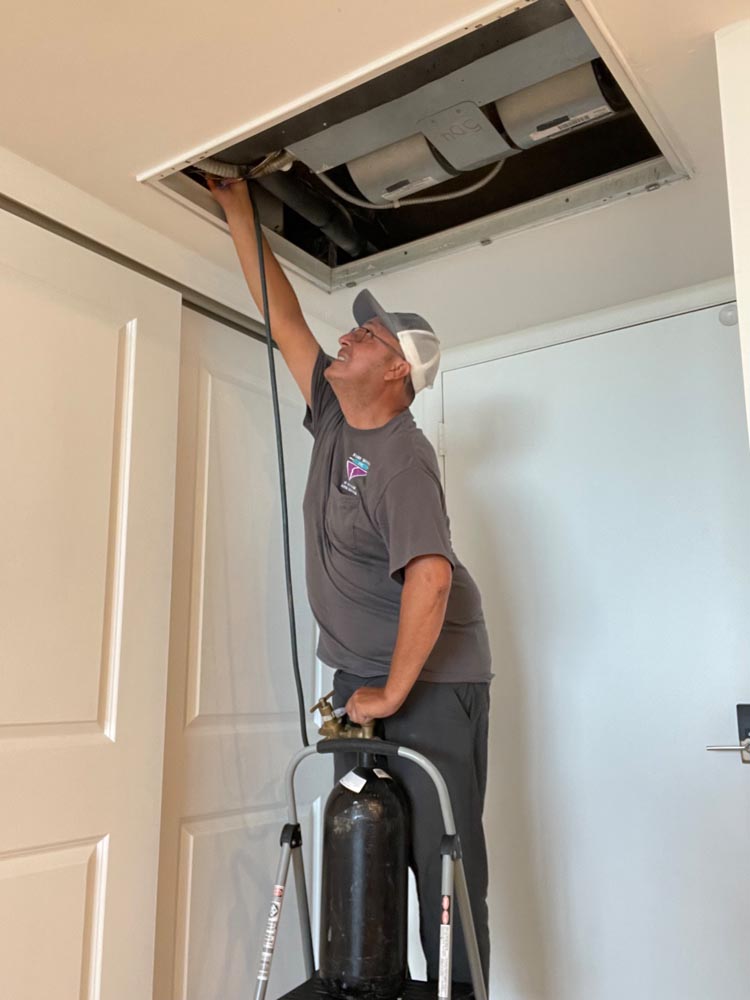

Rattling
Rattling is one of the more variable sounds in terms of what it indicates. At the mild end, a rattle can be a loose panel cover, a debris piece inside the outdoor unit, or a flex duct connection that has vibrated loose. These are minor issues that are easily addressed. At the more significant end, a rattle can indicate a loose refrigerant line that has vibrated free from its mounting clip and is making contact with the unit housing, or an early sign of mechanical looseness within the compressor assembly.
When rattling is new and consistent, it deserves attention. Inspect for obvious loose components around the unit. If the source is not identifiable from outside, schedule a service visit before the rattle progresses to something more significant.
Whistling or High-Pitched Sounds From Vents
In homes throughout Pelican Bay, Park Shore, and Moorings in Naples where high-MERV filters are sometimes used in systems not designed for their higher resistance, this kind of whistling combined with reduced airflow is something we see and address by either recommending a more appropriate filter specification or evaluating the return air system capacity.
When Noise Means Call Us Immediately
Call us without delay for grinding or screeching, banging or clanking, or any sound accompanied by burning smells, smoke, or a system that trips a breaker when it attempts to run. These sounds indicate conditions where continued operation risks making the problem significantly worse or creating a safety concern. We offer 24/7 emergency service throughout Fort Myers, Estero, Bonita Springs, Naples, Marco Island, Sanibel Island, Captiva Island, and surrounding Southwest Florida communities. (239) 482-1122.
Recent Customer Reviews
EXCELLENTTrustindex verifies that the original source of the review is Google. Germayne T. was very professional, courteous, and extremely efficient replacing two ceiling fans for us. Will definitely use Mabry and Germaine again.Posted on GoogleTrustindex verifies that the original source of the review is Google. Just had a biannual service done to my AC, amazing work by Kirk, on time, professional, and efficient!!!Posted on GoogleTrustindex verifies that the original source of the review is Google. Our A/C system wasn’t cooling. Kirk was over to fix it in less than 2 hrs. Very friendly & efficient. Found 2 small leaks. Got system cooling. Went over all options & charges before proceeding. Very satisfied.Posted on GoogleTrustindex verifies that the original source of the review is Google. Amazing professional service! I had smoke detectors falsely alarming and when I called in the morning, Scott immediately had a tech rerouted to address the alarms. Germaine arrived with 15 minutes of my call. He was AWESOME! Knowledgeable, polite and so personable. 5 star🌟 . And that is what we have found with all Mabry Brothers service techs!!!!Posted on GoogleTrustindex verifies that the original source of the review is Google. I love using these guys when I need an electrician. Their prices are fair, service is always fast and on time, and they communicate really well. Today Germayne T came out to install an EV charger at our home. He was on time, worked hard trenching ~80’, and got creative to help minimize the amount of exposed PVC. His connections look great, and the charger is working perfectly. As I said, I really like working with Mabry, and I think you will too.Posted on GoogleTrustindex verifies that the original source of the review is Google. My AC randomly went out in the late afternoon and I thought it had to do with the battery on the thermostat or the filter needing to be changed but it ended up being 84 degrees in my house in the middle of the night and Kirk was able to get to me within an hour of me calling to fix my issue which happened to be the capacitor. He spotted the issue within 10 minutes, thank you so much!!!Posted on GoogleTrustindex verifies that the original source of the review is Google. Company was very responsive. Germayne was knowledgeable, efficient, and cleaned up after work. Very professional! I highly recommend Mabry Brothers for your electrical needs.Posted on GoogleTrustindex verifies that the original source of the review is Google. I was very pleased with the service call. Kirk arrived on time, was professional and knowledgeable about the problems we were having with our air conditioner. He explained in detail what was happening and the steps needed to correct them. I highly recommend Mabry Brothers.Posted on GoogleTrustindex verifies that the original source of the review is Google. We needed an outdoor low voltage circuit installed! Emailed Scott for a quote with quick turnaround and Martin showed up and did excellent install work! Can highly recommend Mabry Brothers from this first experience and will use again!Posted on GoogleTrustindex verifies that the original source of the review is Google. Troy from Mabry Brothers is extremely professional and truly knows 100% what he’s doing. He is very responsible and takes the time to explain every step of the process, including every part that needs to be replaced. After calling several different companies, nobody was able to repair my generator and I only ended up wasting money. Troy was the only one who actually solved the problem quickly, and now my generator is working perfectly just in time for the upcoming storms. I highly recommend Troy and Mabry Brothers to anyone looking for honest, knowledgeable, and reliable service.
Frequently Asked Questions
Need Service in Southwest Florida?
The licensed electricians and HVAC technicians at Mabry Brothers have served Fort Myers, Estero, Bonita Springs, Naples, Sanibel Island, and Captiva Island since 1995.
For immediate assistance, please call our office directly at (239) 482-1122.

