- 5731 Halifax Ave Fort Myers, FL 33912
- (239) 482-1122

Protection Built for Florida Storm Season
Whole Home Surge Protection in Fort Myers and SWFL
Florida sees more lightning activity than any other state, and Southwest Florida sits in the middle of the most active corridor of it. Every summer, homes across Lee and Collier County take voltage transients that most homeowners never notice, because the damage they do is cumulative rather than dramatic.
A whole home surge protective device installs at your electrical panel and clamps voltage spikes before they reach the branch circuits feeding your air conditioning equipment, your appliances, your pool pump, and everything you have plugged in. Our licensed electricians install them throughout Fort Myers, Estero, Bonita Springs, Naples, Sanibel Island, and Captiva Island.
The equipment in a modern home is far more sensitive than what it replaced. Variable speed motors, control boards, LED drivers, and smart devices all contain electronics that a 1980s home simply did not have. That is the real reason surge protection matters more now than it used to.
Most Surge Damage Happens Gradually
How Power Surges Actually Damage a Home
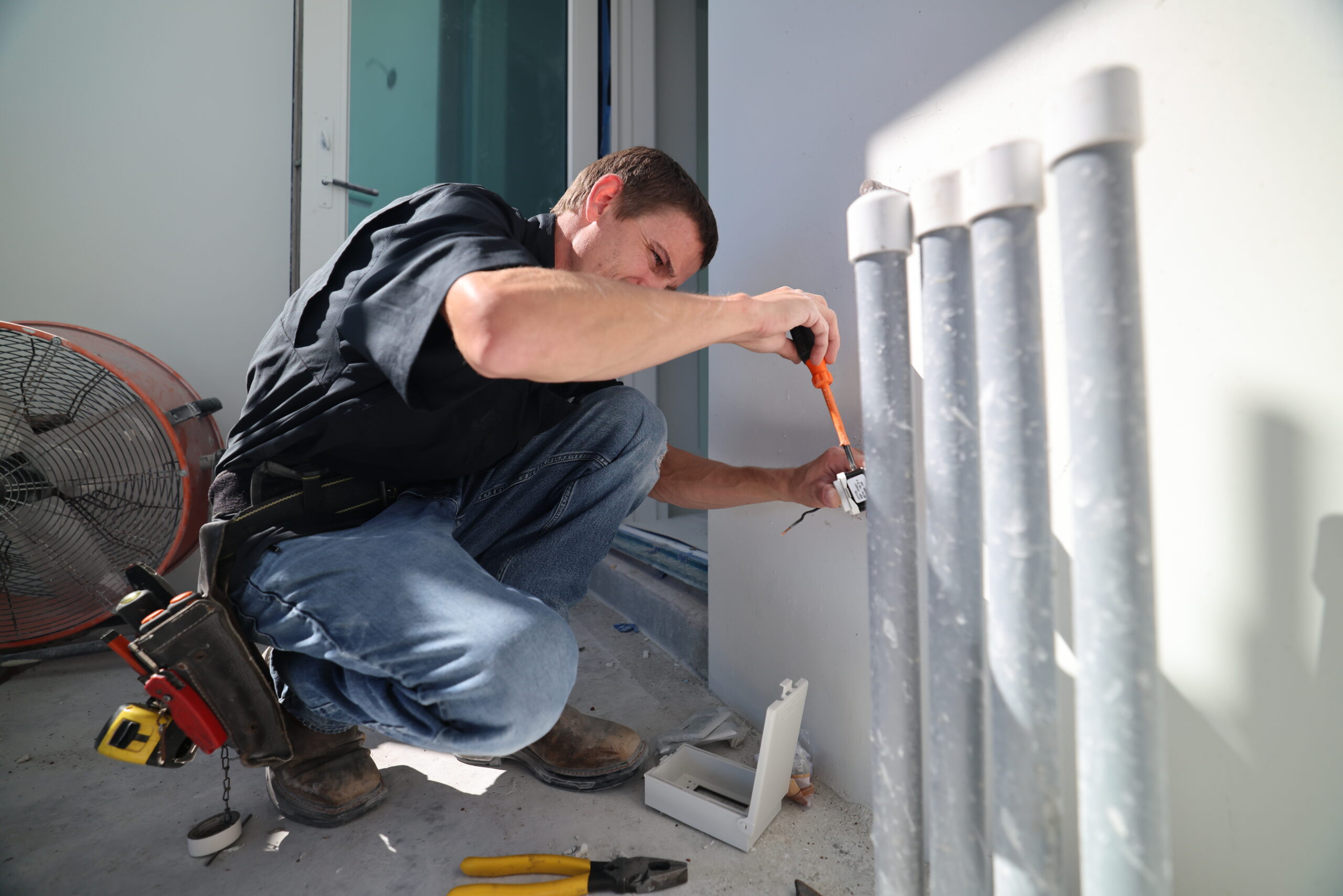
The image most people have of a surge is a direct lightning strike destroying everything at once. That happens, but it is rare, and it is not what surge protection is primarily for. The far more common pattern is repeated small transients: nearby strikes, utility switching operations, and large motors in your own home cycling on and off. Each one is brief and none of them trip anything. They degrade electronic components incrementally, and the failure shows up months later as an air handler control board or an appliance that stopped working for no apparent reason.
That pattern is worth understanding, because it explains why homeowners often do not connect the damage to its cause. An air conditioning control board that fails in October was very likely being degraded through August. Southwest Florida’s storm season concentrates that activity into a few months every year, and homes here also run large motor loads almost continuously. Current electrical code now requires surge protection at the service equipment for dwelling units, including when a panel is replaced, which reflects how much the risk profile of a typical home has changed.
Surge protection is worth prioritizing in most Southwest Florida homes, and particularly in a few situations. Modern variable speed air conditioning equipment runs on control boards considerably more surge sensitive than what they replaced, and they are among the most expensive components in a home to replace. Variable speed pool pumps, heaters, and automation controllers contain the same electronics and sit on exterior circuits, which is why they are one of the most common casualties we see in this market. If you have already replaced appliances or control boards that failed early with no clear explanation, cumulative transient damage is a likely cause. And if there is no protective device at your panel, everything hardwired in the home is unprotected, because a plug in strip covers only what is plugged into it.
Layered Protection From the Panel Outward
Surge Protection Services We Provide
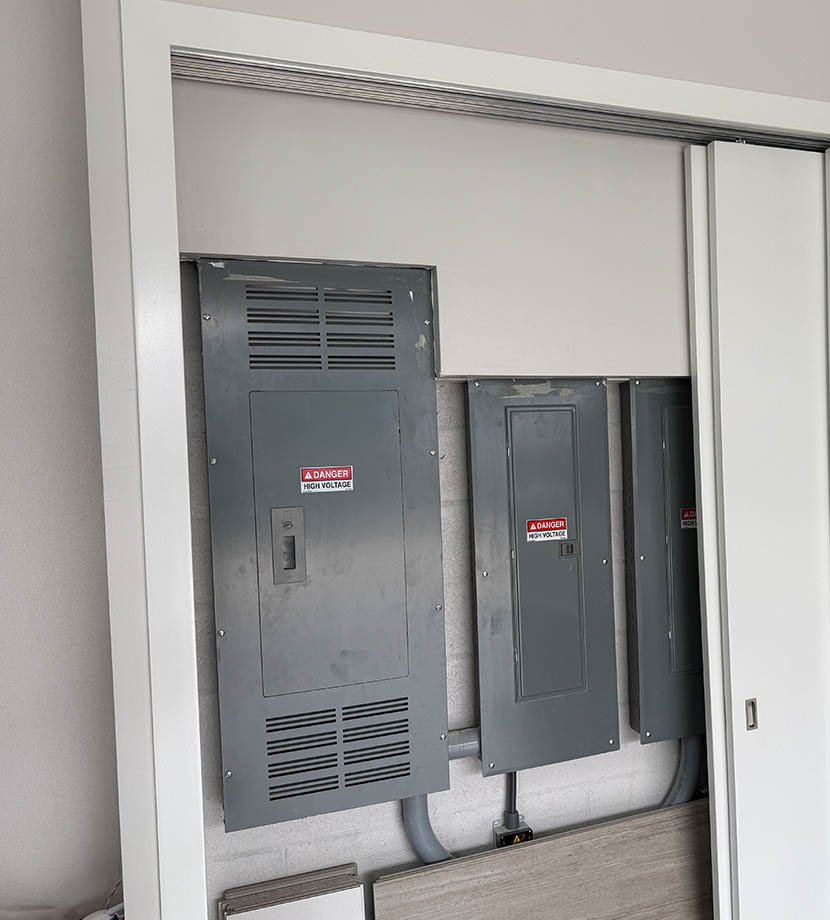
Effective surge protection is layered. It starts at the service equipment, where a single device protects every circuit in the home including the hardwired equipment a plug in strip cannot reach, and extends to dedicated protection at the equipment worth covering individually. We will tell you where a second layer is genuinely justified and where it would not add much.
Whole Home Surge Protective Device Installation
The primary device installs at your main panel and protects every circuit in the home, including hardwired equipment that point of use protectors cannot reach. We size and select the device based on your service and verify it is properly bonded and connected with the shortest practical lead length.
Panel Integrated Breaker Style Devices
Where panel space and configuration allow, a breaker style surge device installs directly into the panel bus. This produces very short connection leads, which improves performance, and it keeps the installation clean in panels where enclosure space is limited.Point of Use and Second Tier Protection
The panel device handles the large events. A second layer at sensitive equipment, home offices, entertainment systems, and network gear catches what gets through and handles transients generated inside the home. We advise on where a second tier is genuinely worth it and where it is not.
HVAC and Pool Equipment Surge Protection
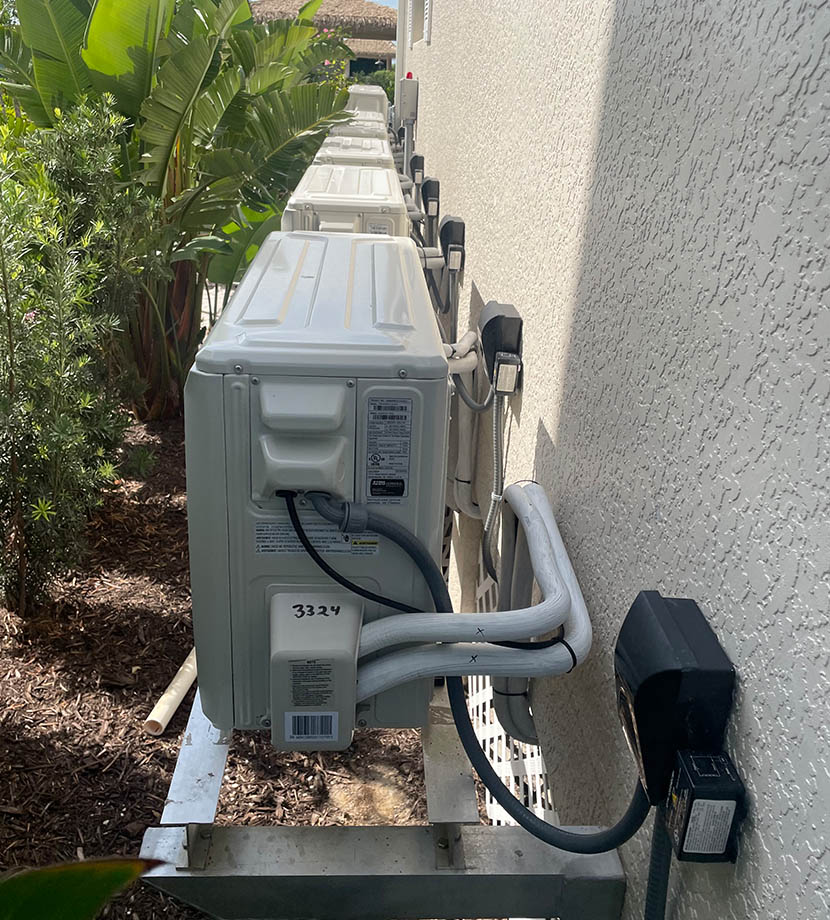
Air conditioning condensers and pool equipment sit outdoors on their own circuits and contain expensive electronics. Dedicated protection at that equipment is one of the highest value additions available in this market, given what a control board replacement costs.
Generator and Sub Panel Protection
Homes with standby generators or multiple sub panels need protection considered at each point of distribution, not only at the main. We evaluate the full distribution layout and place devices where they will actually protect the loads downstream of them.
Post Storm Surge Damage Evaluation
Surge protective devices are sacrificial, and they degrade as they absorb events. After significant storm activity we check indicator status, evaluate whether a device has reached end of life, and inspect for damage to equipment and circuits that may not be obvious yet.

Installed Where It Actually Works
Why Work With Mabry Brothers for Surge Protection?
Surge protection performance depends heavily on installation details that are easy to get wrong and impossible to see afterward. Lead length matters enormously, because the connecting conductors add impedance and reduce how effectively the device clamps a fast transient. Bonding and grounding condition matters, since a surge device can only divert energy to a ground path that is actually sound. We install to those details rather than simply mounting a device and calling it protected.
Because we work both trades, we also see the downstream consequences directly. Our HVAC side replaces the control boards that surges take out, which gives us a fairly clear picture of what unprotected equipment costs a homeowner over time in this market. If you are already scheduling a panel replacement, that is the least expensive moment to add surge protection, since current code requires it at replacement anyway.
Kind Words From Recent Clients
Customer Reviews
EXCELLENTTrustindex verifies that the original source of the review is Google. Germayne T. was very professional, courteous, and extremely efficient replacing two ceiling fans for us. Will definitely use Mabry and Germaine again.Posted on GoogleTrustindex verifies that the original source of the review is Google. Just had a biannual service done to my AC, amazing work by Kirk, on time, professional, and efficient!!!Posted on GoogleTrustindex verifies that the original source of the review is Google. Our A/C system wasn’t cooling. Kirk was over to fix it in less than 2 hrs. Very friendly & efficient. Found 2 small leaks. Got system cooling. Went over all options & charges before proceeding. Very satisfied.Posted on GoogleTrustindex verifies that the original source of the review is Google. Amazing professional service! I had smoke detectors falsely alarming and when I called in the morning, Scott immediately had a tech rerouted to address the alarms. Germaine arrived with 15 minutes of my call. He was AWESOME! Knowledgeable, polite and so personable. 5 star🌟 . And that is what we have found with all Mabry Brothers service techs!!!!Posted on GoogleTrustindex verifies that the original source of the review is Google. I love using these guys when I need an electrician. Their prices are fair, service is always fast and on time, and they communicate really well. Today Germayne T came out to install an EV charger at our home. He was on time, worked hard trenching ~80’, and got creative to help minimize the amount of exposed PVC. His connections look great, and the charger is working perfectly. As I said, I really like working with Mabry, and I think you will too.Posted on GoogleTrustindex verifies that the original source of the review is Google. My AC randomly went out in the late afternoon and I thought it had to do with the battery on the thermostat or the filter needing to be changed but it ended up being 84 degrees in my house in the middle of the night and Kirk was able to get to me within an hour of me calling to fix my issue which happened to be the capacitor. He spotted the issue within 10 minutes, thank you so much!!!Posted on GoogleTrustindex verifies that the original source of the review is Google. Company was very responsive. Germayne was knowledgeable, efficient, and cleaned up after work. Very professional! I highly recommend Mabry Brothers for your electrical needs.Posted on GoogleTrustindex verifies that the original source of the review is Google. I was very pleased with the service call. Kirk arrived on time, was professional and knowledgeable about the problems we were having with our air conditioner. He explained in detail what was happening and the steps needed to correct them. I highly recommend Mabry Brothers.Posted on GoogleTrustindex verifies that the original source of the review is Google. We needed an outdoor low voltage circuit installed! Emailed Scott for a quote with quick turnaround and Martin showed up and did excellent install work! Can highly recommend Mabry Brothers from this first experience and will use again!Posted on GoogleTrustindex verifies that the original source of the review is Google. Troy from Mabry Brothers is extremely professional and truly knows 100% what he’s doing. He is very responsible and takes the time to explain every step of the process, including every part that needs to be replaced. After calling several different companies, nobody was able to repair my generator and I only ended up wasting money. Troy was the only one who actually solved the problem quickly, and now my generator is working perfectly just in time for the upcoming storms. I highly recommend Troy and Mabry Brothers to anyone looking for honest, knowledgeable, and reliable service.
Communities We Install Surge Protection For
Communities We Install Surge Protection For
Storm exposure, equipment mix, and utility infrastructure all vary across our service area, and they change what surge protection needs to accomplish in a given home.
Fort Myers
Fort Myers homes span enough construction eras that the surge conversation changes address to address. Older homes frequently have grounding electrode systems that need evaluated before a surge device will perform as intended, since the protection is only as good as the ground path behind it. In newer Fort Myers construction, the panel is generally ready for a device and the priority becomes protecting the HVAC and pool equipment that represent the largest replacement costs.
Estero
Estero homes tend to carry a heavy concentration of exactly the equipment surges destroy: variable speed air handlers, variable speed pool pumps, spa controllers, outdoor kitchen appliances, and increasingly car chargers. Panels here are usually modern enough to accept a device cleanly, which makes Estero one of the more straightforward markets for a well designed layered installation.
Bonita Springs
Bonita Springs sits in a heavily active corridor during summer storm season, and homes here take a lot of transient activity. In the eastern communities we most often install at the panel and add dedicated protection at pool equipment. In the older housing near Old 41 and toward the beach, the panel usually needs evaluated first, because a surge device on an aging service is protecting equipment through a system that itself needs attention.
Naples
Naples properties have the most to lose and the most complicated distribution. Multiple sub panels, detached guest structures, landscape lighting transformers, motorized shades, audio and network infrastructure, and pool automation mean protection has to be planned across the whole distribution layout rather than installed at a single point. A main panel device alone frequently leaves significant equipment unprotected on a large Naples property.
Sanibel Island
On Sanibel, surge protection and corrosion protection are the same conversation. Island service equipment lives in salt air, and a surge device connected through corroded terminations or a degraded ground path will not perform as rated. We inspect enclosure and grounding condition on the island as part of every installation, and we advise island homeowners to have device indicator status checked after each storm season rather than assuming a device installed years ago is still functional.
Captiva Island
Captiva takes severe storm exposure and holds a high share of homes that sit unoccupied during peak storm season. That combination is exactly the case surge protection is for, since nobody is present to unplug anything or notice equipment behaving oddly. For seasonal Captiva homeowners, whole home protection at the panel plus dedicated protection at HVAC and pool equipment is the configuration we recommend most often.
Surge Protection Questions We Hear Often
Frequently Asked Surge Protection Questions
Do power strips protect my home?
They protect what is plugged into them, and nothing else. Your air conditioning system, pool equipment, water heater, range, and any other hardwired equipment have no protection from a plug in strip. Whole home protection installs at the panel and covers every circuit, which is why the two are complementary rather than interchangeable.
Is surge protection required by code?
Current electrical code requires surge protection at the service equipment for dwelling units, including when service equipment is replaced. That means a panel replacement in Lee or Collier County will include it. Adding one to an existing panel is a voluntary upgrade, and it is one of the least expensive protective measures available.
How long does a surge protective device last?
It depends entirely on how much energy it absorbs, which in Southwest Florida can be considerable. The components that do the work degrade with each event. Quality devices include a status indicator so the condition can be checked visually, and we recommend having yours verified after each storm season rather than assuming it is still doing its job.
Will surge protection stop a direct lightning strike?
No, and any company telling you otherwise is overselling. A direct strike involves energy levels no residential device is designed to handle. What surge protection does very well is manage the far more common transients from nearby strikes, utility switching, and equipment cycling, which is where most cumulative damage in a Florida home actually comes from.
What does surge protection actually protect?
Everything downstream of the panel, which in a modern home is a long list: HVAC control boards and variable speed motors, pool pumps and automation, refrigerators, ranges, washers and dryers, water heaters, garage door openers, LED drivers, and every plugged in electronic device. The HVAC and pool equipment alone usually justify the installation on cost.
Serving Fort Myers, Estero, Bonita Springs, Naples, and the Islands
Protect Your Home Before the Next Storm
Surge protection is straightforward to install and considerably less expensive than replacing the equipment it protects. Fill out the form below and a member of our team will reach out to schedule your installation. For immediate assistance, please call our office directly at (239) 482-1122.

Ensure your air conditioning system is running efficiently with help from our NATE certified technicians.

We specialize in the service, repair, and installation of residential & commercial electrical systems.