
When Should You Upgrade to LED Lighting?
If your home still has significant incandescent or halogen lighting, the case for converting to LED is straightforward. LED technology is better in every practical performance dimension: energy consumption, lifespan, heat output, and design flexibility. The prices that once made LED a premium choice have come down dramatically. A quality LED retrofit that gives your home the warm, attractive light that incandescent lighting provided while consuming a fraction of the energy is entirely achievable and increasingly the standard we see in new construction and renovation throughout Southwest Florida.
The one area where we see homeowners hesitate is dimming performance. If you have experienced LED lights that flicker, buzz, or refuse to dim smoothly, that experience was almost certainly the result of incompatible dimmers rather than a fundamental problem with LED technology. With the right combination of quality LED fixtures and proper dimmers, and with Lutron dimmers specifically, LED performs beautifully.
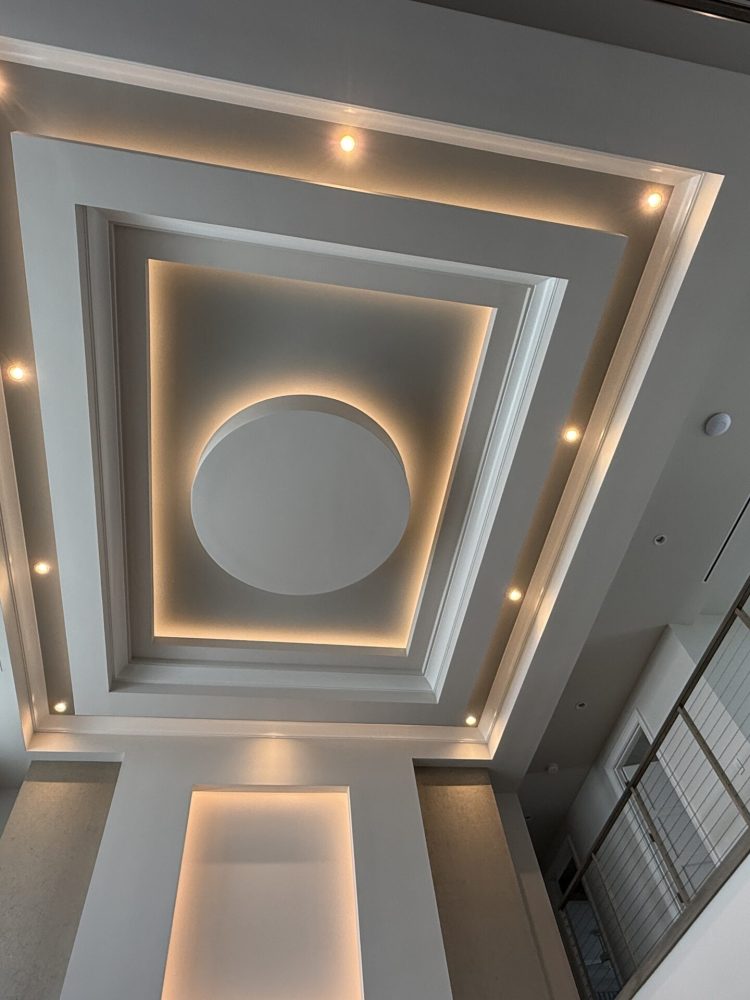
What Makes LED Fundamentally Different
LED, which stands for light-emitting diode, produces light through semiconductor electroluminescence rather than by heating a filament to incandescence or exciting a gas. That fundamental difference in the light production mechanism is why LEDs are so much more efficient. An incandescent bulb converts roughly 10 percent of its energy input into visible light, releasing the other 90 percent as heat. A quality LED converts 40 to 60 percent of its energy input into visible light. Put simply, an LED bulb can produce the same light output as an incandescent bulb while using approximately one-fifth the electricity.
For lifespan, the difference is similarly dramatic. An incandescent bulb typically lasts 1,000 to 2,000 hours. A quality LED bulb is rated for 15,000 to 25,000 hours or more. In a home with dozens of fixtures, the reduction in bulb replacement frequency over the life of the installation is a meaningful practical benefit beyond the energy savings.
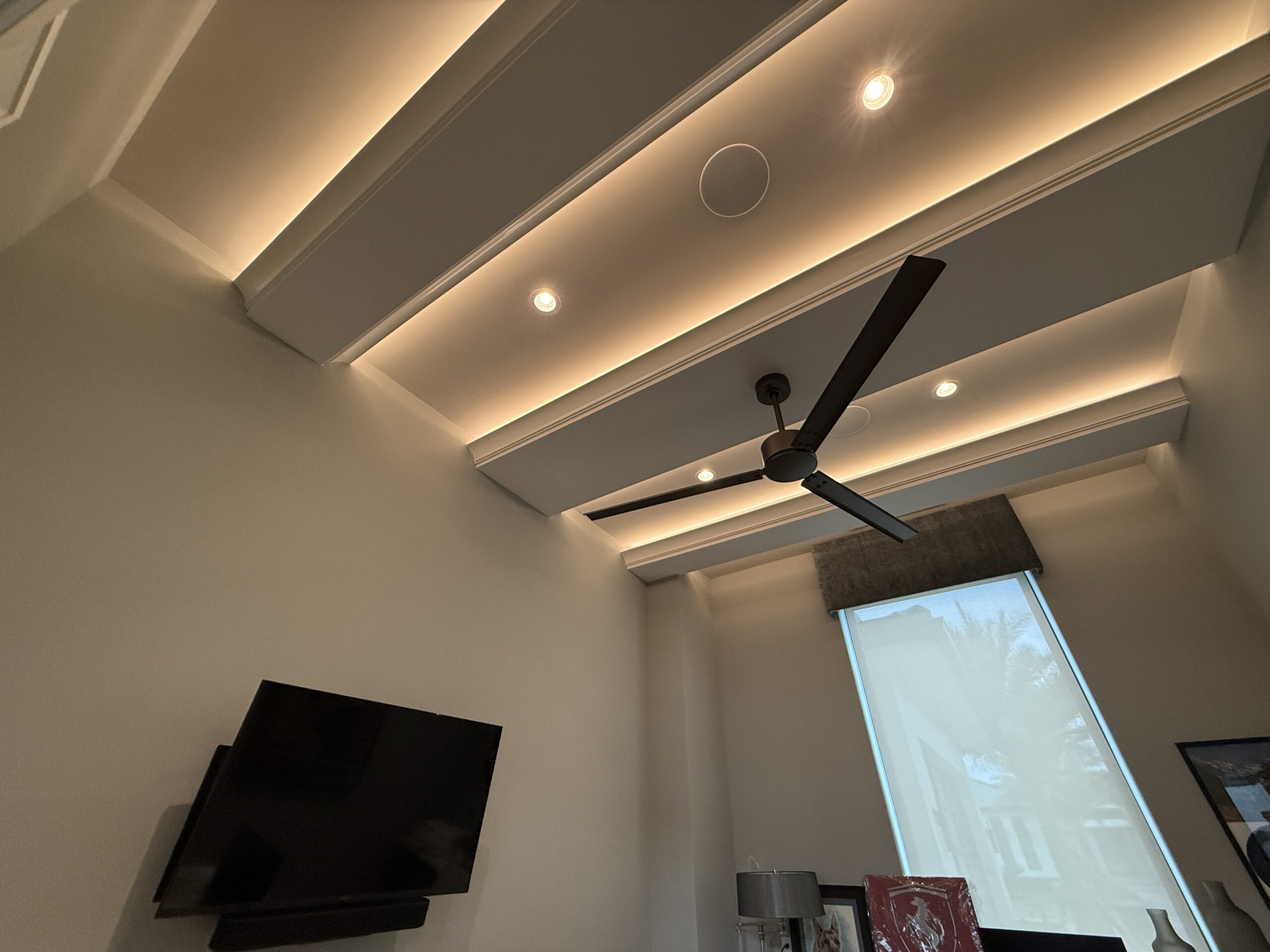
Why LED Makes Even More Sense in Florida's Climate
The heat that incandescent and halogen bulbs produce is not just wasted energy. In Southwest Florida’s air-conditioned environment, it is wasted energy that your AC system then has to remove. Every watt of heat produced by inefficient lighting is a watt that adds to your home’s cooling load. In a Florida home where the AC runs for 10 to 12 months per year, this secondary effect on cooling energy compounds the direct lighting energy savings.
Beyond energy, LED’s longer lifespan matters more in Florida than in seasonal markets because fixtures in Southwest Florida are in continuous year-round use. A recessed fixture in a home along the Pelican Bay corridor or in a community in Estero or Bonita Springs runs far more hours annually than the same fixture in a home in a northern market where it might only be needed during winter evenings. The lifespan advantage of LED translates into fewer replacements and less maintenance interruption over the life of the installation.
LED Dimming and the Role of Quality Dimmers
The most common complaint about LED lighting in residential applications is flickering, buzzing, or poor dimming performance. In the vast majority of cases, this is a dimmer compatibility issue rather than a problem with the LED fixture itself. Older dimmer switches designed for incandescent loads use a dimming method that is fundamentally incompatible with many LED driver circuits, producing the undesirable behavior that gives some homeowners a negative impression of LED.
The solution is using dimmers designed specifically for LED operation. Lutron LED-compatible dimmers, including the Caséta and RadioRA 3 dimmers we install throughout Southwest Florida, are engineered to work with the specific electrical characteristics of LED fixtures. Lutron maintains a published compatibility list of tested LED fixtures and lamp combinations that ensures smooth, flicker-free dimming performance. When we convert a home from incandescent to LED, we address the dimmer situation as part of the same project rather than leaving incompatible dimmers in place behind new LED fixtures.

Color Rendering and Color Temperature: Getting LED Right
LED lighting comes in a range of color temperatures measured in Kelvin (K), and selecting the right color temperature for each space is an important part of a LED conversion that looks and feels good. Warmer color temperatures in the 2700K to 3000K range produce light that is similar to incandescent, with a warm yellow-white quality that works well for residential living spaces, bedrooms, and dining areas. Cooler temperatures in the 3500K to 4000K range are cleaner and brighter, more appropriate for task-oriented spaces like kitchens, bathrooms, and offices. Temperatures above 4000K, which tend toward a blue-white quality, are generally not appropriate for residential interior applications.
Color rendering index (CRI) measures how accurately a light source reproduces colors compared to natural light on a scale of 0 to 100. For residential applications, a CRI of 90 or above is what we recommend. At CRI 90 and above, the colors of your furnishings, artwork, and finishes look as intended. At lower CRI values, colors can appear muted or slightly off in ways that are subtle but cumulatively affect how the space feels.
Lutron’s Ketra system takes this further by enabling continuous adjustment of color temperature throughout the day to follow natural daylight progression. For homeowners in communities like Mediterra or Quail West who have invested in the design quality of their interiors, Ketra combined with Lutron Homeworks creates a lighting environment that supports and enhances those interiors in a way that static color temperature fixtures cannot match.
When to Pair an LED Upgrade With Lutron
An LED conversion is a natural opportunity to also upgrade to Lutron dimming if the home does not already have it. When the electrician is already in the electrical system replacing fixtures and updating wiring for LED compatibility, adding Lutron dimmers or expanding to a Caséta or RadioRA 3 system is the most efficient time to do it. The incremental scope of adding Lutron during a LED conversion is much smaller than doing it as a separate project later, and the performance improvement from LED fixtures combined with quality Lutron dimming is immediately obvious.
For homeowners who are renovating, updating finishes, or simply ready to make their home work better for them, a combined LED conversion and Lutron dimming upgrade is one of the highest-impact lighting projects we complete. The result is a home that looks better, consumes less energy, and works more intuitively than before.
Recent Customer Reviews
EXCELLENTTrustindex verifies that the original source of the review is Google. Germayne T. was very professional, courteous, and extremely efficient replacing two ceiling fans for us. Will definitely use Mabry and Germaine again.Posted on GoogleTrustindex verifies that the original source of the review is Google. Just had a biannual service done to my AC, amazing work by Kirk, on time, professional, and efficient!!!Posted on GoogleTrustindex verifies that the original source of the review is Google. Our A/C system wasn’t cooling. Kirk was over to fix it in less than 2 hrs. Very friendly & efficient. Found 2 small leaks. Got system cooling. Went over all options & charges before proceeding. Very satisfied.Posted on GoogleTrustindex verifies that the original source of the review is Google. Amazing professional service! I had smoke detectors falsely alarming and when I called in the morning, Scott immediately had a tech rerouted to address the alarms. Germaine arrived with 15 minutes of my call. He was AWESOME! Knowledgeable, polite and so personable. 5 star🌟 . And that is what we have found with all Mabry Brothers service techs!!!!Posted on GoogleTrustindex verifies that the original source of the review is Google. I love using these guys when I need an electrician. Their prices are fair, service is always fast and on time, and they communicate really well. Today Germayne T came out to install an EV charger at our home. He was on time, worked hard trenching ~80’, and got creative to help minimize the amount of exposed PVC. His connections look great, and the charger is working perfectly. As I said, I really like working with Mabry, and I think you will too.Posted on GoogleTrustindex verifies that the original source of the review is Google. My AC randomly went out in the late afternoon and I thought it had to do with the battery on the thermostat or the filter needing to be changed but it ended up being 84 degrees in my house in the middle of the night and Kirk was able to get to me within an hour of me calling to fix my issue which happened to be the capacitor. He spotted the issue within 10 minutes, thank you so much!!!Posted on GoogleTrustindex verifies that the original source of the review is Google. Company was very responsive. Germayne was knowledgeable, efficient, and cleaned up after work. Very professional! I highly recommend Mabry Brothers for your electrical needs.Posted on GoogleTrustindex verifies that the original source of the review is Google. I was very pleased with the service call. Kirk arrived on time, was professional and knowledgeable about the problems we were having with our air conditioner. He explained in detail what was happening and the steps needed to correct them. I highly recommend Mabry Brothers.Posted on GoogleTrustindex verifies that the original source of the review is Google. We needed an outdoor low voltage circuit installed! Emailed Scott for a quote with quick turnaround and Martin showed up and did excellent install work! Can highly recommend Mabry Brothers from this first experience and will use again!Posted on GoogleTrustindex verifies that the original source of the review is Google. Troy from Mabry Brothers is extremely professional and truly knows 100% what he’s doing. He is very responsible and takes the time to explain every step of the process, including every part that needs to be replaced. After calling several different companies, nobody was able to repair my generator and I only ended up wasting money. Troy was the only one who actually solved the problem quickly, and now my generator is working perfectly just in time for the upcoming storms. I highly recommend Troy and Mabry Brothers to anyone looking for honest, knowledgeable, and reliable service.
Frequently Asked Questions
Need Service in Southwest Florida?
The licensed electricians and HVAC technicians at Mabry Brothers have served Fort Myers, Estero, Bonita Springs, Naples, Sanibel Island, and Captiva Island since 1995.
For immediate assistance, please call our office directly at (239) 482-1122.

