
When Should You Replace Your Air Conditioning System in Southwest Florida?
The repair versus replace decision is one of the most important and most common conversations we have with homeowners throughout our service area. We approach it with the same honesty we bring to every customer interaction: our job is to give you the information you need to make the right decision for your specific situation, not to push you toward the option that generates the most revenue for us.
A straightforward way to think about it is this: when a repair cost approaches or exceeds roughly half the cost of a comparable new system, and the existing system is already in the second half of its expected service life, replacement is almost always the better investment. But there are several other factors that can make replacement the cleaner path even when that threshold has not been reached, and we want to walk through all of them.
Age of the System
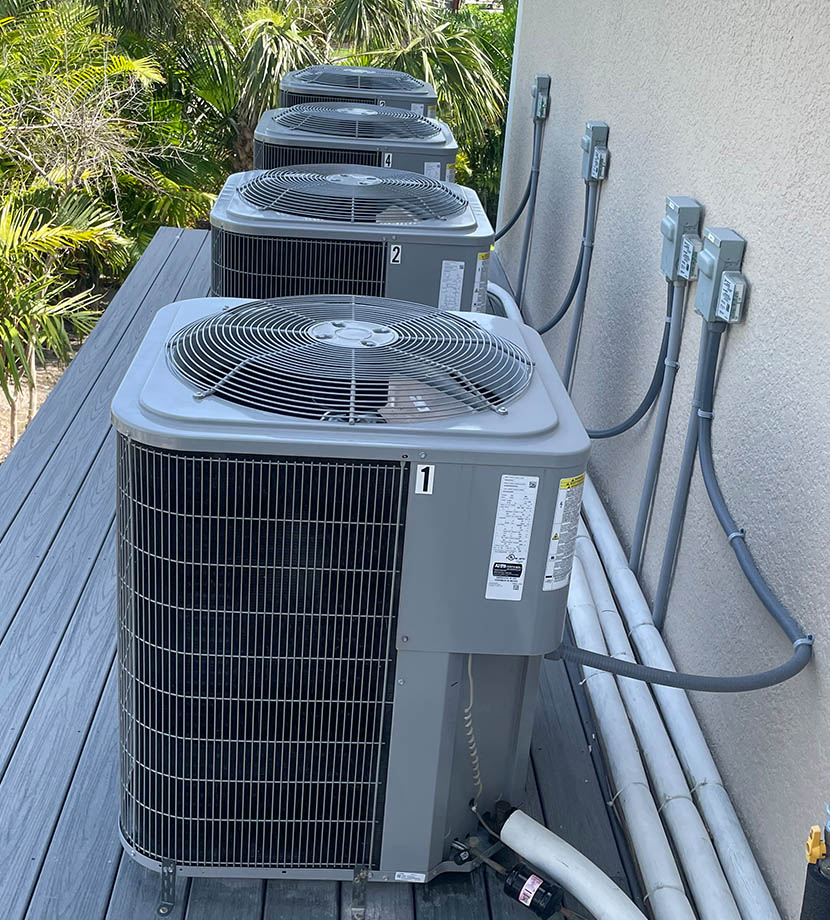
Air conditioning systems in Southwest Florida have a realistic service life of 12 to 15 years with consistent maintenance, somewhat shorter than the 15 to 20-year lifespan achievable in milder climates where systems run seasonally. The year-round operation in our market accumulates the equivalent of multiple northern seasons in a single Florida year. A system that is 10 to 12 years old and beginning to require repairs is well into the range where replacement planning is appropriate, not because the system has necessarily failed, but because the likelihood of recurring issues and the cost-effectiveness of continued repair versus replacement have shifted.
For homeowners in communities throughout Fort Myers, Bonita Springs, and North Fort Myers who have been in their homes since the early 2000s and have original systems, this conversation is likely overdue. For those who purchased in communities like Esplanade Lake Club, WildBlue, or Riverland in Fort Myers during the last five years, this is not a near-term concern.
R-22 Refrigerant and What It Means for Older Systems
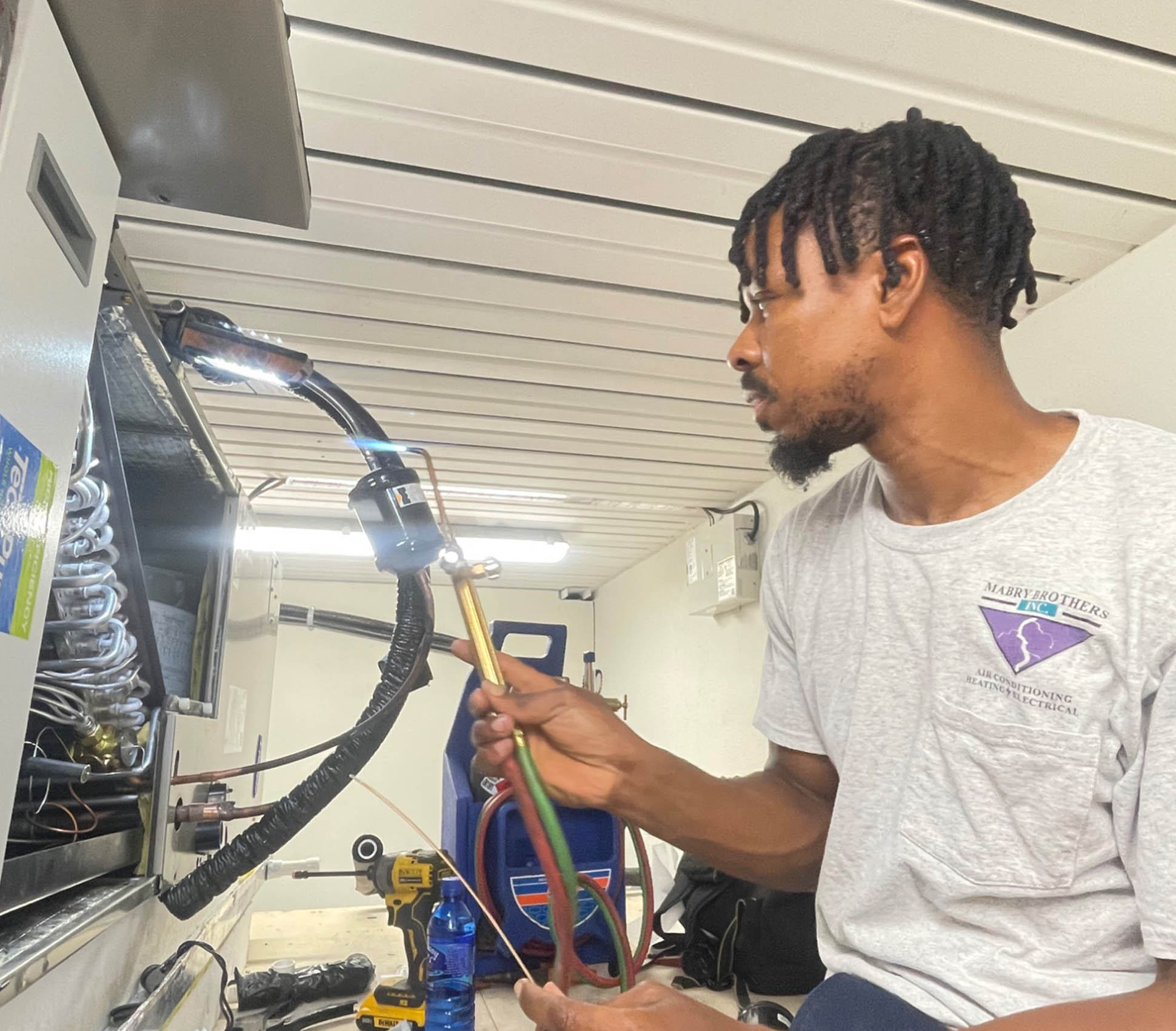
For homeowners with an R-22 system that develops a refrigerant leak, the economics change significantly. Recharging that system requires purchasing reclaimed R-22 at a price that can easily exceed what a modest repair bill would have been, and that recharge does not solve the leak that caused the refrigerant loss in the first place. When an R-22 system develops a leak, the conversation almost always moves to replacement rather than continued R-22-dependent repair. If you are unsure whether your system uses R-22, the system's nameplate data or any previous service records will confirm the refrigerant type.
Frequency and Cost of Recent Repairs
We track repair history for our service customers, and when we see a pattern of escalating repairs on a system we know well, we have that honest conversation proactively rather than waiting for the homeowner to ask. It is not a conversation we enjoy because no one wants to hear their system needs replacement, but it is better to plan a replacement on your schedule than to respond to a complete failure on the hottest day of the year.
Declining Comfort and Performance
This pattern shows up most clearly in homes in communities throughout older Fort Myers neighborhoods including Whiskey Creek, the McGregor corridor, and Iona, and in established North Fort Myers communities near the Caloosahatchee, where original systems from the late 1990s and early 2000s are reaching the end of their useful lives while Florida summers continue to demand full performance.

The Efficiency Gap Between Old and New
An older 10 to 14 SEER system operating in Southwest Florida’s year-round cooling environment is consuming significantly more electricity for the same cooling work than a modern 16 to 20 SEER2 system would. In a climate where cooling accounts for 40 to 60 percent of household energy consumption, this efficiency gap translates to a meaningful ongoing operating cost difference every month throughout the year. The cumulative value of that savings over the life of a new system is part of the total cost of ownership calculation that makes replacement increasingly attractive as older systems age.
When the Compressor Fails
Our technicians will always give you an honest assessment of whether a compressor repair makes sense given the age and overall condition of the system. On a newer system in good overall condition, a compressor repair or replacement under warranty may be entirely appropriate. On a 14-year-old system with a history of repairs and R-22 refrigerant, it almost never is.
How the Decision Plays Out Across Southwest Florida Communities
In our experience, replacement decisions tend to cluster geographically based on when communities were built and the typical age of systems in those areas.
In older Fort Myers neighborhoods that were developed heavily in the 1970s and 1980s, the homes we visit often have systems on their second or third replacement cycle. Many of these homeowners are making the replacement decision thoughtfully because they have done it before and understand the process.
In communities throughout Fort Myers including Gateway, San Carlos Park, and the established sections of South Fort Myers, systems from the early 2000s are reaching the age where replacement planning is timely. In growing communities throughout Estero including The Reserve at Estero, Corkscrew Highlands, and Wildcat Run, systems installed when these communities were built in the mid-2000s are similarly entering the planning window.
In newer developments throughout Naples including Fiddler’s Creek, Hammock Bay, and Winding Cypress, systems are typically young enough that replacement is not a near-term concern. In older Naples communities including Golden Gate, East Naples, and the Brookside area, the range of system ages is broad and assessment on a home-by-home basis is the only reliable guide.
Recent Customer Reviews
EXCELLENTTrustindex verifies that the original source of the review is Google. Germayne T. was very professional, courteous, and extremely efficient replacing two ceiling fans for us. Will definitely use Mabry and Germaine again.Posted on GoogleTrustindex verifies that the original source of the review is Google. Just had a biannual service done to my AC, amazing work by Kirk, on time, professional, and efficient!!!Posted on GoogleTrustindex verifies that the original source of the review is Google. Our A/C system wasn’t cooling. Kirk was over to fix it in less than 2 hrs. Very friendly & efficient. Found 2 small leaks. Got system cooling. Went over all options & charges before proceeding. Very satisfied.Posted on GoogleTrustindex verifies that the original source of the review is Google. Amazing professional service! I had smoke detectors falsely alarming and when I called in the morning, Scott immediately had a tech rerouted to address the alarms. Germaine arrived with 15 minutes of my call. He was AWESOME! Knowledgeable, polite and so personable. 5 star🌟 . And that is what we have found with all Mabry Brothers service techs!!!!Posted on GoogleTrustindex verifies that the original source of the review is Google. I love using these guys when I need an electrician. Their prices are fair, service is always fast and on time, and they communicate really well. Today Germayne T came out to install an EV charger at our home. He was on time, worked hard trenching ~80’, and got creative to help minimize the amount of exposed PVC. His connections look great, and the charger is working perfectly. As I said, I really like working with Mabry, and I think you will too.Posted on GoogleTrustindex verifies that the original source of the review is Google. My AC randomly went out in the late afternoon and I thought it had to do with the battery on the thermostat or the filter needing to be changed but it ended up being 84 degrees in my house in the middle of the night and Kirk was able to get to me within an hour of me calling to fix my issue which happened to be the capacitor. He spotted the issue within 10 minutes, thank you so much!!!Posted on GoogleTrustindex verifies that the original source of the review is Google. Company was very responsive. Germayne was knowledgeable, efficient, and cleaned up after work. Very professional! I highly recommend Mabry Brothers for your electrical needs.Posted on GoogleTrustindex verifies that the original source of the review is Google. I was very pleased with the service call. Kirk arrived on time, was professional and knowledgeable about the problems we were having with our air conditioner. He explained in detail what was happening and the steps needed to correct them. I highly recommend Mabry Brothers.Posted on GoogleTrustindex verifies that the original source of the review is Google. We needed an outdoor low voltage circuit installed! Emailed Scott for a quote with quick turnaround and Martin showed up and did excellent install work! Can highly recommend Mabry Brothers from this first experience and will use again!Posted on GoogleTrustindex verifies that the original source of the review is Google. Troy from Mabry Brothers is extremely professional and truly knows 100% what he’s doing. He is very responsible and takes the time to explain every step of the process, including every part that needs to be replaced. After calling several different companies, nobody was able to repair my generator and I only ended up wasting money. Troy was the only one who actually solved the problem quickly, and now my generator is working perfectly just in time for the upcoming storms. I highly recommend Troy and Mabry Brothers to anyone looking for honest, knowledgeable, and reliable service.
Frequently Asked Questions
Need Service in Southwest Florida?
The licensed electricians and HVAC technicians at Mabry Brothers have served Fort Myers, Estero, Bonita Springs, Naples, Sanibel Island, and Captiva Island since 1995.
For immediate assistance, please call our office directly at (239) 482-1122.

