
What Should I Know Before Installing an EV Charger at Home?
The most common mistake we see homeowners make when planning a home EV charger is starting by shopping for the charger unit before understanding what their home’s electrical system can actually support. We have had customers call us after purchasing a 48-amp Level 2 charger only to learn their older home in Cape Coral or Lehigh Acres has a 100-amp panel that is already near capacity. The charger is the last piece of the puzzle, not the first.
Before anything else, a licensed electrician should assess your panel’s current capacity, determine whether a dedicated circuit can be added without a panel upgrade, and identify the best routing from your panel to your parking location. That assessment shapes every decision that follows, including which charger unit actually makes sense for your home.
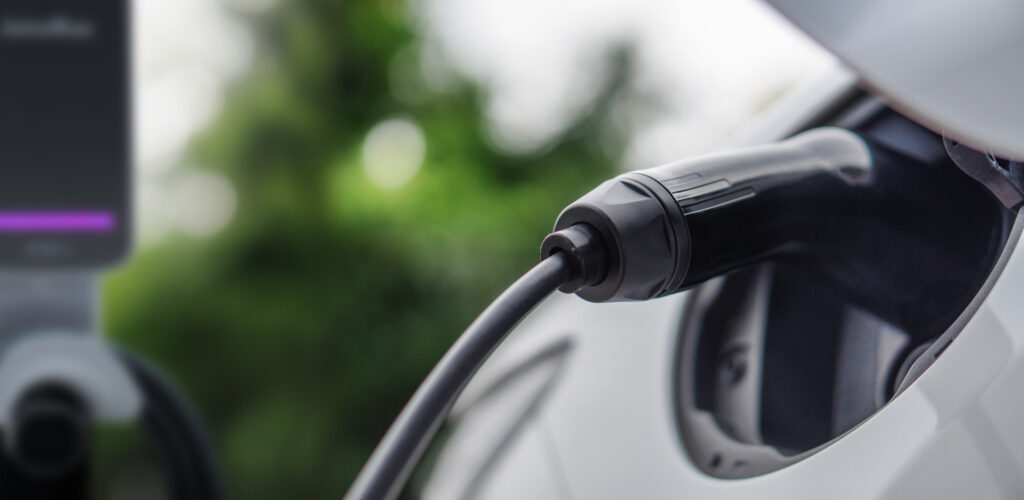
Understanding Charging Levels and What They Mean for Your Vehicle
There are two practical home charging levels. Level 1 uses a standard 120-volt household outlet and charges at roughly 3 to 5 miles of range per hour. Level 2 uses a dedicated 240-volt circuit and charges at roughly 15 to 30 miles of range per hour depending on the vehicle and charger amperage. For most Southwest Florida drivers who cover typical daily distances, Level 1 charging is too slow to reliably replenish a vehicle overnight if you are driving more than 30 to 40 miles per day.
Level 2 is the standard for homeowners who want practical daily charging capability. You plug in when you get home in the evening and wake up to a full or nearly full battery. That is the experience most of our customers are looking for, and it is what a properly installed Level 2 circuit delivers.
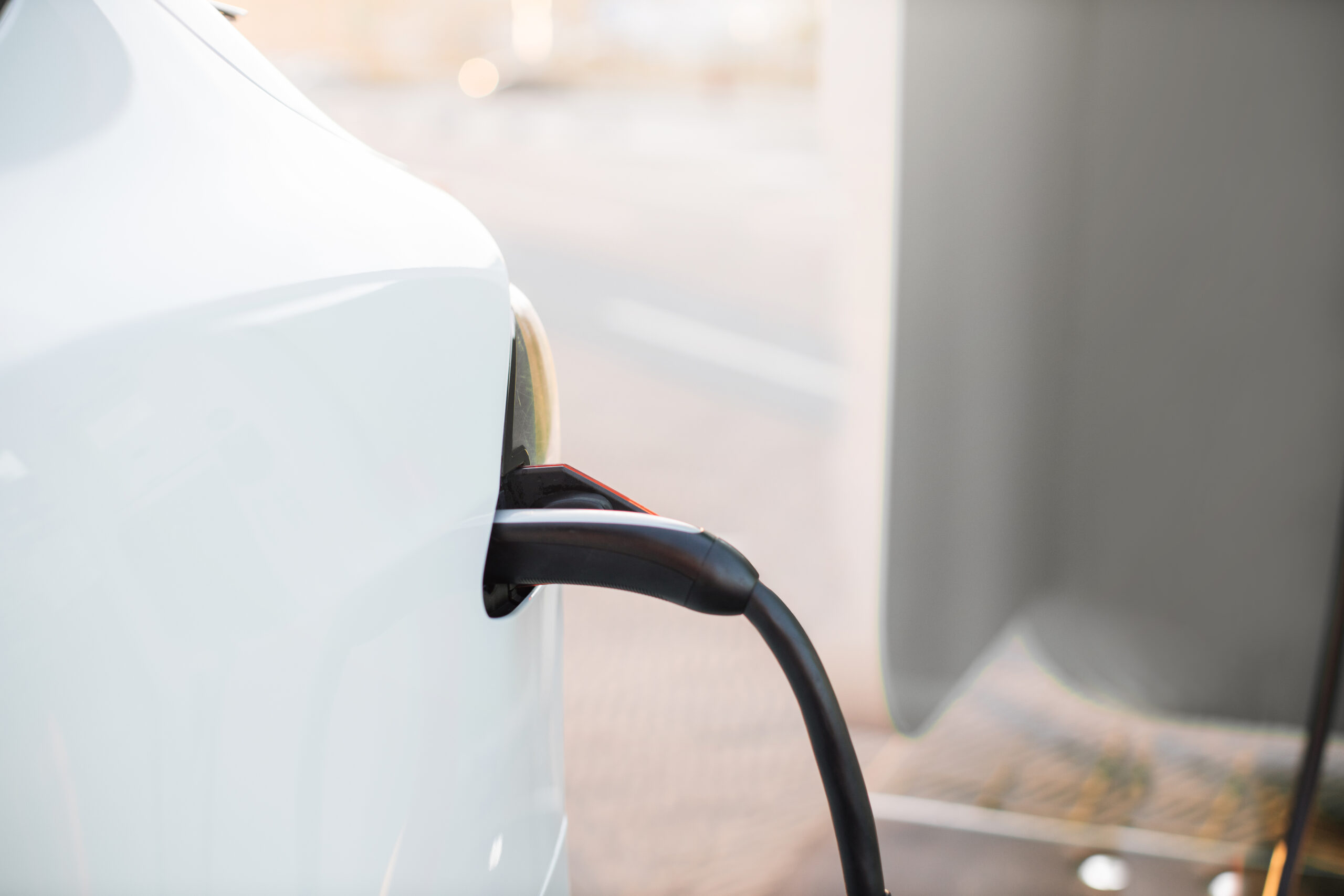
How Your Vehicle’s Onboard Charger Affects Speed
This is a detail many homeowners do not realize until after installation: the charger installed in your home is actually just a power delivery device. The component that controls how fast your battery actually charges is the onboard charger built into the vehicle itself. Installing a 48-amp home charger does not mean your vehicle will charge at 48 amps if the car’s onboard charger is rated for less.
Tesla Model 3 Long Range and Model Y Long Range vehicles come with an 11.5 kW onboard charger, meaning they can accept a high charge rate and benefit from a higher-amperage home circuit. The Tesla Model 3 Standard Range has a 7.2 kW onboard charger, which is the effective ceiling regardless of what the home charger supplies. The Chevrolet Bolt EV and Bolt EUV both have 11.5 kW onboard chargers, handling up to 48 amps on Level 2. The Ford F-150 Lightning in its standard configuration accepts up to 19.2 kW, and the extended range version can accept even more, making it one of the fastest-charging home scenarios we work with. The Rivian R1T and R1S support up to 11.5 kW on Level 2. The Hyundai IONIQ 5 and Kia EV6, which share the same 800-volt platform, accept up to 10.5 kW on Level 2. The BMW iX accepts up to 11 kW on Level 2. The Audi Q4 e-tron accepts up to 11 kW. The Volkswagen ID.4 accepts up to 11 kW. The Lucid Air, a vehicle we see increasingly in the Naples and Bonita Springs luxury market, accepts up to 19.2 kW on Level 2, which is one of the highest residential charging rates available.
Knowing your specific vehicle’s onboard charger rating helps us right-size the circuit we install so you are getting the fastest charge your vehicle can actually accept without oversizing the circuit unnecessarily.
What Your Home's Electrical System Actually Needs to Support EV Charging
Your panel must have the physical space for the required two-pole breaker and the available capacity to support the additional load on top of everything else already connected. In older homes throughout the McGregor corridor, Whiskey Creek, and the original Cape Coral grid where 100-amp panels are still common, this often means a panel upgrade is part of the conversation before the charger installation can proceed. In newer homes in Estero communities like Bella Terra, Corkscrew Shores, or The Reserve, 200-amp panels with available capacity are much more common and the charger circuit installation is typically straightforward.
Choosing the Right Charger for Your Vehicle and Your Home
Some vehicles also have preferred or recommended charger pairings. Tesla vehicles use their proprietary charging connector through 2023 model years and a J1772 adapter for third-party chargers, though newer Tesla models have transitioned to the NACS connector which is now being adopted industry-wide. Vehicles from most other manufacturers use the SAE J1772 connector standard for Level 2 charging. This does not affect your home installation in a major way since we specify the right outlet type for your vehicle, but it is worth understanding when you are selecting equipment.

Permits, Inspections, and HOA Considerations in Southwest Florida
EV charger installations that require new circuit work require a permit and inspection in both Lee County and Collier County. This is not optional and we handle it as standard practice on every installation. The permit process protects you by ensuring the work is inspected by the county before it is placed in service.
Florida Statute 163.04 provides strong protections for EV charger installation in HOA communities throughout Southwest Florida. HOAs generally cannot prohibit homeowners from installing EV charging equipment for their own vehicles, though they may impose reasonable requirements around placement or aesthetics. In gated communities and planned developments throughout Bonita Springs, Estero, and Naples, we recommend confirming the specific requirements with your HOA before finalizing installation placement, and we are happy to help navigate that process based on our familiarity with policies in many communities throughout our service area.
What the Installation Process Looks Like
Our process starts with a site visit to assess your panel, your parking location, and the best routing for the circuit. From there we provide a written estimate, handle the permit application, complete the installation, and coordinate the county inspection. Most single-vehicle Level 2 charger installations that do not require a panel upgrade are completed in a single day. If a panel upgrade is part of the project, the timeline extends accordingly and we manage both scopes together.
Call our office at (239) 482-1122 or use the form below to schedule your initial assessment. We install and service EV charging equipment throughout Fort Myers, Estero, Bonita Springs, Naples, Sanibel Island, Captiva Island, and surrounding Southwest Florida communities.
Recent Customer Reviews
EXCELLENTTrustindex verifies that the original source of the review is Google. Germayne T. was very professional, courteous, and extremely efficient replacing two ceiling fans for us. Will definitely use Mabry and Germaine again.Posted on GoogleTrustindex verifies that the original source of the review is Google. Just had a biannual service done to my AC, amazing work by Kirk, on time, professional, and efficient!!!Posted on GoogleTrustindex verifies that the original source of the review is Google. Our A/C system wasn’t cooling. Kirk was over to fix it in less than 2 hrs. Very friendly & efficient. Found 2 small leaks. Got system cooling. Went over all options & charges before proceeding. Very satisfied.Posted on GoogleTrustindex verifies that the original source of the review is Google. Amazing professional service! I had smoke detectors falsely alarming and when I called in the morning, Scott immediately had a tech rerouted to address the alarms. Germaine arrived with 15 minutes of my call. He was AWESOME! Knowledgeable, polite and so personable. 5 star🌟 . And that is what we have found with all Mabry Brothers service techs!!!!Posted on GoogleTrustindex verifies that the original source of the review is Google. I love using these guys when I need an electrician. Their prices are fair, service is always fast and on time, and they communicate really well. Today Germayne T came out to install an EV charger at our home. He was on time, worked hard trenching ~80’, and got creative to help minimize the amount of exposed PVC. His connections look great, and the charger is working perfectly. As I said, I really like working with Mabry, and I think you will too.Posted on GoogleTrustindex verifies that the original source of the review is Google. My AC randomly went out in the late afternoon and I thought it had to do with the battery on the thermostat or the filter needing to be changed but it ended up being 84 degrees in my house in the middle of the night and Kirk was able to get to me within an hour of me calling to fix my issue which happened to be the capacitor. He spotted the issue within 10 minutes, thank you so much!!!Posted on GoogleTrustindex verifies that the original source of the review is Google. Company was very responsive. Germayne was knowledgeable, efficient, and cleaned up after work. Very professional! I highly recommend Mabry Brothers for your electrical needs.Posted on GoogleTrustindex verifies that the original source of the review is Google. I was very pleased with the service call. Kirk arrived on time, was professional and knowledgeable about the problems we were having with our air conditioner. He explained in detail what was happening and the steps needed to correct them. I highly recommend Mabry Brothers.Posted on GoogleTrustindex verifies that the original source of the review is Google. We needed an outdoor low voltage circuit installed! Emailed Scott for a quote with quick turnaround and Martin showed up and did excellent install work! Can highly recommend Mabry Brothers from this first experience and will use again!Posted on GoogleTrustindex verifies that the original source of the review is Google. Troy from Mabry Brothers is extremely professional and truly knows 100% what he’s doing. He is very responsible and takes the time to explain every step of the process, including every part that needs to be replaced. After calling several different companies, nobody was able to repair my generator and I only ended up wasting money. Troy was the only one who actually solved the problem quickly, and now my generator is working perfectly just in time for the upcoming storms. I highly recommend Troy and Mabry Brothers to anyone looking for honest, knowledgeable, and reliable service.
Frequently Asked Questions
Need Service in Southwest Florida?

