
What Is an Air Handler and How Does It Affect Performance?
If you have a split-system air conditioner, which is the configuration found in the overwhelming majority of Southwest Florida homes, your system has two main components: the outdoor unit that contains the compressor and condenser coil, and the indoor air handler that contains the evaporator coil, blower motor, and in many systems the electric heat strips or furnace components. These two units work together as a matched system, and the performance of one directly affects the performance of the other.
The air handler is where the actual cooling of your home’s air takes place. The blower motor pulls return air from the home across the cold evaporator coil, which absorbs heat and moisture from that air before the blower distributes the cooled, dehumidified air back through the supply ducts. Everything about how comfortable your home feels, the temperature, the humidity level, the evenness of conditioning throughout the space, is affected by how well the air handler is performing.
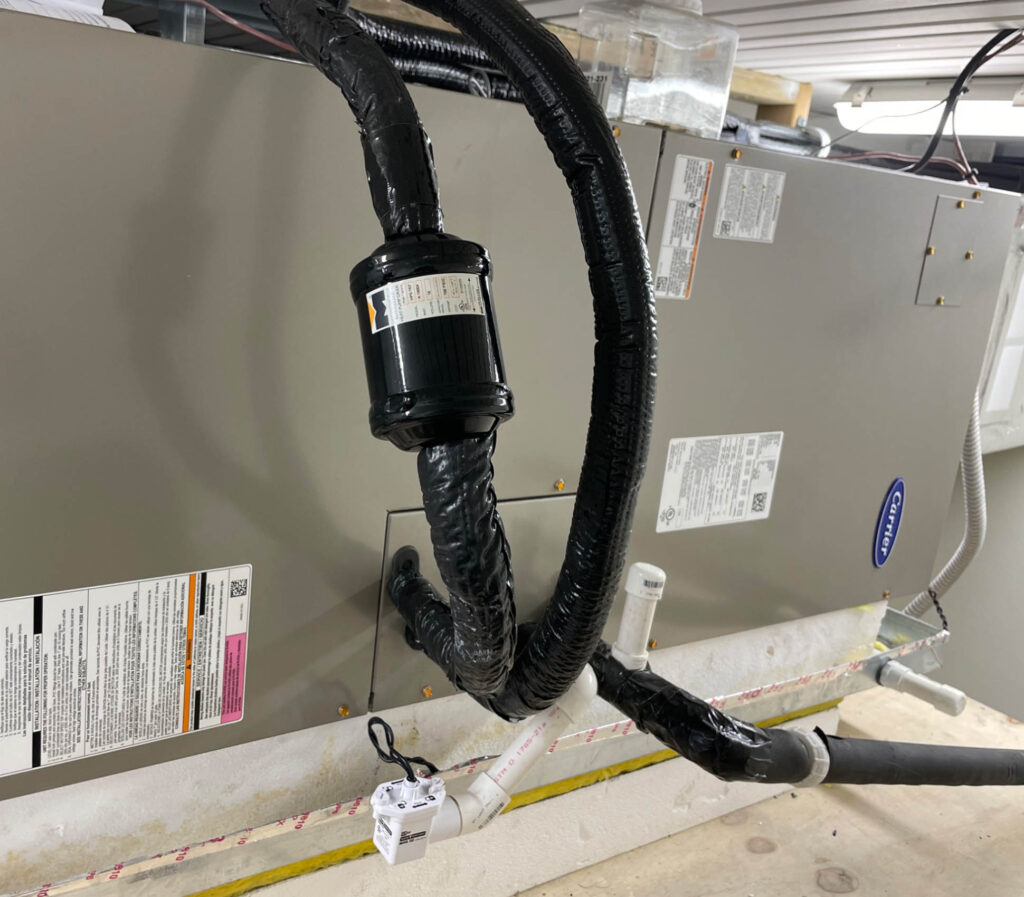
What Is Inside an Air Handler
Understanding the components inside the air handler helps make sense of why maintenance and service matters. The evaporator coil is the primary heat exchange surface, a finned coil through which refrigerant flows. The blower motor and blower wheel move air through the system. The filter rack holds the filter that removes particles from return air before it reaches the coil. The drain pan collects condensation from the coil. The float switch shuts the system down if the drain pan fills to prevent overflow. On most systems there are also electrical components including the control board, capacitor for the blower motor, and terminal connections for the low-voltage control wiring.
In variable-speed air handlers, which are increasingly the standard in new installations throughout our service area, an electronic variable-frequency drive controls blower motor speed. This component is sophisticated and sensitive to voltage quality, which is part of why surge protection matters for homes with these systems.
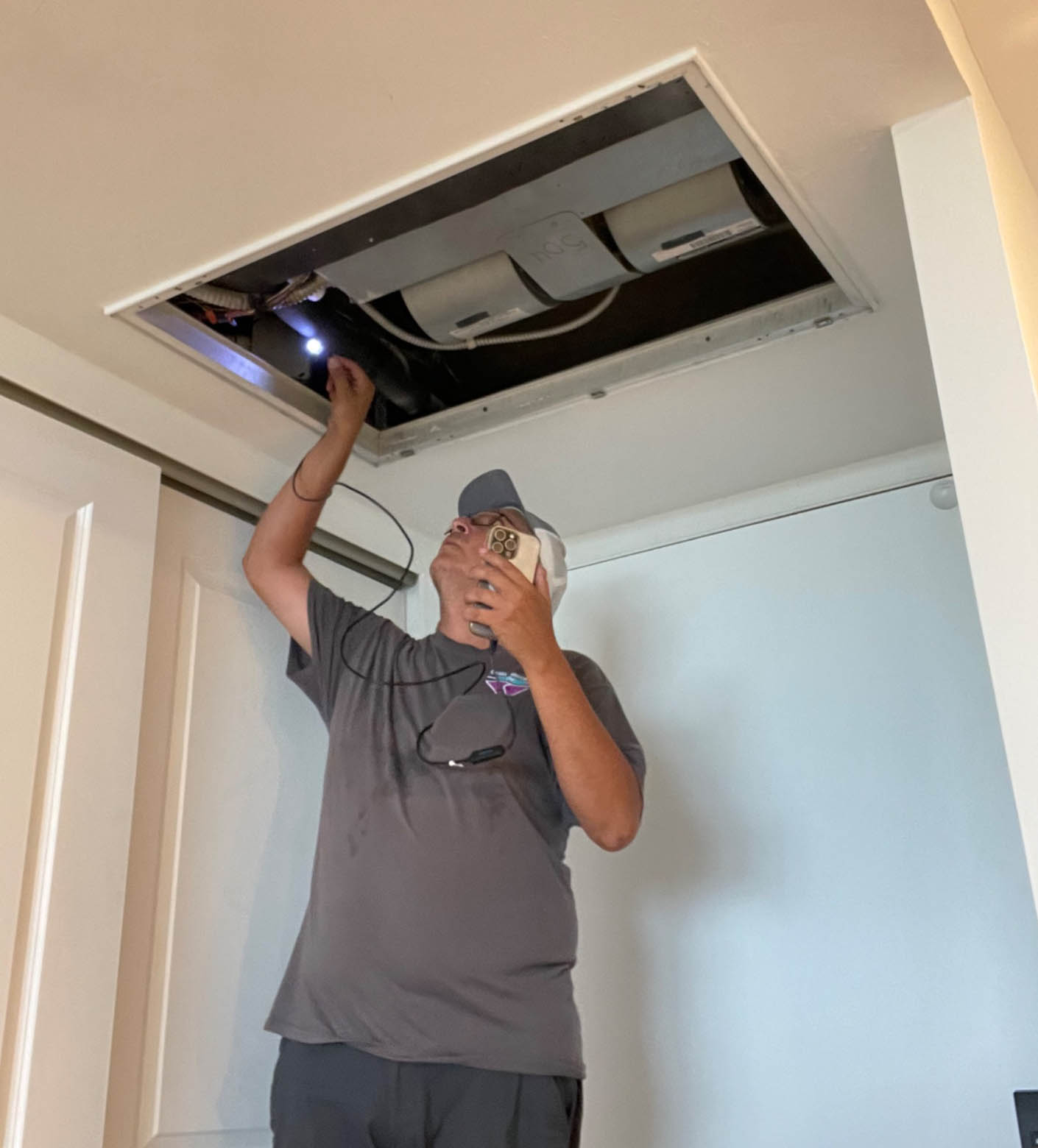
How the Air Handler Affects Humidity Control
The air handler’s performance has a direct and significant effect on how well your home manages indoor humidity, which as we discuss throughout our content is the central comfort challenge in Southwest Florida. Specifically, the blower speed and the time the air spends in contact with the evaporator coil determines how much moisture is removed from each unit of air passing through the system.
Slower blower speeds mean more contact time with the coil and more moisture removal per cubic foot of air. Higher blower speeds mean faster air delivery but less moisture removal efficiency. Variable-speed air handlers can optimize this tradeoff continuously, running the blower at a speed that balances air distribution with maximum moisture removal based on actual conditions. This is one of the primary reasons variable-speed systems feel more comfortable in Southwest Florida than comparable single-speed systems even when the temperature readings are similar.
An air handler blower running faster than optimal for the system configuration, which can happen when an oversized system is installed and the installer sets blower speed to match, produces the short-cycle high-humidity condition we describe in our humidity article. An air handler blower running slower than optimal produces insufficient airflow and can cause freeze-up. Getting blower speed right is part of proper commissioning and is something we verify during installation and check during maintenance visits.
Common Air Handler Problems in Southwest Florida
Clogged Condensate Drain and Overflowing Drain Pan
This is the air handler problem we address most frequently throughout our service area. The drain pan under the evaporator coil collects the several gallons of moisture the system removes from the air daily during humid Florida summers. In the warm, moist environment of the air handler cabinet, algae and biological growth thrive in the drain line and can clog it completely within a single season without treatment. When the drain clogs and the pan overflows, the float switch shuts the system down. When the switch fails or the pan volume is exceeded before the switch can respond, water damage to the ceiling or walls below the air handler follows.
We see this outcome in homes throughout every community in our service area and it is genuinely unnecessary given how straightforward prevention is. Quarterly drain treatment and annual flush essentially eliminate drain overflow as a failure mode.
Dirty Evaporator Coil and Coil Biological Growth
The evaporator coil operates in a persistently moist and warm environment that supports mold and biological growth year-round in Southwest Florida’s climate. A coil that has accumulated a layer of biological growth restricts airflow, reduces heat transfer efficiency, and in some cases contributes to indoor air quality issues when the growth becomes extensive. Annual coil inspection and cleaning during maintenance visits is the standard prevention.
Blower Motor and Wheel Issues
Blower motors in humid environments experience bearing wear that is accelerated compared to dry climates. Blower wheels accumulate biological growth and debris on their vanes over time, adding mass and reducing efficiency. Both of these conditions reduce airflow gradually in ways that often go unnoticed until symptoms like freeze-up or inadequate cooling in distant rooms become apparent.
When Air Handler Replacement Makes Sense
One scenario we encounter regularly involves homeowners who have replaced the outdoor unit but kept the original air handler to reduce upfront cost. While this can work in some situations, a mismatched pairing often prevents the new outdoor unit from achieving its rated efficiency and performance. A high-efficiency variable-speed outdoor unit paired with an old single-speed air handler cannot deliver the comfort and efficiency performance the new equipment is capable of. The outdoor unit is only as good as the complete system it operates within.
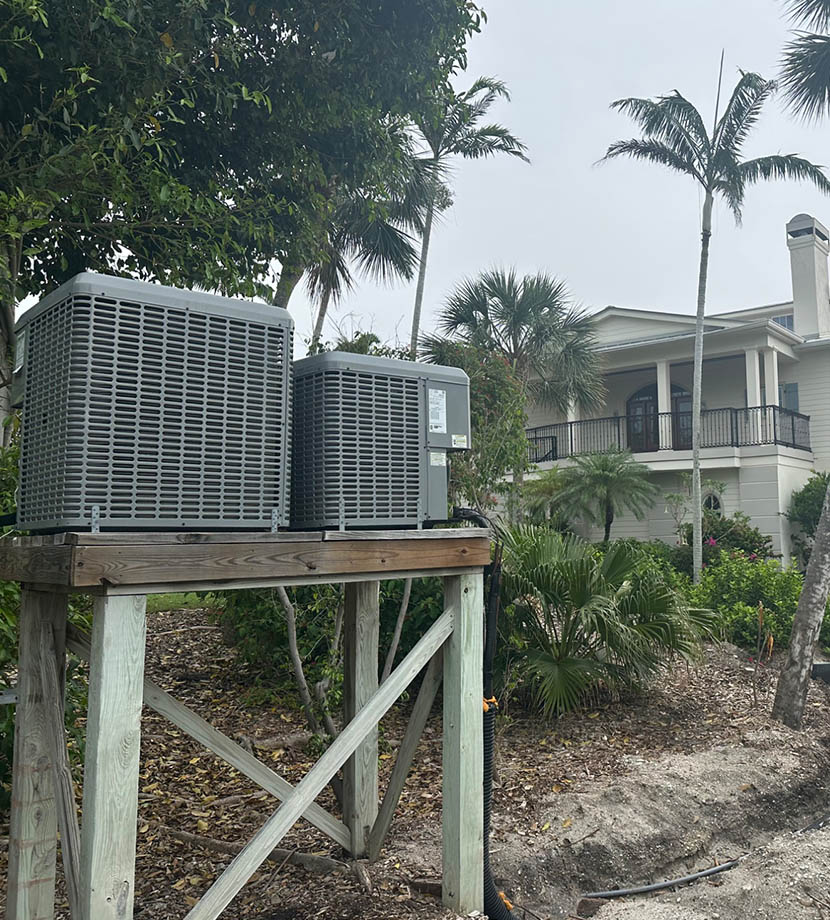

Matching the Air Handler to the Outdoor Unit
When we replace either component of a split system, we assess whether the remaining component is an appropriate match for the new equipment. AHRI certification, the Air-Conditioning, Heating, and Refrigeration Institute standard for matched system testing, defines which combinations of outdoor units and air handlers have been tested together and what efficiency rating that combination achieves. Installing a combination that is not AHRI-certified can result in efficiency below the rated value, potential refrigerant system issues, and in some cases warranty limitations.
In communities throughout Fort Myers, Naples, and Estero where we replace significant numbers of AC systems each year, we see the effects of mismatched systems regularly. The best outcomes, both for immediate comfort and for long-term reliability, come from treating the indoor and outdoor units as the matched system they were designed to be.
Recent Customer Reviews
EXCELLENTTrustindex verifies that the original source of the review is Google. Germayne T. was very professional, courteous, and extremely efficient replacing two ceiling fans for us. Will definitely use Mabry and Germaine again.Posted on GoogleTrustindex verifies that the original source of the review is Google. Just had a biannual service done to my AC, amazing work by Kirk, on time, professional, and efficient!!!Posted on GoogleTrustindex verifies that the original source of the review is Google. Our A/C system wasn’t cooling. Kirk was over to fix it in less than 2 hrs. Very friendly & efficient. Found 2 small leaks. Got system cooling. Went over all options & charges before proceeding. Very satisfied.Posted on GoogleTrustindex verifies that the original source of the review is Google. Amazing professional service! I had smoke detectors falsely alarming and when I called in the morning, Scott immediately had a tech rerouted to address the alarms. Germaine arrived with 15 minutes of my call. He was AWESOME! Knowledgeable, polite and so personable. 5 star🌟 . And that is what we have found with all Mabry Brothers service techs!!!!Posted on GoogleTrustindex verifies that the original source of the review is Google. I love using these guys when I need an electrician. Their prices are fair, service is always fast and on time, and they communicate really well. Today Germayne T came out to install an EV charger at our home. He was on time, worked hard trenching ~80’, and got creative to help minimize the amount of exposed PVC. His connections look great, and the charger is working perfectly. As I said, I really like working with Mabry, and I think you will too.Posted on GoogleTrustindex verifies that the original source of the review is Google. My AC randomly went out in the late afternoon and I thought it had to do with the battery on the thermostat or the filter needing to be changed but it ended up being 84 degrees in my house in the middle of the night and Kirk was able to get to me within an hour of me calling to fix my issue which happened to be the capacitor. He spotted the issue within 10 minutes, thank you so much!!!Posted on GoogleTrustindex verifies that the original source of the review is Google. Company was very responsive. Germayne was knowledgeable, efficient, and cleaned up after work. Very professional! I highly recommend Mabry Brothers for your electrical needs.Posted on GoogleTrustindex verifies that the original source of the review is Google. I was very pleased with the service call. Kirk arrived on time, was professional and knowledgeable about the problems we were having with our air conditioner. He explained in detail what was happening and the steps needed to correct them. I highly recommend Mabry Brothers.Posted on GoogleTrustindex verifies that the original source of the review is Google. We needed an outdoor low voltage circuit installed! Emailed Scott for a quote with quick turnaround and Martin showed up and did excellent install work! Can highly recommend Mabry Brothers from this first experience and will use again!Posted on GoogleTrustindex verifies that the original source of the review is Google. Troy from Mabry Brothers is extremely professional and truly knows 100% what he’s doing. He is very responsible and takes the time to explain every step of the process, including every part that needs to be replaced. After calling several different companies, nobody was able to repair my generator and I only ended up wasting money. Troy was the only one who actually solved the problem quickly, and now my generator is working perfectly just in time for the upcoming storms. I highly recommend Troy and Mabry Brothers to anyone looking for honest, knowledgeable, and reliable service.
Frequently Asked Questions
Need Service in Southwest Florida?
The licensed electricians and HVAC technicians at Mabry Brothers have served Fort Myers, Estero, Bonita Springs, Naples, Sanibel Island, and Captiva Island since 1995.
For immediate assistance, please call our office directly at (239) 482-1122.

