
What Happens During an AC Installation in Southwest Florida?
A lot of homeowners do not have a clear picture of what an AC replacement involves beyond the physical work of swapping the equipment. Understanding the full process from the initial assessment through the final inspection helps set appropriate expectations and helps you evaluate whether any contractor you are considering is actually planning to do the job correctly.
The process we follow on every installation reflects what a proper AC replacement requires in Florida’s regulatory environment and Southwest Florida’s specific climate. Shortcuts in any phase of this process compromise either the quality of the installation, the code compliance of the work, or both.
The Assessment and Equipment Selection Phase
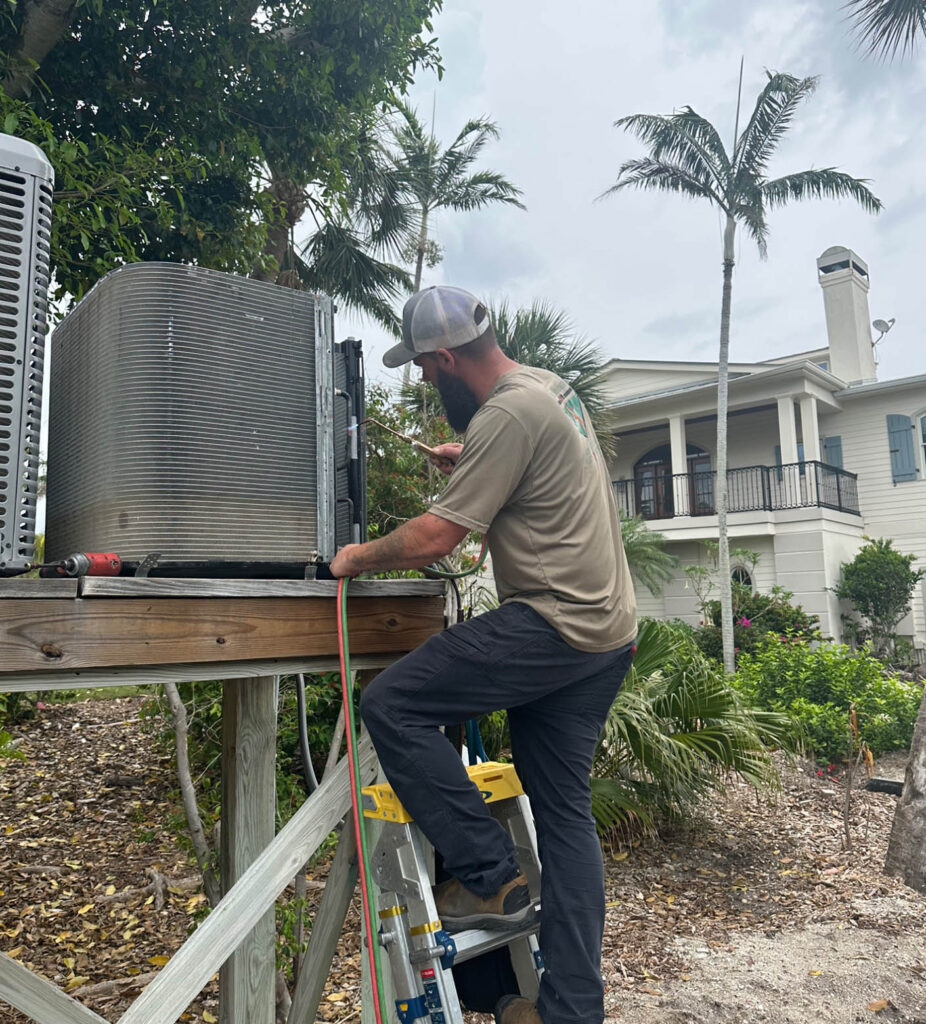
Before any equipment is specified or ordered, one of our licensed technicians visits your home to perform a Manual J load calculation and assess the existing system, the ductwork, and any other factors that affect what the replacement should involve. This is not a sales visit. It is an engineering assessment that determines the correct equipment size, the right system type for your home and your preferences, whether the ductwork is adequate or needs attention, and whether any other work should be part of the project.
Equipment selection follows from that assessment. We recommend systems based on what the calculation and assessment indicate your home needs, what efficiency level makes sense given your operating costs and preferences, and what system type matches your home’s infrastructure.
Permitting in Lee and Collier Counties
AC replacement in Florida requires a permit. This is not optional and it is not a formality. The permit process ensures that the installation is inspected by the county building department and confirmed to meet the Florida Building Code. An installation that has not been permitted is not inspected, which means there is no independent verification that the work was done correctly.
For homeowners, a permitted installation also protects you in the event of a sale. Unpermitted HVAC work in Lee County and Collier County can create complications during the sale process and may need to be opened up and re-inspected at the homeowner’s expense. The permit process adds a small amount of lead time to a project but it is the right way to do the work and we include it in every installation we perform.
Our office handles the permit application on your behalf and coordinates the inspection scheduling so you do not have to navigate the process yourself. We are familiar with the permitting processes in both Lee County and Collier County and manage this aspect of the project as a standard part of every installation.
The Day of Installation
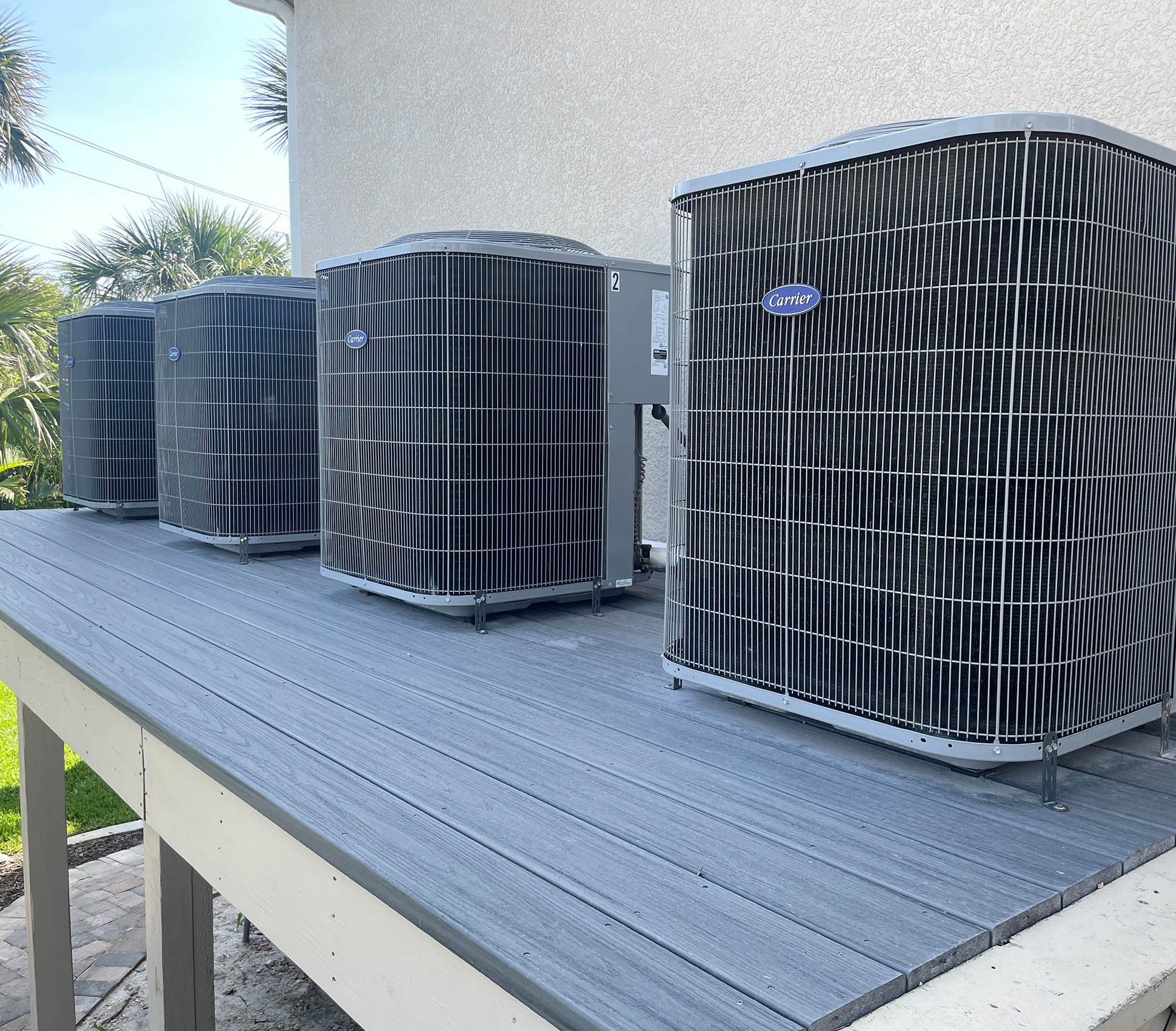
On the day of installation, our crew arrives with the equipment and materials needed to complete the project. The existing system is disconnected and removed, including proper recovery of any remaining refrigerant by our EPA-certified technicians before the old system is disposed of. The new outdoor unit is positioned on the existing or new concrete pad, leveled, and secured. The new air handler is installed in the existing location or in the agreed-upon new location if the installation involves a repositioning.
New refrigerant line sets are typically installed rather than reusing old lines, because old copper line sets may have internal debris, oil contamination, or insulation degradation that can affect the new system’s performance. The refrigerant circuit is then leak-tested under pressure before being charged to the manufacturer’s specification. Electrical connections are made at the air handler, at the outdoor disconnect, and at the panel if new circuit work is needed. Control wiring between the thermostat, the air handler, and the outdoor unit is installed or updated.
For most single-system replacements in a standard configuration, the installation is completed in a single day and the home has a functioning cooling system before our crew leaves.
System Commissioning and Performance Verification
This step is where a proper installation is distinguished from a rushed one. A technician who installs the equipment, turns it on, verifies that cold air is blowing from the vents, and calls it done has not confirmed that the system is operating at its rated efficiency and capacity. Commissioning data gives us and you documentation that the system was performing correctly from the first day, which is valuable context if any performance question arises in the future.

What We Document and Leave With You
After every installation, we provide you with documentation of the project including the permit record, the commissioning data from startup, equipment model and serial numbers, warranty registration confirmation, and any specific maintenance recommendations for the new system. This documentation is something you should keep with your home’s records because it is useful for warranty service, for any future service technician who works on the system, and for disclosure purposes if the home is ever sold.
We also walk you through the new thermostat operation, the filter type and location, and the recommended maintenance schedule for the new equipment before we leave. A new system that the homeowner understands how to operate and maintain is one that will perform as intended.
What to Expect in the Days After Installation
Most homeowners notice an immediate difference after an AC replacement, particularly if the previous system had been declining in performance for some time. The home reaches setpoint faster, maintains temperature more evenly, and in the case of a variable-speed replacement, the reduction in indoor humidity is often noticed within the first day or two.
Some homeowners experience a brief period of adjustment to the sound profile of the new system, particularly when moving from an older single-stage system to a variable-speed unit that runs at lower speeds for longer periods. The new system is quieter and runs more continuously at lower output rather than cycling loudly on and off. This is the system performing correctly, not a problem.
If anything feels off in the days immediately after installation, call our office. We stand behind every installation and will address any concern promptly.
Recent Customer Reviews
EXCELLENTTrustindex verifies that the original source of the review is Google. Germayne T. was very professional, courteous, and extremely efficient replacing two ceiling fans for us. Will definitely use Mabry and Germaine again.Posted on GoogleTrustindex verifies that the original source of the review is Google. Just had a biannual service done to my AC, amazing work by Kirk, on time, professional, and efficient!!!Posted on GoogleTrustindex verifies that the original source of the review is Google. Our A/C system wasn’t cooling. Kirk was over to fix it in less than 2 hrs. Very friendly & efficient. Found 2 small leaks. Got system cooling. Went over all options & charges before proceeding. Very satisfied.Posted on GoogleTrustindex verifies that the original source of the review is Google. Amazing professional service! I had smoke detectors falsely alarming and when I called in the morning, Scott immediately had a tech rerouted to address the alarms. Germaine arrived with 15 minutes of my call. He was AWESOME! Knowledgeable, polite and so personable. 5 star🌟 . And that is what we have found with all Mabry Brothers service techs!!!!Posted on GoogleTrustindex verifies that the original source of the review is Google. I love using these guys when I need an electrician. Their prices are fair, service is always fast and on time, and they communicate really well. Today Germayne T came out to install an EV charger at our home. He was on time, worked hard trenching ~80’, and got creative to help minimize the amount of exposed PVC. His connections look great, and the charger is working perfectly. As I said, I really like working with Mabry, and I think you will too.Posted on GoogleTrustindex verifies that the original source of the review is Google. My AC randomly went out in the late afternoon and I thought it had to do with the battery on the thermostat or the filter needing to be changed but it ended up being 84 degrees in my house in the middle of the night and Kirk was able to get to me within an hour of me calling to fix my issue which happened to be the capacitor. He spotted the issue within 10 minutes, thank you so much!!!Posted on GoogleTrustindex verifies that the original source of the review is Google. Company was very responsive. Germayne was knowledgeable, efficient, and cleaned up after work. Very professional! I highly recommend Mabry Brothers for your electrical needs.Posted on GoogleTrustindex verifies that the original source of the review is Google. I was very pleased with the service call. Kirk arrived on time, was professional and knowledgeable about the problems we were having with our air conditioner. He explained in detail what was happening and the steps needed to correct them. I highly recommend Mabry Brothers.Posted on GoogleTrustindex verifies that the original source of the review is Google. We needed an outdoor low voltage circuit installed! Emailed Scott for a quote with quick turnaround and Martin showed up and did excellent install work! Can highly recommend Mabry Brothers from this first experience and will use again!Posted on GoogleTrustindex verifies that the original source of the review is Google. Troy from Mabry Brothers is extremely professional and truly knows 100% what he’s doing. He is very responsible and takes the time to explain every step of the process, including every part that needs to be replaced. After calling several different companies, nobody was able to repair my generator and I only ended up wasting money. Troy was the only one who actually solved the problem quickly, and now my generator is working perfectly just in time for the upcoming storms. I highly recommend Troy and Mabry Brothers to anyone looking for honest, knowledgeable, and reliable service.
Frequently Asked Questions
Need Service in Southwest Florida?
The licensed electricians and HVAC technicians at Mabry Brothers have served Fort Myers, Estero, Bonita Springs, Naples, Sanibel Island, and Captiva Island since 1995.
For immediate assistance, please call our office directly at (239) 482-1122.

