
How to Know If Your Home Needs New Electrical Wiring
A home typically needs rewiring when its electrical wiring is too old to safely support modern electrical demand, when wiring materials like aluminum or knob-and-tube have known safety limitations, when widespread electrical problems cannot be resolved through targeted repairs, or when significant renovation work requires electrical systems to be updated to current code.
Most homes do not need complete rewiring. However, homes built before the 1970s, homes with a history of recurring electrical problems, and homes that have experienced storm or flood damage may have wiring that is no longer fit for purpose. A licensed electrician can evaluate your specific situation and determine whether targeted repairs, partial rewiring, or complete rewiring is the appropriate path.
What Is Home Rewiring?
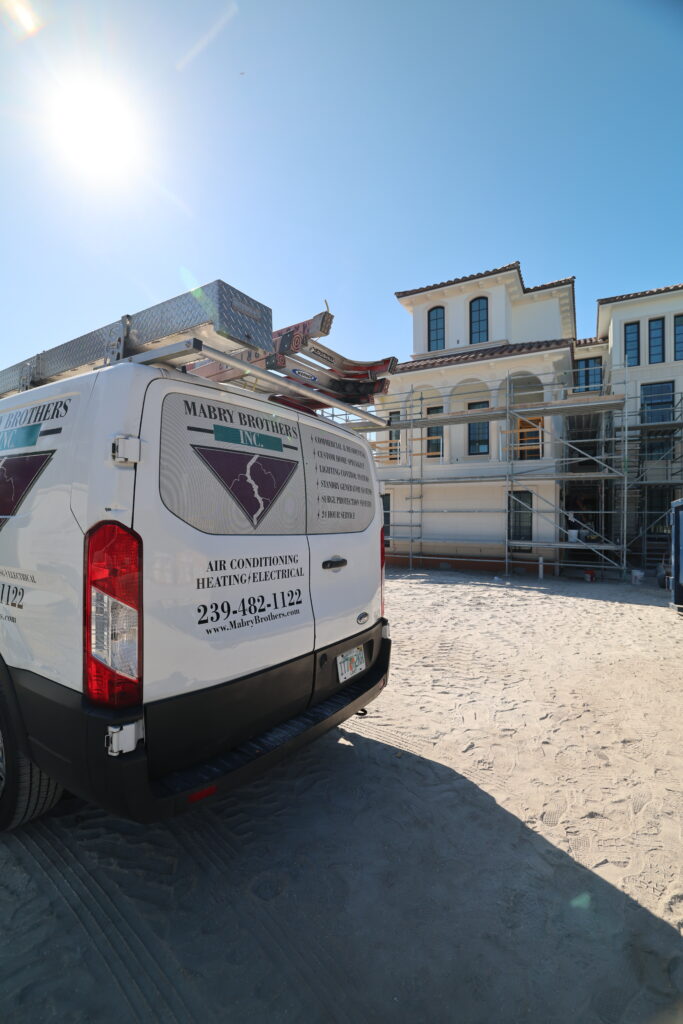
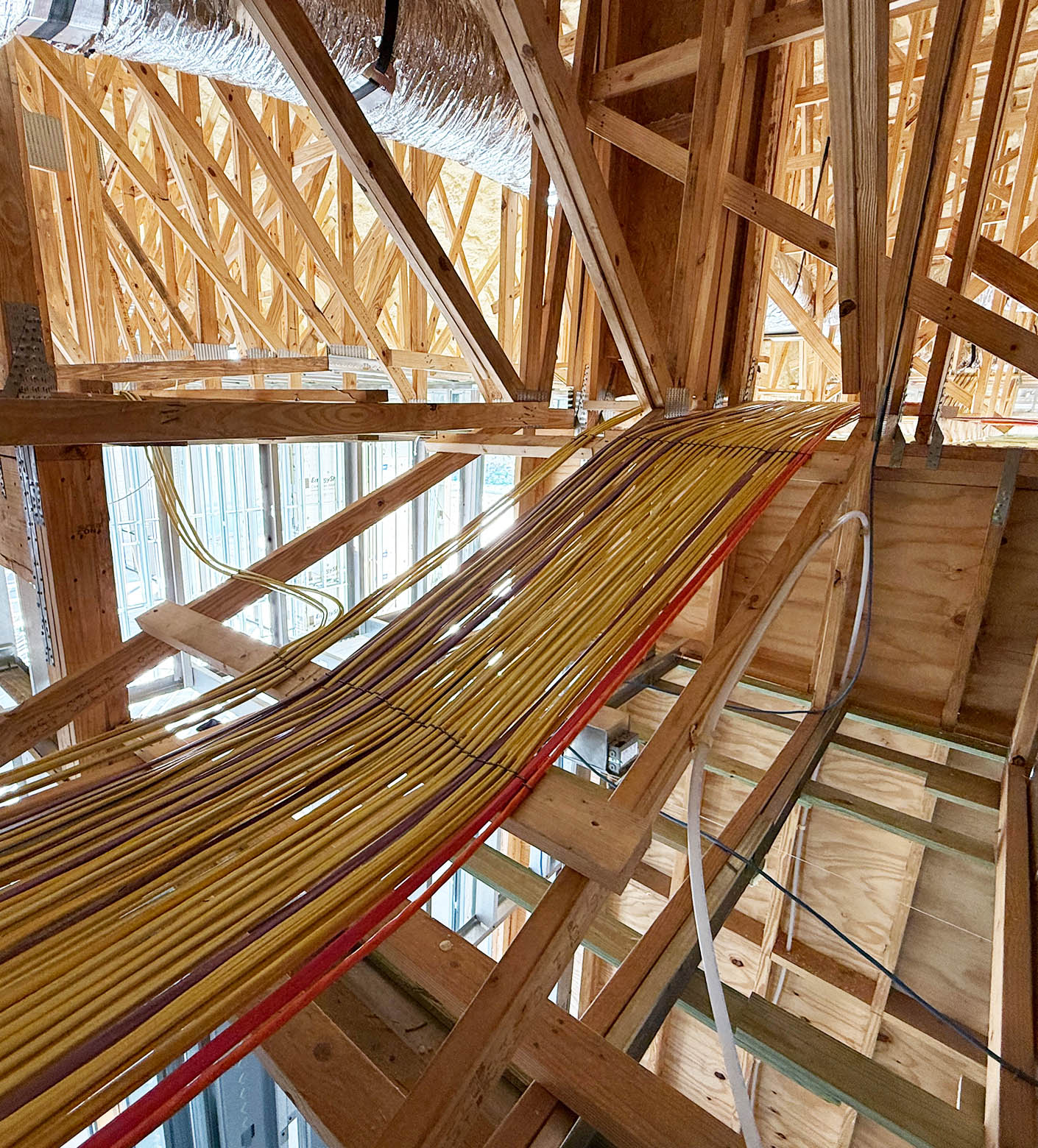
Home rewiring involves replacing the existing branch circuit wiring throughout a home with new copper wiring that meets current National Electrical Code requirements. In most cases this also includes replacing outlet and switch devices, updating junction boxes, and ensuring that grounding is correct throughout the system.
Rewiring is a significant project that typically requires opening walls or ceilings to access existing wiring. In older homes, experienced electricians can often minimize disruption by fishing new wire through existing cavities, but some degree of wall work is generally unavoidable.
Rewiring projects always require permits and inspections through Lee County or Collier County building departments.
Common Reasons a Home Needs Rewiring
Knob and Tube Wiring
Knob and tube wiring was common in homes built before the 1940s. This wiring system uses individual conductors routed through ceramic insulators and does not include a ground wire. It was never designed for the electrical loads modern homes require, and its insulation has almost universally degraded beyond reliable service life. Many insurance companies will not insure homes with active knob and tube wiring.
Aluminum Branch Circuit Wiring
Aluminum branch circuit wiring was installed in many Florida homes built between approximately 1965 and 1973 as a cost-saving alternative to copper. Aluminum expands and contracts differently than copper during temperature cycling, causing connections to loosen over time and creating arc fault and fire risks. Homes with aluminum branch circuit wiring require either complete rewiring to copper or installation of approved connectors at every connection point throughout the home.
Wiring Significantly Degraded by Age or Environment
Even copper wiring can reach a point where insulation has deteriorated to the degree that it no longer safely insulates conductors. This is accelerated in Florida’s climate by heat, humidity, and in coastal areas by salt air. Wiring that was submerged during hurricane flooding should be evaluated carefully — moisture-damaged wiring insulation does not always show obvious symptoms immediately.
Repeated Electrical Problems That Cannot Be Resolved
When a home experiences recurring issues across multiple circuits — repeated breaker trips, warm outlets in multiple areas, flickering throughout the home — and targeted repairs have not resolved the underlying pattern, the wiring system itself may have reached a point where rewiring is more practical than continued repairs.
Why Older Southwest Florida Homes Are More Likely to Need Rewiring
Homes along McGregor Boulevard, throughout Cape Coral's original developments, and across older Naples neighborhoods that have not had electrical system updates in several decades are among the most likely candidates for rewiring evaluation. A professional assessment from Mabry Brothers can determine the current condition and remaining safe service life of your home's wiring.

What Homeowners Can Safely Observe
Look for patterns of recurring electrical problems rather than isolated incidents. If you are experiencing breaker trips on multiple circuits, warm outlets in more than one area of the home, flickering that is not explained by bulb or fixture issues, and these problems have persisted despite previous repairs, document the pattern and schedule a professional evaluation.
If your home has original wiring from before the 1970s and has never had an electrical inspection, scheduling one proactively is advisable regardless of whether obvious symptoms are present.
When Rewiring Becomes Urgent
When to Call Mabry Brothers
Mabry Brothers has performed rewiring projects throughout Fort Myers, Estero, Bonita Springs, Naples, Sanibel Island, and Captiva Island since 1995. Our licensed electricians evaluate your home’s specific wiring condition, provide a clear recommendation, and perform rewiring work with the quality and care Southwest Florida homeowners have relied on for three decades.
Recent Customer Reviews
EXCELLENTTrustindex verifies that the original source of the review is Google. Germayne T. was very professional, courteous, and extremely efficient replacing two ceiling fans for us. Will definitely use Mabry and Germaine again.Posted on GoogleTrustindex verifies that the original source of the review is Google. Just had a biannual service done to my AC, amazing work by Kirk, on time, professional, and efficient!!!Posted on GoogleTrustindex verifies that the original source of the review is Google. Our A/C system wasn’t cooling. Kirk was over to fix it in less than 2 hrs. Very friendly & efficient. Found 2 small leaks. Got system cooling. Went over all options & charges before proceeding. Very satisfied.Posted on GoogleTrustindex verifies that the original source of the review is Google. Amazing professional service! I had smoke detectors falsely alarming and when I called in the morning, Scott immediately had a tech rerouted to address the alarms. Germaine arrived with 15 minutes of my call. He was AWESOME! Knowledgeable, polite and so personable. 5 star🌟 . And that is what we have found with all Mabry Brothers service techs!!!!Posted on GoogleTrustindex verifies that the original source of the review is Google. I love using these guys when I need an electrician. Their prices are fair, service is always fast and on time, and they communicate really well. Today Germayne T came out to install an EV charger at our home. He was on time, worked hard trenching ~80’, and got creative to help minimize the amount of exposed PVC. His connections look great, and the charger is working perfectly. As I said, I really like working with Mabry, and I think you will too.Posted on GoogleTrustindex verifies that the original source of the review is Google. My AC randomly went out in the late afternoon and I thought it had to do with the battery on the thermostat or the filter needing to be changed but it ended up being 84 degrees in my house in the middle of the night and Kirk was able to get to me within an hour of me calling to fix my issue which happened to be the capacitor. He spotted the issue within 10 minutes, thank you so much!!!Posted on GoogleTrustindex verifies that the original source of the review is Google. Company was very responsive. Germayne was knowledgeable, efficient, and cleaned up after work. Very professional! I highly recommend Mabry Brothers for your electrical needs.Posted on GoogleTrustindex verifies that the original source of the review is Google. I was very pleased with the service call. Kirk arrived on time, was professional and knowledgeable about the problems we were having with our air conditioner. He explained in detail what was happening and the steps needed to correct them. I highly recommend Mabry Brothers.Posted on GoogleTrustindex verifies that the original source of the review is Google. We needed an outdoor low voltage circuit installed! Emailed Scott for a quote with quick turnaround and Martin showed up and did excellent install work! Can highly recommend Mabry Brothers from this first experience and will use again!Posted on GoogleTrustindex verifies that the original source of the review is Google. Troy from Mabry Brothers is extremely professional and truly knows 100% what he’s doing. He is very responsible and takes the time to explain every step of the process, including every part that needs to be replaced. After calling several different companies, nobody was able to repair my generator and I only ended up wasting money. Troy was the only one who actually solved the problem quickly, and now my generator is working perfectly just in time for the upcoming storms. I highly recommend Troy and Mabry Brothers to anyone looking for honest, knowledgeable, and reliable service.
Frequently Asked Questions
Need Service in Southwest Florida?
The licensed electricians and HVAC technicians at Mabry Brothers have served Fort Myers, Estero, Bonita Springs, Naples, Sanibel Island, and Captiva Island since 1995.
Call (239) 482-1122. or complete the form below to schedule service today.

