- 5731 Halifax Ave Fort Myers, FL 33912
- (239) 482-1122

Protection Against What You Cannot Detect
Carbon Monoxide Detector Installation in Fort Myers
Carbon monoxide has no color, no odor, and no taste, and the early symptoms of exposure look like almost anything else. That combination is the entire reason detection equipment exists. There is no way to notice it without a device that is designed to.
Our licensed electricians install and replace carbon monoxide alarms in homes throughout Fort Myers, Estero, Bonita Springs, Naples, Sanibel Island, and Captiva Island. That includes hardwired units, combination smoke and carbon monoxide alarms, and placement in homes with attached garages, gas appliances, or standby generators.
Many Southwest Florida homes are entirely electric, which leads homeowners to assume the risk does not apply to them. Attached garages, gas ranges and water heaters, and portable generators used after storms all produce carbon monoxide, and the last of those is a genuine seasonal concern in this region.
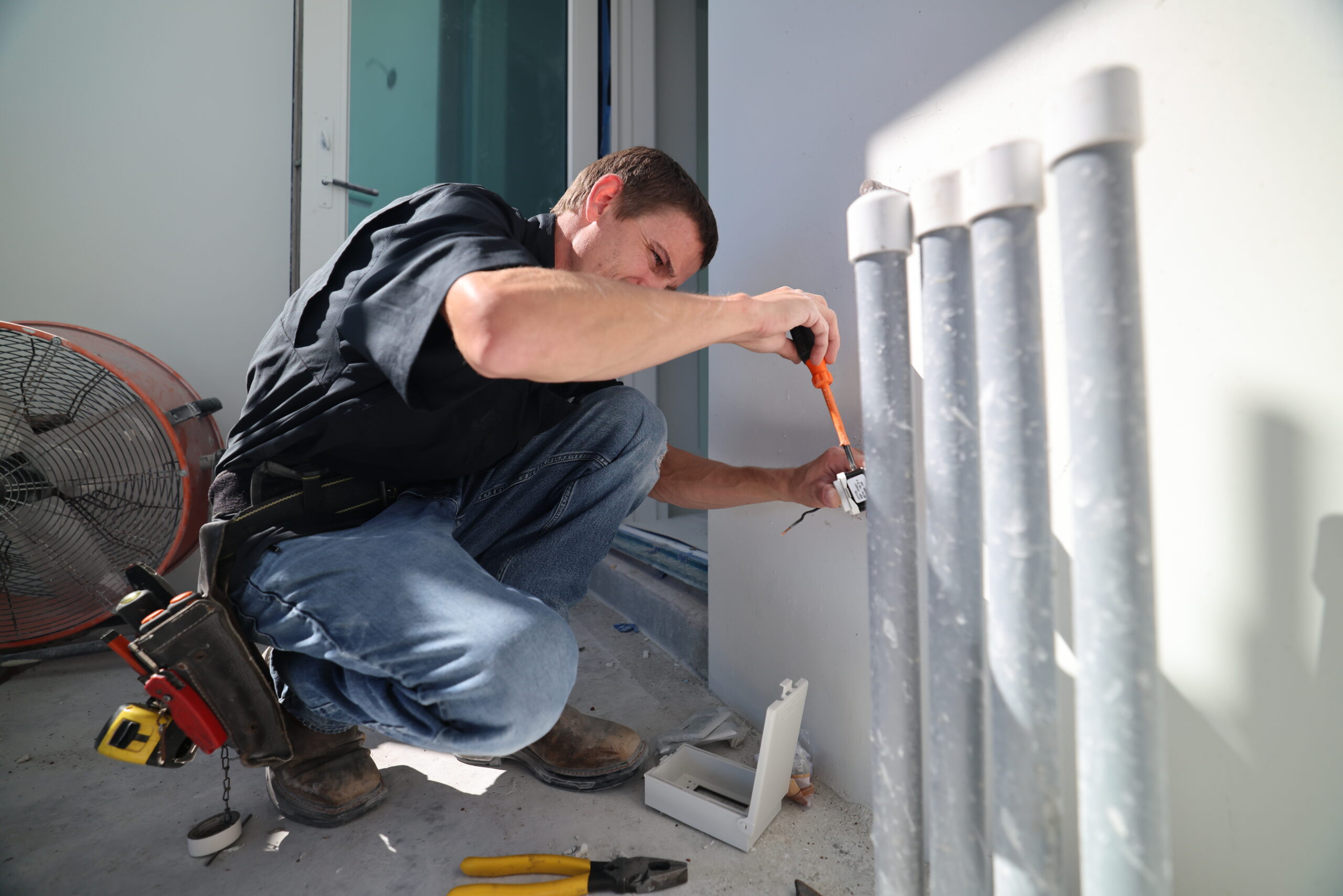
Where the Risk Comes From in an Electric Home
Why Florida Homes Still Need Carbon Monoxide Detection
Carbon monoxide is produced by incomplete combustion, so the sources in a home are anything that burns fuel. In a heating dominated climate the obvious source is a furnace, which is why homeowners moving to Florida often conclude that an all electric house has no exposure. That reasoning misses the sources that are actually common here. An attached garage puts a running engine on the other side of a shared wall. Gas ranges, gas water heaters, gas dryers, and outdoor grills used too close to an opening all contribute. So do fireplaces in the homes that have them.
The most serious risk in Southwest Florida is seasonal. After a storm knocks out power, portable generators come out, and generators are the leading cause of carbon monoxide incidents in the days following a hurricane. A generator run in a garage, under a lanai, near an open window, or too close to the house can push carbon monoxide into living space quickly and with no warning to the people inside. A working detector is the only thing that provides notice, and it matters most at exactly the time the power is out, which is why hardwired units with battery backup are the right choice here.
Detection matters in most homes here, and in a few situations it matters a great deal. An attached garage puts a running engine on the other side of a shared wall and door, which is enough to move carbon monoxide into living space even with the garage door open. Gas ranges, water heaters, dryers, and fireplaces all produce combustion byproducts, and a venting problem turns normal operation into a hazard. Any use of a portable or standby generator raises the risk substantially, and it does so during outages, which is exactly when battery only units are most likely to already be dead. And in homes with sleeping areas on more than one level, coverage has to reach each of them, since carbon monoxide does not distribute evenly through a house.
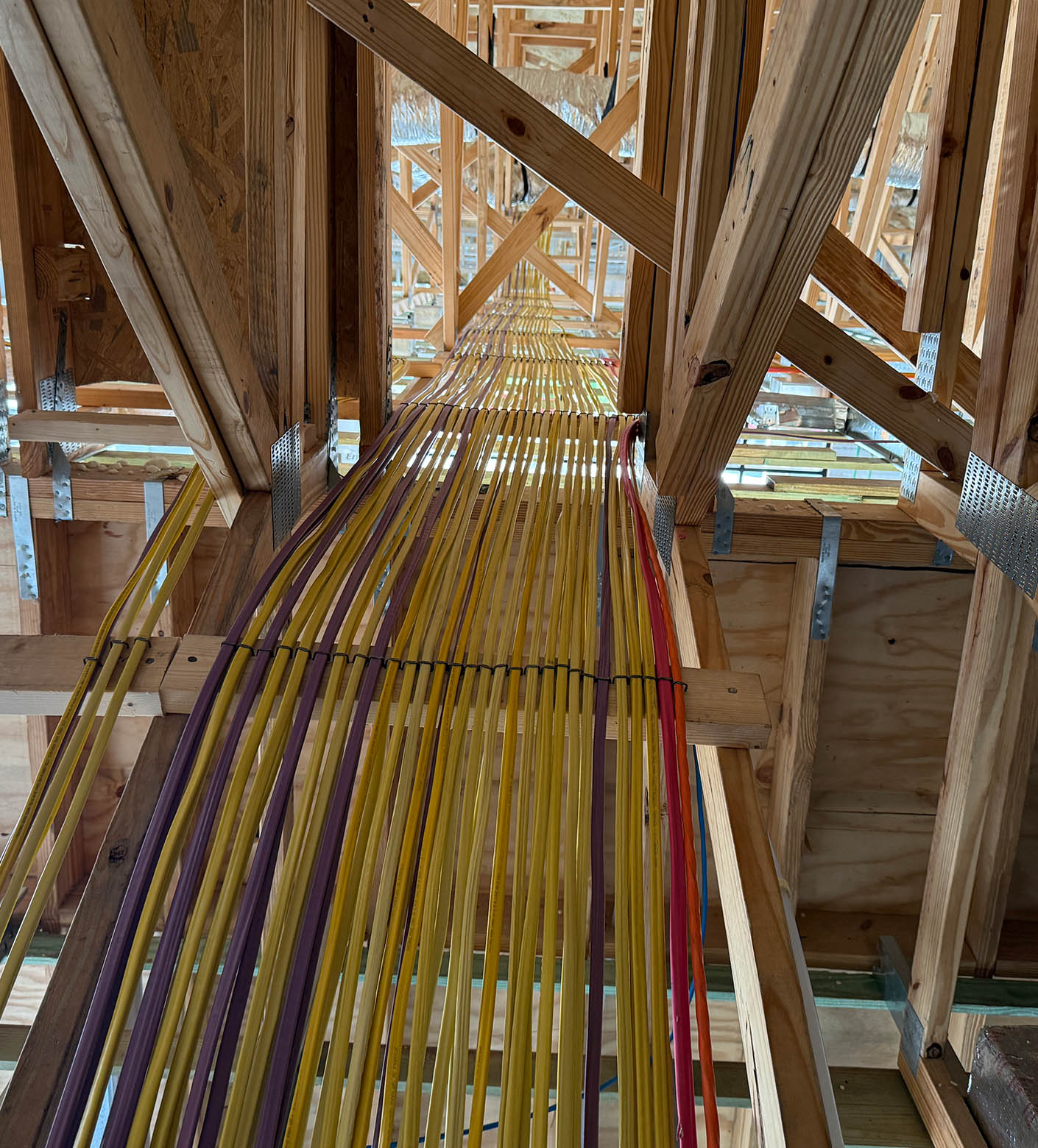
Detection Where It Will Actually Help
Carbon Monoxide Detection Services We Provide
Detection is only useful where it is placed correctly and where it will still be working during an outage. We evaluate the combustion sources, the garage configuration, the floor plan, and how a generator would realistically be used on the property, then install accordingly rather than distributing devices evenly across the ceiling.
Hardwired Carbon Monoxide Alarm Installation
Hardwired units with battery backup continue functioning during a power outage, which is exactly when generator related risk is highest. We install and interconnect them so that a detection anywhere in the home alerts everyone in it.
Combination Smoke and Carbon Monoxide Alarms
Combination units reduce the number of devices on the ceiling while covering both hazards. We install them where placement suits both functions and use separate devices where the ideal locations for each do not overlap.
Placement Evaluation and Code Compliance
Placement is determined by where the potential sources are and where people sleep. We evaluate the layout, the appliances, the garage configuration, and any generator arrangement, then install to current requirements rather than to convenience.
Detection for Generator Equipped Homes
Homes with standby or portable generators warrant particular attention to detector placement near the areas closest to where the generator operates and near sleeping areas. We also review generator placement relative to windows, doors, and lanais during the visit.
Attached Garage Protection
Where a garage shares a wall or a door with living space, detection near that boundary provides earlier warning than a device placed elsewhere in the home. This is one of the most commonly missing placements we find in existing houses.
Testing and End of Life Replacement
Carbon monoxide sensors have a shorter service life than smoke sensors, commonly in the range of five to seven years depending on the unit. We check manufacture dates, test operation, and replace expired devices rather than leaving equipment in place that is no longer sensing reliably.


Placed Where It Will Actually Help
Why Work With Mabry Brothers for Carbon Monoxide Detection?
Carbon monoxide detection is one of the few home safety systems where the placement decision is genuinely the whole job. A detector installed in the wrong location can be in a house that has a serious problem and never sound. Our electricians evaluate where combustion sources actually are, how the home is laid out, where people sleep, and how a generator would be used during an outage, and place devices accordingly.
Working both trades gives us a fuller picture than an electrical only contractor would have. Our HVAC side deals with combustion appliances and venting, so we know what to look at when a home has gas equipment. We also see the aftermath of every storm season in this region, and generator related exposure is a pattern we have watched repeat often enough to take seriously.
Kind Words From Recent Clients
Customer Reviews
EXCELLENTTrustindex verifies that the original source of the review is Google. Germayne T. was very professional, courteous, and extremely efficient replacing two ceiling fans for us. Will definitely use Mabry and Germaine again.Posted on GoogleTrustindex verifies that the original source of the review is Google. Just had a biannual service done to my AC, amazing work by Kirk, on time, professional, and efficient!!!Posted on GoogleTrustindex verifies that the original source of the review is Google. Our A/C system wasn’t cooling. Kirk was over to fix it in less than 2 hrs. Very friendly & efficient. Found 2 small leaks. Got system cooling. Went over all options & charges before proceeding. Very satisfied.Posted on GoogleTrustindex verifies that the original source of the review is Google. Amazing professional service! I had smoke detectors falsely alarming and when I called in the morning, Scott immediately had a tech rerouted to address the alarms. Germaine arrived with 15 minutes of my call. He was AWESOME! Knowledgeable, polite and so personable. 5 star🌟 . And that is what we have found with all Mabry Brothers service techs!!!!Posted on GoogleTrustindex verifies that the original source of the review is Google. I love using these guys when I need an electrician. Their prices are fair, service is always fast and on time, and they communicate really well. Today Germayne T came out to install an EV charger at our home. He was on time, worked hard trenching ~80’, and got creative to help minimize the amount of exposed PVC. His connections look great, and the charger is working perfectly. As I said, I really like working with Mabry, and I think you will too.Posted on GoogleTrustindex verifies that the original source of the review is Google. My AC randomly went out in the late afternoon and I thought it had to do with the battery on the thermostat or the filter needing to be changed but it ended up being 84 degrees in my house in the middle of the night and Kirk was able to get to me within an hour of me calling to fix my issue which happened to be the capacitor. He spotted the issue within 10 minutes, thank you so much!!!Posted on GoogleTrustindex verifies that the original source of the review is Google. Company was very responsive. Germayne was knowledgeable, efficient, and cleaned up after work. Very professional! I highly recommend Mabry Brothers for your electrical needs.Posted on GoogleTrustindex verifies that the original source of the review is Google. I was very pleased with the service call. Kirk arrived on time, was professional and knowledgeable about the problems we were having with our air conditioner. He explained in detail what was happening and the steps needed to correct them. I highly recommend Mabry Brothers.Posted on GoogleTrustindex verifies that the original source of the review is Google. We needed an outdoor low voltage circuit installed! Emailed Scott for a quote with quick turnaround and Martin showed up and did excellent install work! Can highly recommend Mabry Brothers from this first experience and will use again!Posted on GoogleTrustindex verifies that the original source of the review is Google. Troy from Mabry Brothers is extremely professional and truly knows 100% what he’s doing. He is very responsible and takes the time to explain every step of the process, including every part that needs to be replaced. After calling several different companies, nobody was able to repair my generator and I only ended up wasting money. Troy was the only one who actually solved the problem quickly, and now my generator is working perfectly just in time for the upcoming storms. I highly recommend Troy and Mabry Brothers to anyone looking for honest, knowledgeable, and reliable service.
Communities We Install Carbon Monoxide Detectors For
Detector Installations Across Southwest Florida
Exposure risk varies more than most homeowners expect across our service area, driven mostly by gas appliance prevalence, garage configuration, and how heavily a community relies on generators during outages.
Fort Myers
Fort Myers has the widest mix of housing and the widest mix of risk. Older homes with attached garages and gas water heaters are common, and many of them have no carbon monoxide detection at all because none was required when they were built. Fort Myers also experiences significant outage duration after major storms, which puts portable generators in use across large parts of the city at once.
Estero
Estero homes generally have attached garages and were built recently enough that detection is often present, but frequently not in the right locations and frequently past sensor life. Outdoor kitchens with gas appliances have become extremely common in Estero communities, which adds a source close to lanai and living space openings that did not exist in the original design.
Bonita Springs
Bonita Springs sees heavy generator use during outages, both portable and standby, particularly in the eastern communities. Detection placement relative to where a generator is actually set up is the conversation we have most often here, since a generator positioned near a lanai or a bedroom window creates exposure that no amount of detection at the far end of the house will catch in time.
Naples
Naples properties are more likely than anywhere else in our service area to have gas appliances, outdoor kitchens, fireplaces, and standby generators, sometimes all on the same property. Coverage has to extend across the main residence, any guest structure, and every sleeping area, and the size of these homes means a single centrally placed device is not adequate.
Sanibel Island
Sanibel relies heavily on generators during and after storm events, and outage duration on the island can be considerably longer than on the mainland. That makes hardwired detection with battery backup particularly important here. Elevated home configurations also require thought about where a generator ends up being run and where the living space sits relative to it.
Captiva Island
Captiva sees the longest outage exposure in our service area and the highest proportion of homes that are unoccupied when storms hit, then reoccupied while generators are still running. For island properties we recommend detection on every level, battery backup on every device, and a check of sensor expiration dates as part of pre season preparation rather than after an outage has already started.
Carbon Monoxide Questions We Hear Often
Frequently Asked Carbon Monoxide Detector Questions
My home is all electric. Do I still need a carbon monoxide detector?
In most cases yes. An attached garage, an outdoor grill or kitchen near an opening, and any use of a portable generator all produce carbon monoxide regardless of whether the home has gas appliances. Generator use after storms is the most significant exposure in this region, and it applies to all electric homes equally.
Where should carbon monoxide detectors be placed?
Placement is driven by potential sources and by where people sleep. That generally means near sleeping areas, on each level of the home, and near any boundary with an attached garage. We evaluate the specific layout during the visit rather than applying a uniform pattern, because the right locations differ house to house.
How long do carbon monoxide detectors last?
The sensors typically last five to seven years depending on the unit, which is shorter than a smoke alarm's ten year life. Many units signal end of life, but not all do it clearly. Checking the manufacture date is the reliable method, and combination units expire on the shorter of the two sensor lives.
What should I do if my carbon monoxide alarm sounds?
Get everyone out of the house into fresh air first, then call 911 from outside. Do not spend time trying to identify the source or ventilate the home while people are still inside. Once the situation has been evaluated by emergency responders, we can help identify and correct an electrical or appliance related cause.
How far from the house should I run a portable generator?
Well away from the structure and never inside a garage, under a lanai, or near a window, door, or vent, even with the garage door open. Generator exhaust reaches living space far more easily than most people expect. Follow the manufacturer's distance guidance, and treat detection inside the home as a backup rather than as the primary safeguard.
Serving Fort Myers, Estero, Bonita Springs, Naples, and the Islands
Schedule Your Carbon Monoxide Detector Installation
Detection is inexpensive, quick to install, and matters most during the exact conditions Southwest Florida sees every storm season. Fill out the form below and a member of our team will reach out. For immediate assistance, please call our office directly at (239) 482-1122.

Ensure your air conditioning system is running efficiently with help from our NATE certified technicians.

We specialize in the service, repair, and installation of residential & commercial electrical systems.