
What Does It Mean When an Electrical Outlet Feels Hot?
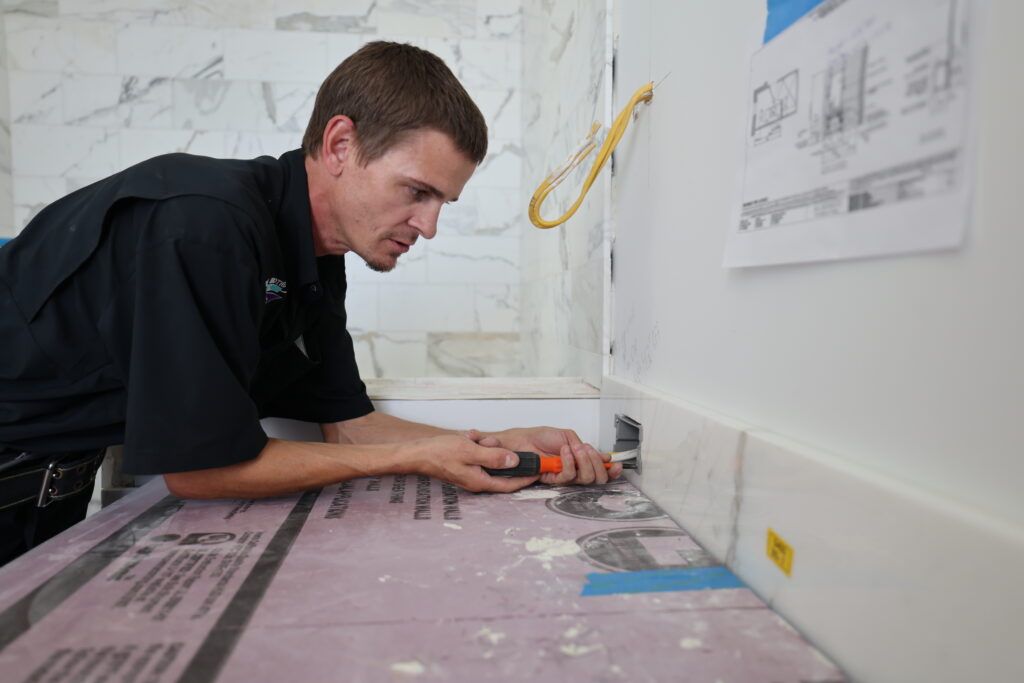
A properly functioning electrical outlet should be cool or at most slightly warm to the touch during light use. An outlet that feels noticeably warm, hot, or uncomfortable to touch is a sign that something within the outlet, its wiring connections, or the broader circuit is generating more heat than the system was designed to produce.
Heat is one of electricity’s most reliable warning signals. When electrical resistance increases at a connection point, at a worn component, or along a segment of wiring, the energy that would otherwise flow to your devices is instead converted into heat. Left unaddressed, this heat damages insulation, degrades connections further, and in worst-case scenarios can ignite materials inside your walls.
Understanding Why Outlets Generate Heat
Electrical resistance is present to some degree in every conductor, component, and connection in your home’s electrical system. Well-designed and properly maintained systems keep this resistance at levels where heat generation is negligible. When resistance increases — whether due to a loose connection, a worn outlet, damaged wiring, or a circuit carrying more current than it was designed for — the heat generated at that point increases proportionally. The outlet face plate absorbs some of this heat, which is the warmth you feel when you touch the outlet.
The concerning aspect of this is that by the time an outlet is noticeably warm to the touch, it has already been generating excess heat for some time. The components and wiring behind the outlet face may have been exposed to elevated temperatures through multiple heating cycles before the condition became perceptible externally.
Common Causes of Warm Outlets
Overloaded Circuits
Every electrical circuit is rated for a specific maximum current, typically 15 or 20 amperes for most residential circuits. When the total load connected to a circuit consistently pushes toward or beyond that limit, the wiring and outlet connections carry more current than they were designed for. This generates heat at every connection point along the circuit, including the outlets themselves. This is an increasingly common issue in Southwest Florida homes as homeowners add more devices to existing circuits.
Loose Wiring Connections
Connections behind an outlet can loosen over time due to thermal cycling. Every time current flows through the connection, it generates a small amount of heat. Metal expands when heated and contracts when it cools. Over thousands of cycles, this movement can cause terminal screws to gradually lose their grip on the wire. As a connection loosens, electrical resistance at that point increases. A loose connection can eventually produce arcing, which is among the leading causes of residential electrical fires.
Aging or Deteriorated Outlets
Outlets have a finite service life. The internal contact springs that grip plug prongs fatigue over time. As these contacts weaken, they no longer maintain firm pressure against plug prongs, increasing the resistance of the connection. An outlet with degraded internal contacts may feel warm even under modest loads that would not affect a new outlet. Outlets that are 20, 30, or 40 years old are common in established neighborhoods throughout Fort Myers, Cape Coral, and Naples.
Incorrect Wiring
Outlets that were wired incorrectly at installation or during a previous repair can carry current in ways that generate excessive heat. Reversed hot and neutral connections, undersized wire gauges, and improper use of push-in connectors can all contribute to resistance and heat generation. This type of issue is frequently discovered during Mabry Brothers electrical inspections in homes that have had previous DIY electrical work.
Faulty Devices
An appliance with damaged internal wiring, a failing motor, or compromised insulation can draw irregular or excessive current in ways that generate heat at the outlet connection. If an outlet is warm only when one specific appliance is plugged in and cool with other devices, the appliance itself may be contributing to the problem.
Why Southwest Florida Homes Are Particularly Vulnerable
Older Home Stock in Fort Myers and Naples
A significant portion of the housing stock throughout Fort Myers, Cape Coral, and Naples was built during the 1960s through the 1980s. Electrical systems in these homes were designed for a fraction of the electrical load that a modern household generates. Many of these homes have had outlets replaced piecemeal without addressing the underlying wiring or circuit capacity.
Thermal Cycling in Florida’s Climate
Southwest Florida’s climate creates more aggressive thermal cycling conditions than most parts of the country. The combination of intense summer heat — particularly in attic spaces where temperatures can exceed 140 degrees Fahrenheit — and the cooling effect of air conditioning running continuously creates repeated expansion and contraction cycles in electrical components throughout the home. Over years, this cycling loosens connections and accelerates component wear.
Salt Air and Humidity on Coastal Properties
Properties on Sanibel Island, Captiva Island, and coastal communities throughout Lee and Collier counties experience salt air exposure that accelerates corrosion of metal electrical components. Corroded terminal screws, oxidized wire ends, and degraded internal outlet contacts all increase electrical resistance and heat generation.
Post-Storm Conditions
Major storm events including Hurricane Ian left many homes with electrical systems that experienced flooding. Wiring insulation that absorbed water, outlet boxes that were submerged, and terminal connections exposed to contaminated floodwater may all harbor damage that manifests as elevated heat generation during operation.

What Homeowners Can Safely Check
Compare the temperature of the warm outlet to outlets in other parts of the home. An outlet that remains warm even when nothing is connected to it is generating heat from within and is more concerning than an outlet that warms only when a high-draw device is in use. Check for associated symptoms including flickering lights, tripping breakers, or burning smells. If a warm outlet is in a bathroom, kitchen, garage, or outdoor area, confirm it has GFCI protection. If an outlet is warm, stop using it for high-draw appliances until it has been evaluated.
When a Warm Outlet Becomes a Safety Concern
When to Call Mabry Brothers
Mabry Brothers provides electrical inspection, repair, and upgrade services for homeowners throughout Fort Myers, Estero, Bonita Springs, Naples, Sanibel Island, Captiva Island, and the surrounding Southwest Florida area. Warm outlets often occur alongside other early warning signs of electrical wiring problems and are frequently connected to the same root causes that drive circuit breakers to keep tripping. A comprehensive evaluation of your home’s electrical system is often the most effective approach.
Recent Customer Reviews
EXCELLENTTrustindex verifies that the original source of the review is Google. Germayne T. was very professional, courteous, and extremely efficient replacing two ceiling fans for us. Will definitely use Mabry and Germaine again.Posted on GoogleTrustindex verifies that the original source of the review is Google. Just had a biannual service done to my AC, amazing work by Kirk, on time, professional, and efficient!!!Posted on GoogleTrustindex verifies that the original source of the review is Google. Our A/C system wasn’t cooling. Kirk was over to fix it in less than 2 hrs. Very friendly & efficient. Found 2 small leaks. Got system cooling. Went over all options & charges before proceeding. Very satisfied.Posted on GoogleTrustindex verifies that the original source of the review is Google. Amazing professional service! I had smoke detectors falsely alarming and when I called in the morning, Scott immediately had a tech rerouted to address the alarms. Germaine arrived with 15 minutes of my call. He was AWESOME! Knowledgeable, polite and so personable. 5 star🌟 . And that is what we have found with all Mabry Brothers service techs!!!!Posted on GoogleTrustindex verifies that the original source of the review is Google. I love using these guys when I need an electrician. Their prices are fair, service is always fast and on time, and they communicate really well. Today Germayne T came out to install an EV charger at our home. He was on time, worked hard trenching ~80’, and got creative to help minimize the amount of exposed PVC. His connections look great, and the charger is working perfectly. As I said, I really like working with Mabry, and I think you will too.Posted on GoogleTrustindex verifies that the original source of the review is Google. My AC randomly went out in the late afternoon and I thought it had to do with the battery on the thermostat or the filter needing to be changed but it ended up being 84 degrees in my house in the middle of the night and Kirk was able to get to me within an hour of me calling to fix my issue which happened to be the capacitor. He spotted the issue within 10 minutes, thank you so much!!!Posted on GoogleTrustindex verifies that the original source of the review is Google. Company was very responsive. Germayne was knowledgeable, efficient, and cleaned up after work. Very professional! I highly recommend Mabry Brothers for your electrical needs.Posted on GoogleTrustindex verifies that the original source of the review is Google. I was very pleased with the service call. Kirk arrived on time, was professional and knowledgeable about the problems we were having with our air conditioner. He explained in detail what was happening and the steps needed to correct them. I highly recommend Mabry Brothers.Posted on GoogleTrustindex verifies that the original source of the review is Google. We needed an outdoor low voltage circuit installed! Emailed Scott for a quote with quick turnaround and Martin showed up and did excellent install work! Can highly recommend Mabry Brothers from this first experience and will use again!Posted on GoogleTrustindex verifies that the original source of the review is Google. Troy from Mabry Brothers is extremely professional and truly knows 100% what he’s doing. He is very responsible and takes the time to explain every step of the process, including every part that needs to be replaced. After calling several different companies, nobody was able to repair my generator and I only ended up wasting money. Troy was the only one who actually solved the problem quickly, and now my generator is working perfectly just in time for the upcoming storms. I highly recommend Troy and Mabry Brothers to anyone looking for honest, knowledgeable, and reliable service.
Frequently Asked Questions
Need Service in Southwest Florida?
The licensed electricians and HVAC technicians at Mabry Brothers have served Fort Myers, Estero, Bonita Springs, Naples, Sanibel Island, and Captiva Island since 1995.
Call (239) 482-1122. or complete the form below to schedule service today.

