
How Much Does EV Charger Installation Involve and What Affects the Scope?
When homeowners call our office about EV charger installation, one of the first things we explain is that the scope of the project varies considerably depending on the home. A straightforward installation in a newer Estero home with a 200-amp panel located in the garage, 20 feet from the parking stall, looks very different from the same project in an older Fort Myers home with a 100-amp panel located inside the home, requiring a circuit run through finished walls to a garage on the other side of the house.
Before any estimate can be accurate, we need to see the home. That site visit is where we determine what the project actually involves, and it is the foundation of every written estimate we provide.
What Is Always Included in an EV Charger Installation
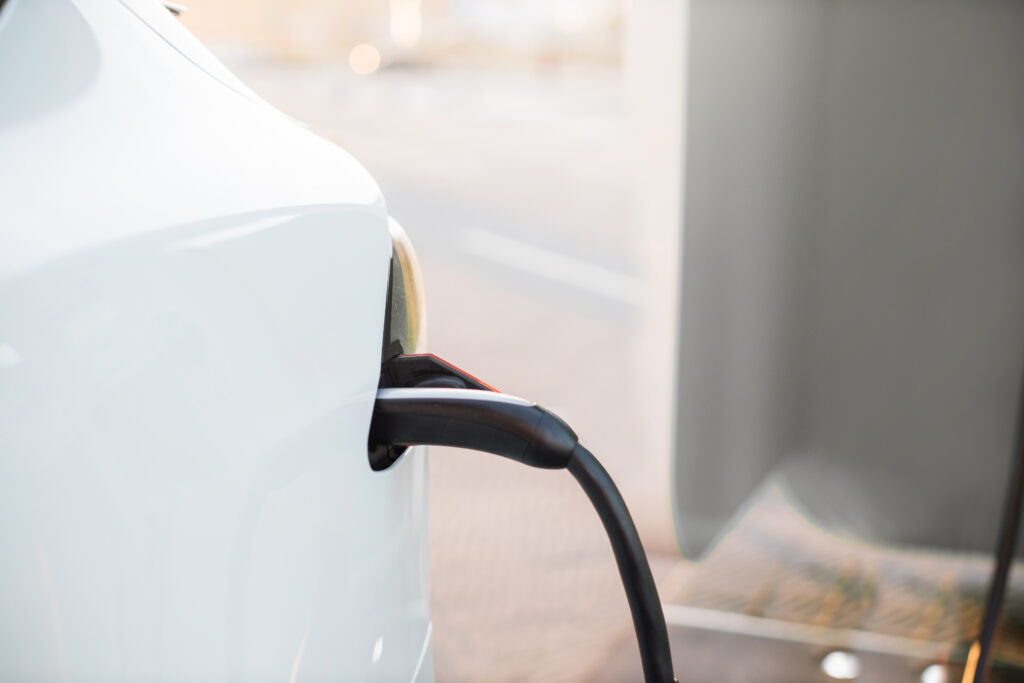
Regardless of where your home is or what vehicle you drive, every Level 2 EV charger installation we complete includes the same core elements: a dedicated 240-volt circuit run from the electrical panel to the charging location, a properly sized two-pole breaker installed in the panel, wire run in conduit or through walls as required to meet code and protect the conductors, the outlet or hardwired connection at the charging point, and the permit application and county inspection process. Documentation of the completed permitted installation is provided for your records.
Factors That Expand the Scope
Distance Between the Panel and the Parking Location
The longer the circuit run, the more wire and conduit are involved and the more labor the installation requires. A garage in Cape Coral or Bonita Springs where the panel is in the garage itself and the parking stall is 15 feet away is a very short run. A home in Pelican Bay or Park Shore in Naples where the panel is in a utility closet inside the home and the vehicle parks in a detached garage across the courtyard is a much longer and more complex run. Both are installations we do regularly. The scope is just different.
Routing Through Finished Spaces
When the circuit needs to pass through finished walls, ceilings, or floors rather than through an open garage space, the installation involves more labor to route the circuit without damaging or creating visible disruption to finishes. In the luxury homes throughout Quail West, Mediterra, and Port Royal, where finishes are high-end and aesthetics matter, this routing work is an important part of what we plan during the site visit.
Underground Runs for Detached Garages
Homes with detached garages, a common configuration in older neighborhoods in Fort Myers and in many custom properties throughout Sanibel Island, Captiva, and rural sections of Lee County, require an underground conduit run between the house and the garage. This involves trenching, which adds meaningful scope to the project. The result is a clean, code-compliant installation but it is more involved than a garage-attached scenario.
Charger Amperage and Vehicle Requirements
Higher-amperage circuits require heavier gauge wire, which affects material costs and installation labor. A 40-amp circuit for a Nissan Ariya or Volkswagen ID.4 is less material-intensive than a 60-amp circuit for a Tesla Model 3 Long Range, Chevrolet Bolt, or Hyundai IONIQ 5, which in turn is less involved than an 80-amp circuit for a Ford F-150 Lightning or Lucid Air. The vehicle you drive shapes the circuit specification and the overall installation scope.
When a Panel Upgrade Becomes Part of the Project
Panel upgrades in conjunction with EV charger installations are most common in older neighborhoods across Cape Coral, Lehigh Acres, North Fort Myers, and established sections of Fort Myers. They are less common but still occur in older properties on Sanibel and Captiva where original electrical services have not kept pace with modernization.

Installation Scope by Vehicle Type
The vehicle you drive has a direct bearing on the installation we recommend.
For a Nissan LEAF, Mini Cooper SE, or Mazda MX-30, which have lower onboard charger ratings, a 32-amp circuit is typically sufficient and the installation scope is at the simpler end of the range.
For a Tesla Model 3 Standard Range, the onboard charger accepts a maximum of about 32 amps, making a 40-amp circuit the practical recommendation. For the Model 3 Long Range or Performance, the full 48-amp circuit is worthwhile. For the Model Y, same logic applies by trim level.
For a Chevrolet Bolt EV or Bolt EUV, a 48-amp circuit maximizes the vehicle’s 11.5 kW onboard charger. For a Rivian R1T or R1S, a 48-amp circuit uses the vehicle’s Level 2 capability effectively. For a Ford F-150 Lightning or Lucid Air, the ideal home setup involves an 80-amp circuit to approach the vehicle’s maximum home charging rate, which requires a panel with sufficient capacity for that load.
For Hyundai IONIQ 5, IONIQ 6, and Kia EV6 owners, a 48-amp circuit is the right match for these vehicles’ 10.5 to 10.9 kW onboard chargers. Audi Q4 e-tron, BMW iX3, and Volvo XC40 Recharge drivers are well-served by a 48-amp circuit. Mercedes EQB and EQC owners are matched appropriately by a 40-amp circuit given those vehicles’ 9.6 kW onboard chargers.
What the Process Looks Like From Start to Finish
If a panel upgrade is part of the project, the timeline extends slightly to account for the larger scope of work, but we manage the whole process so you are not coordinating between separate contractors or separate permit applications. Call us at (239) 482-1122 or use the form below to get started.
Recent Customer Reviews
EXCELLENTTrustindex verifies that the original source of the review is Google. Germayne T. was very professional, courteous, and extremely efficient replacing two ceiling fans for us. Will definitely use Mabry and Germaine again.Posted on GoogleTrustindex verifies that the original source of the review is Google. Just had a biannual service done to my AC, amazing work by Kirk, on time, professional, and efficient!!!Posted on GoogleTrustindex verifies that the original source of the review is Google. Our A/C system wasn’t cooling. Kirk was over to fix it in less than 2 hrs. Very friendly & efficient. Found 2 small leaks. Got system cooling. Went over all options & charges before proceeding. Very satisfied.Posted on GoogleTrustindex verifies that the original source of the review is Google. Amazing professional service! I had smoke detectors falsely alarming and when I called in the morning, Scott immediately had a tech rerouted to address the alarms. Germaine arrived with 15 minutes of my call. He was AWESOME! Knowledgeable, polite and so personable. 5 star🌟 . And that is what we have found with all Mabry Brothers service techs!!!!Posted on GoogleTrustindex verifies that the original source of the review is Google. I love using these guys when I need an electrician. Their prices are fair, service is always fast and on time, and they communicate really well. Today Germayne T came out to install an EV charger at our home. He was on time, worked hard trenching ~80’, and got creative to help minimize the amount of exposed PVC. His connections look great, and the charger is working perfectly. As I said, I really like working with Mabry, and I think you will too.Posted on GoogleTrustindex verifies that the original source of the review is Google. My AC randomly went out in the late afternoon and I thought it had to do with the battery on the thermostat or the filter needing to be changed but it ended up being 84 degrees in my house in the middle of the night and Kirk was able to get to me within an hour of me calling to fix my issue which happened to be the capacitor. He spotted the issue within 10 minutes, thank you so much!!!Posted on GoogleTrustindex verifies that the original source of the review is Google. Company was very responsive. Germayne was knowledgeable, efficient, and cleaned up after work. Very professional! I highly recommend Mabry Brothers for your electrical needs.Posted on GoogleTrustindex verifies that the original source of the review is Google. I was very pleased with the service call. Kirk arrived on time, was professional and knowledgeable about the problems we were having with our air conditioner. He explained in detail what was happening and the steps needed to correct them. I highly recommend Mabry Brothers.Posted on GoogleTrustindex verifies that the original source of the review is Google. We needed an outdoor low voltage circuit installed! Emailed Scott for a quote with quick turnaround and Martin showed up and did excellent install work! Can highly recommend Mabry Brothers from this first experience and will use again!Posted on GoogleTrustindex verifies that the original source of the review is Google. Troy from Mabry Brothers is extremely professional and truly knows 100% what he’s doing. He is very responsible and takes the time to explain every step of the process, including every part that needs to be replaced. After calling several different companies, nobody was able to repair my generator and I only ended up wasting money. Troy was the only one who actually solved the problem quickly, and now my generator is working perfectly just in time for the upcoming storms. I highly recommend Troy and Mabry Brothers to anyone looking for honest, knowledgeable, and reliable service.
Frequently Asked Questions
Need Service in Southwest Florida?
The licensed electricians and HVAC technicians at Mabry Brothers have served Fort Myers, Estero, Bonita Springs, Naples, Sanibel Island, and Captiva Island since 1995.
For immediate assistance, please call our office directly at (239) 482-1122.

