- 5731 Halifax Ave Fort Myers, FL 33912
- (239) 482-1122

Charging at Home, Done Correctly
EV Charger Installation for Fort Myers Homes
Home charging is the main reason electric vehicle ownership works, and it only works well when the circuit behind it was designed for the job. A Level 2 charger is a large continuous load, which makes it different from almost anything else you plug in and means it needs to be treated accordingly.
Our licensed electricians install home EV charging equipment throughout Fort Myers, Estero, Bonita Springs, Naples, Sanibel Island, and Captiva Island. Every installation starts with a load calculation, because the real question is rarely where to mount the charger. It is whether your service has the capacity to support it.
Sometimes the answer is straightforward and the install takes an afternoon. Sometimes the panel needs addressed first, or a load management device makes more sense than a full service upgrade. We will tell you which situation you are in before you buy equipment.
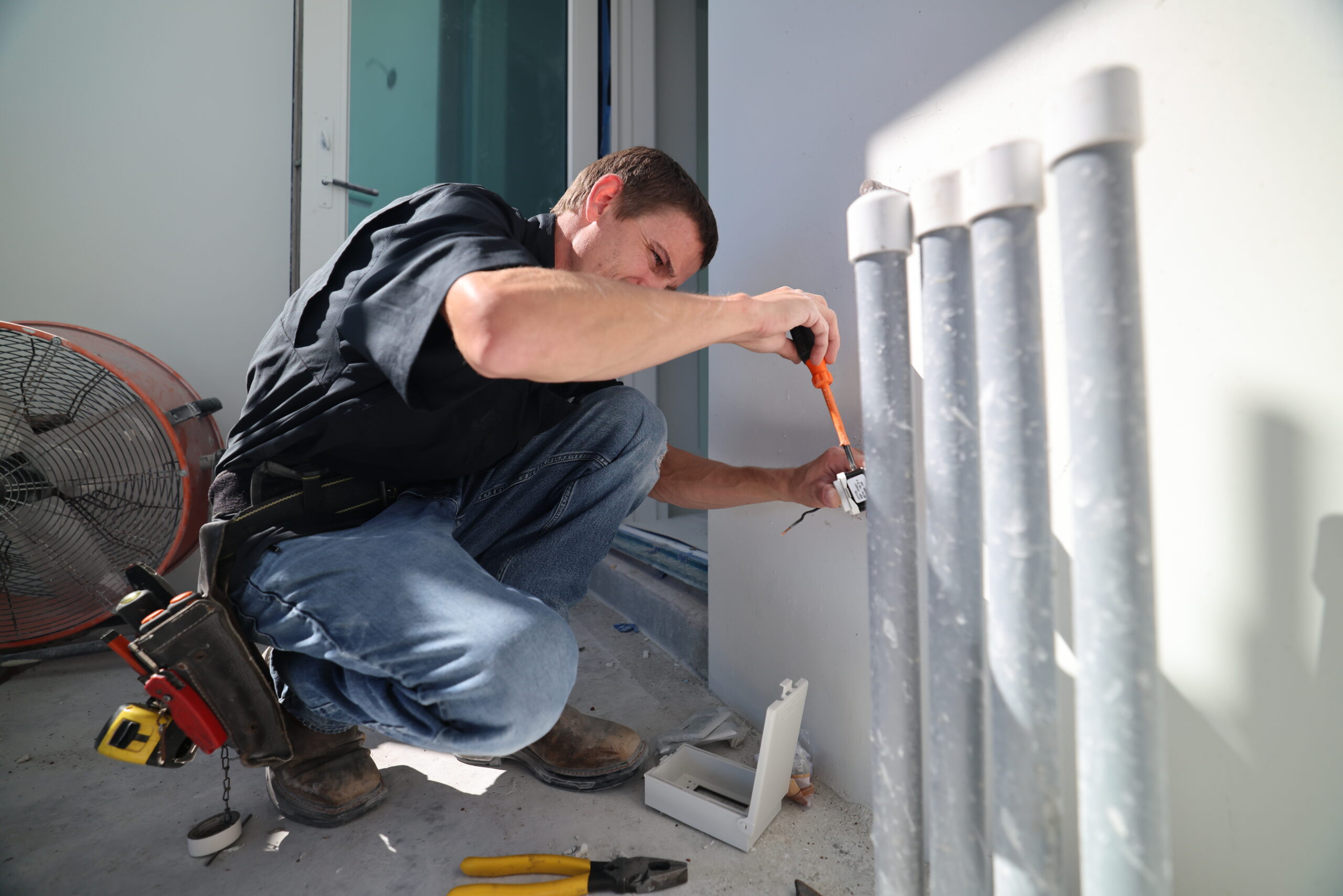
Capacity Is the Real Question
What to Know Before Installing a Home EV Charger
A Level 2 charger runs on a 240 volt circuit and draws steadily for hours at a time. Because it is a continuous load, the circuit and breaker have to be sized above the charger’s actual draw, and that capacity has to come from somewhere in a service that is already supporting an air conditioning system, a water heater, a range, and in many Southwest Florida homes a pool pump and heater as well. This is why two identical chargers can be a simple install at one address and a service upgrade at another.
A proper load calculation answers the question honestly. It accounts for your home’s existing connected load and the charger you want to add, and it produces a real answer rather than an educated guess. If the calculation shows insufficient capacity, there are usually two paths: upgrade the service, or install a load management device that prevents the charger and other large loads from running at full draw simultaneously. Load management is frequently the less expensive option and it is genuinely appropriate in many homes, particularly where charging happens overnight anyway.
A handful of factors determine what your installation actually involves. Available service capacity is the largest one, since a home on a 100 amp service already running central air and a pool has very different options than a newer home with headroom to spare. The distance between the panel and where you park affects conductor sizing, so a charger on the far side of a detached garage costs more to feed properly than one on the wall opposite the panel. Charging speed is limited by whichever is lower, the circuit or the vehicle’s onboard charger, which means installing a larger circuit than the car can use adds cost without adding speed. And if a second electric vehicle is likely within a few years, planning capacity for it now is considerably cheaper than revisiting the panel later.
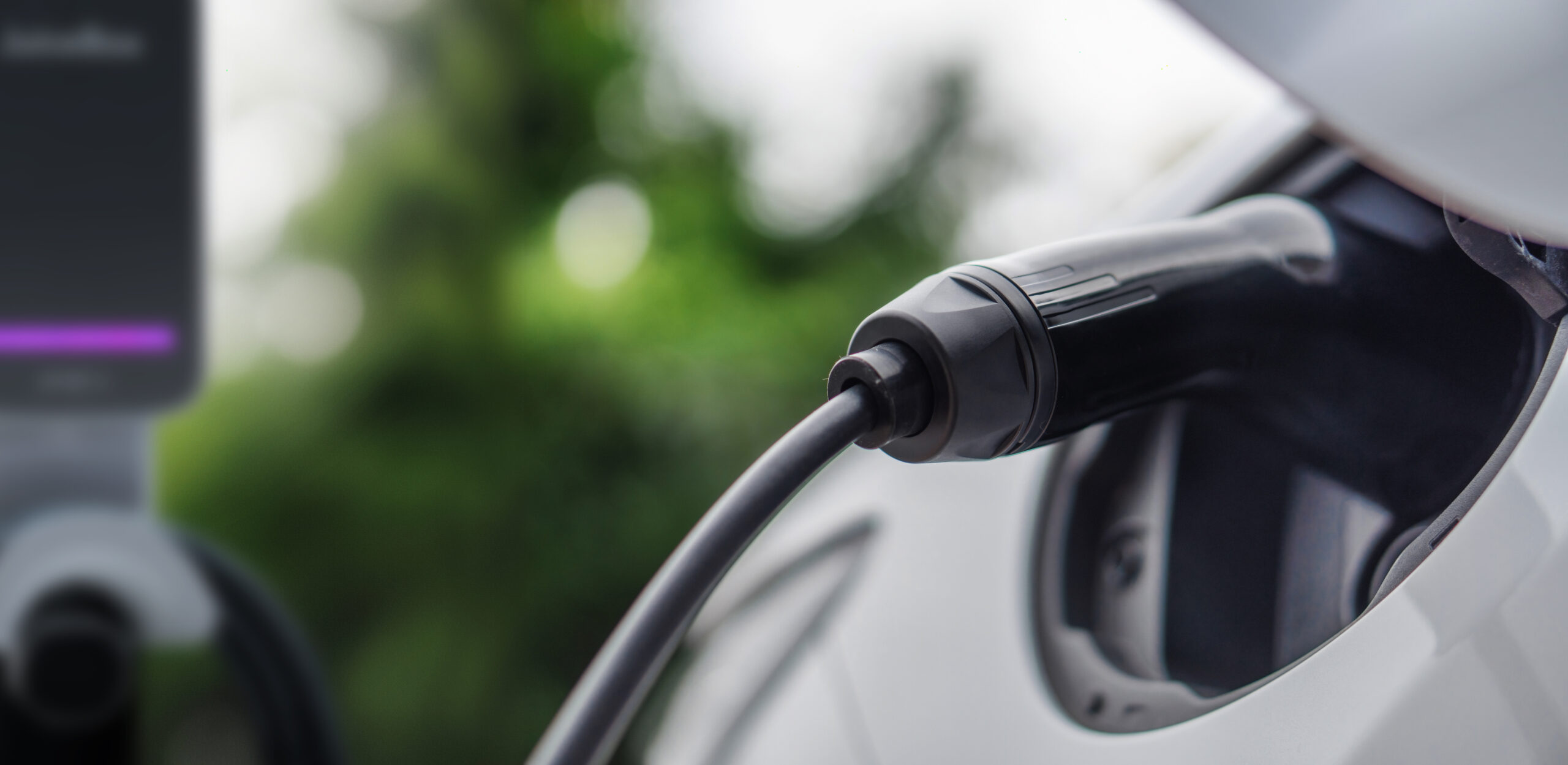
Evaluated, Installed, and Inspected
EV Charging Services We Provide
From the load evaluation through the final inspection, we handle the full installation. Every EV charging circuit in Lee and Collier County requires a permit and an inspection, and we pull it and meet the inspector rather than leaving that to you. The services below cover both the straightforward installations and the ones where capacity has to be addressed first.
Level 2 Charger Installation
We install hardwired and receptacle fed Level 2 chargers on properly sized dedicated circuits, with the breaker and conductors rated for continuous duty. Installation includes mounting, circuit installation, permitting, and inspection coordination.
Load Calculations and Capacity Evaluation
Before anything is installed, we calculate whether your service supports the charger you want. The calculation accounts for your existing loads and your intended charging amperage, and it tells you plainly whether you need a panel upgrade, a load management device, or neither.
Panel Upgrades for EV Charging
Where capacity is genuinely the constraint, we handle the panel replacement or service upgrade as part of the same project. Doing both together avoids paying twice for permitting, coordination, and a second mobilization.
Load Management Device Installation
Load management hardware allows a charger to share capacity with other large loads rather than requiring dedicated headroom for all of them at once. In many homes this eliminates the need for a service upgrade entirely, and it is well suited to overnight charging patterns.
Detached Garage and Long Run Installations
Charging away from the main structure requires correctly sized conductors for the distance, proper burial or conduit methods, and often a sub panel at the destination. We handle detached garage, carport, and porte cochere installations throughout our service area.
Multiple Vehicle and Future Ready Installations
Households with two EVs, or planning for a second, benefit from capacity planned once rather than twice. We can install two circuits, a shared load managed pair, or a single circuit with the panel capacity reserved for the second.
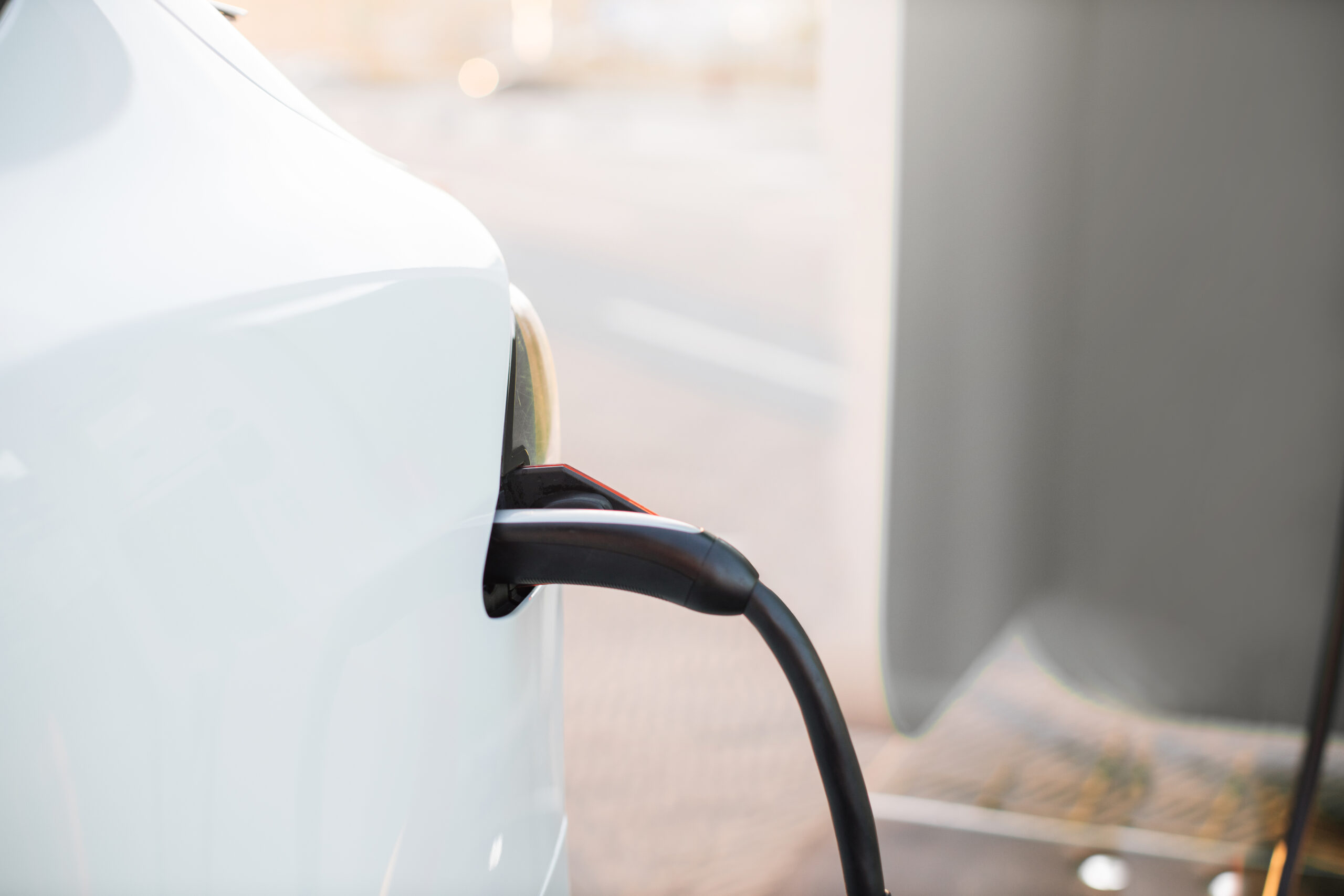

Calculated, Permitted, Inspected
Why Work With Mabry Brothers for EV Charger Installation?
EV charging installations are the fastest growing category of electrical work in this market, and that growth has attracted a lot of people willing to run a circuit without doing the arithmetic first. A charger installed on a service that cannot really support it does not fail dramatically. It nuisance trips, it strains equipment, and it produces a homeowner who thinks their car is the problem. We start with the load calculation because that is the part that determines whether everything after it works.
We have also been wiring new construction in Southwest Florida since 1995, which shapes how we think about capacity. If you are building or renovating, provisioning for EV charging during rough in costs a fraction of adding it afterward, even if you are not buying the vehicle for another three years. It is one of the easiest future proofing decisions available during construction and one of the most commonly skipped.
Kind Words From Recent Clients
Customer Reviews
EXCELLENTTrustindex verifies that the original source of the review is Google. Germayne T. was very professional, courteous, and extremely efficient replacing two ceiling fans for us. Will definitely use Mabry and Germaine again.Posted on GoogleTrustindex verifies that the original source of the review is Google. Just had a biannual service done to my AC, amazing work by Kirk, on time, professional, and efficient!!!Posted on GoogleTrustindex verifies that the original source of the review is Google. Our A/C system wasn’t cooling. Kirk was over to fix it in less than 2 hrs. Very friendly & efficient. Found 2 small leaks. Got system cooling. Went over all options & charges before proceeding. Very satisfied.Posted on GoogleTrustindex verifies that the original source of the review is Google. Amazing professional service! I had smoke detectors falsely alarming and when I called in the morning, Scott immediately had a tech rerouted to address the alarms. Germaine arrived with 15 minutes of my call. He was AWESOME! Knowledgeable, polite and so personable. 5 star🌟 . And that is what we have found with all Mabry Brothers service techs!!!!Posted on GoogleTrustindex verifies that the original source of the review is Google. I love using these guys when I need an electrician. Their prices are fair, service is always fast and on time, and they communicate really well. Today Germayne T came out to install an EV charger at our home. He was on time, worked hard trenching ~80’, and got creative to help minimize the amount of exposed PVC. His connections look great, and the charger is working perfectly. As I said, I really like working with Mabry, and I think you will too.Posted on GoogleTrustindex verifies that the original source of the review is Google. My AC randomly went out in the late afternoon and I thought it had to do with the battery on the thermostat or the filter needing to be changed but it ended up being 84 degrees in my house in the middle of the night and Kirk was able to get to me within an hour of me calling to fix my issue which happened to be the capacitor. He spotted the issue within 10 minutes, thank you so much!!!Posted on GoogleTrustindex verifies that the original source of the review is Google. Company was very responsive. Germayne was knowledgeable, efficient, and cleaned up after work. Very professional! I highly recommend Mabry Brothers for your electrical needs.Posted on GoogleTrustindex verifies that the original source of the review is Google. I was very pleased with the service call. Kirk arrived on time, was professional and knowledgeable about the problems we were having with our air conditioner. He explained in detail what was happening and the steps needed to correct them. I highly recommend Mabry Brothers.Posted on GoogleTrustindex verifies that the original source of the review is Google. We needed an outdoor low voltage circuit installed! Emailed Scott for a quote with quick turnaround and Martin showed up and did excellent install work! Can highly recommend Mabry Brothers from this first experience and will use again!Posted on GoogleTrustindex verifies that the original source of the review is Google. Troy from Mabry Brothers is extremely professional and truly knows 100% what he’s doing. He is very responsible and takes the time to explain every step of the process, including every part that needs to be replaced. After calling several different companies, nobody was able to repair my generator and I only ended up wasting money. Troy was the only one who actually solved the problem quickly, and now my generator is working perfectly just in time for the upcoming storms. I highly recommend Troy and Mabry Brothers to anyone looking for honest, knowledgeable, and reliable service.
EV Charging Installations Across Southwest Florida
Communities We Install EV Chargers For
EV charging installations look different across our service area, mostly because service capacity, garage configuration, and parking arrangements vary so much between communities.
Fort Myers
Fort Myers has the widest range of outcomes on EV installations, and it comes down to the age of the service. In the older neighborhoods, a charger request frequently turns into a panel conversation, since a home on an original 100 amp service with central air and a pool has very little headroom. In newer sections of the city, most installations proceed straightforwardly on the existing service, often on the garage wall directly opposite the panel.
Estero
Estero has become one of our busiest markets for EV charging. Homes here are new enough to have modern panels and attached garages, which makes for clean installations, but many were built before charging was a design consideration, so the capacity has to be verified rather than assumed. Second vehicle installations are increasingly common in Estero, which is why we recommend planning capacity for two even when only one is being installed today.
Bonita Springs
Bonita Springs splits along the same lines as most of its electrical work. In the newer eastern communities, installations are typically direct and the panel supports them. Closer to Old 41 and the beach, older services frequently need addressed first, and load management is often the practical answer for homeowners who do not want a full service upgrade to charge one vehicle overnight.
Naples
Naples installations are usually the most involved. Detached garages, motor courts, guest houses, and long runs from the main service are all common, and many Naples properties want more than one charging location. The advantage is that large Naples homes frequently have 320 or 400 amp services with genuine capacity available, so the constraint is more often distance and distribution than it is amperage.
Sanibel Island
Sanibel installations require attention to exposure. Elevated homes put parking underneath the structure, which is a more corrosive environment than an enclosed garage, so equipment selection, enclosure ratings, and conduit methods matter more here. Island residents also tend to charge overnight on predictable schedules, which makes load management a good fit for Sanibel homes with limited service headroom.
Captiva Island
Captiva presents the same exposure conditions as Sanibel with tighter logistics. Material staging and scheduling take planning, so we prefer to complete the load evaluation and settle the equipment decisions before mobilizing to the island rather than discovering a capacity problem on install day. Weather rated equipment and careful conduit routing are standard on every Captiva installation we do.
EV Charging Questions We Hear Often
Frequently Asked EV Charger Questions
Do I need to upgrade my electrical panel to install a charger?
Not always, and the load calculation is what answers it. Plenty of homes have adequate capacity, particularly newer construction on a 200 amp service. Homes on smaller services already running central air and pool equipment often do not. Where capacity is short, a load management device is frequently a less expensive alternative to a full service upgrade.
How much faster is Level 2 than plugging into a standard outlet?
Substantially. A standard 120 volt outlet, sometimes called Level 1, adds only a few miles of range per hour and is realistic mainly for very low daily mileage. A Level 2 circuit at 240 volts recovers a typical day of driving overnight without difficulty, which is why nearly every homeowner who charges at home regularly ends up installing one.
Can I install a charger in a detached garage?
Yes. It requires conductors sized for the distance, proper burial or conduit methods between structures, and in many cases a sub panel at the detached building. The cost scales with the run length, so it helps to identify the charger location before we quote rather than after.
Does the installation need a permit?
Yes. EV charging circuits require a permit and inspection throughout Lee and Collier County. We handle the permitting and meet the inspector. Unpermitted work on a circuit of this size is a genuine liability at resale and can complicate an insurance claim.
Should I install charging capacity if I do not own an EV yet?
If you are building or remodeling, provisioning during construction is dramatically cheaper than retrofitting later. Running a conduit and reserving panel capacity during rough in costs very little compared to opening finished walls and revisiting the service in a few years.
Serving Fort Myers, Estero, Bonita Springs, Naples, and the Islands
Get Your Home Ready to Charge
Start with a load evaluation and you will know exactly what your installation involves before you spend anything on equipment. Fill out the form below and a member of our team will reach out. For immediate assistance, please call our office directly at (239) 482-1122.

Ensure your air conditioning system is running efficiently with help from our NATE certified technicians.

We specialize in the service, repair, and installation of residential & commercial electrical systems.