
Can I Install an EV Charger in My Garage?
The overwhelming majority of home EV charger installations we complete in Southwest Florida are in garages, and for good reason. The garage offers the shortest circuit run from the electrical panel in most homes, provides a sheltered environment that protects both the charger and the charging connection from the elements, and allows for straightforward vehicle access without dealing with outdoor weather. Whether you are driving a Tesla Model Y, a Ford Mustang Mach-E, a Rivian R1T, or any other EV, the garage installation is typically the most practical and most cost-effective location.
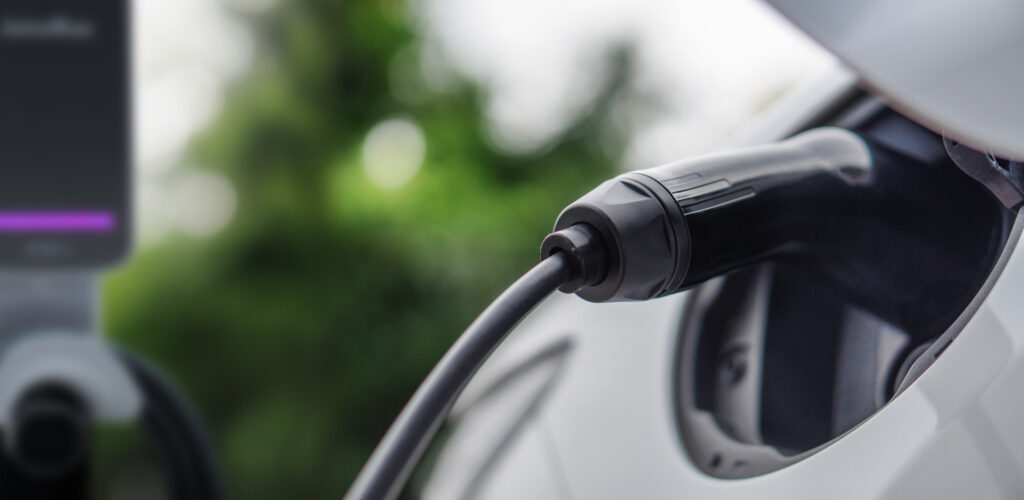
Why the Garage Works Well for EV Charger Installation
The proximity to the electrical panel is the primary practical advantage. In most Southwest Florida homes, the main panel is located in or adjacent to the garage. A shorter circuit run means less wire, a simpler installation, and a lower overall project scope. This is a meaningful factor when we are quoting a project.
The garage also provides protection from Florida’s outdoor conditions. While quality EV chargers are rated for outdoor use, a charger in a covered garage is not subjected to direct sun, driving rain, or the salt air that affects equipment in coastal communities like Fort Myers Beach, Sanibel Island, and Captiva Island. In those environments particularly, putting the charger in the garage rather than outside extends equipment life noticeably.
From a practical use standpoint, plugging in a vehicle in the garage is simply more convenient than an outdoor setup. You pull in, plug in without being in the sun or rain, and that is it.
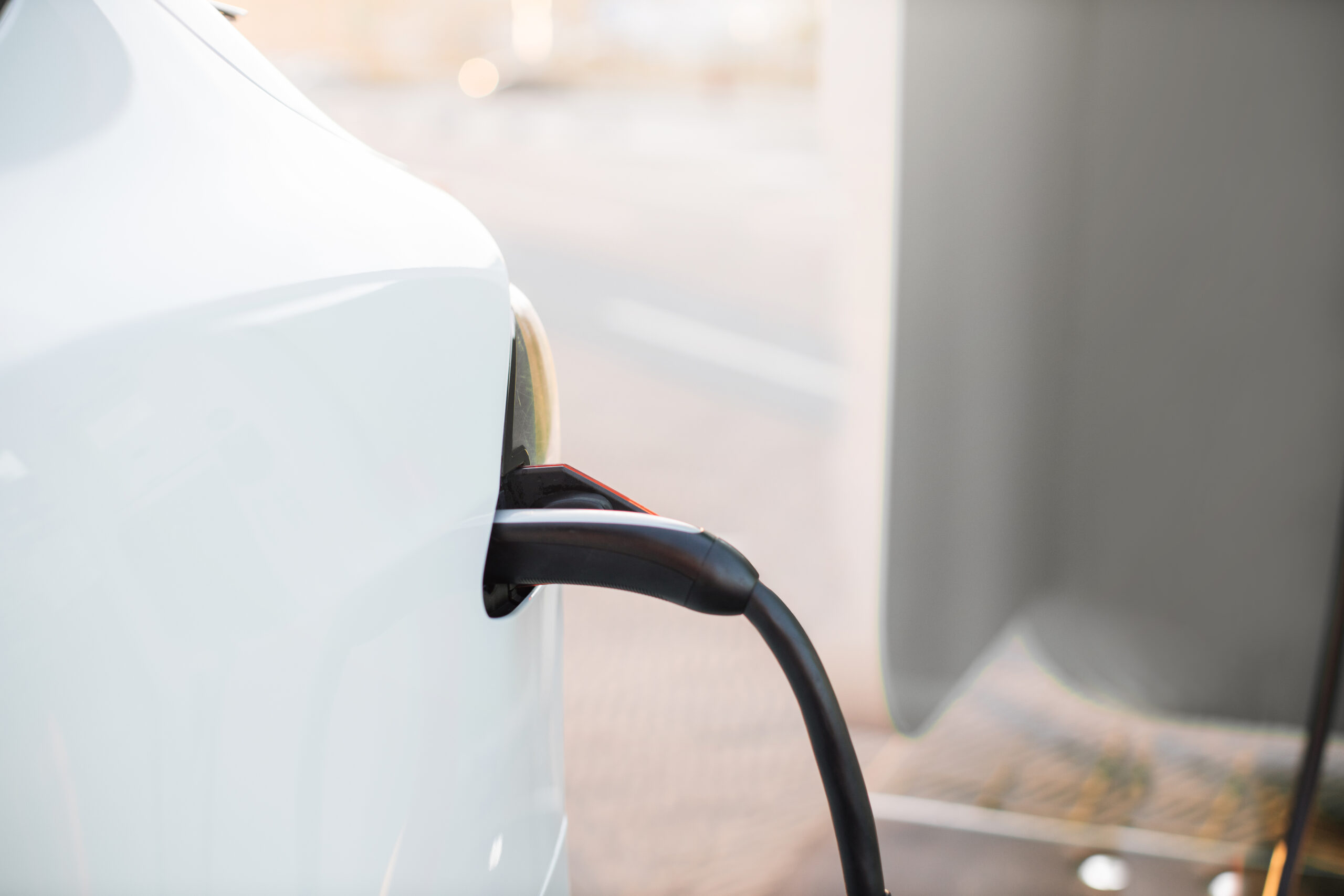
Electrical Requirements for a Garage EV Charger
The charger must be mounted at an appropriate height and location relative to where the vehicle will park. For vehicles like the Tesla Model 3 and Model Y, which have a charge port on the rear left quarter panel, the charger placement on the left wall or rear wall of the garage works best. For vehicles like the Chevrolet Bolt EV or Bolt EUV, which have the charge port on the front left, a placement at the front of the parking position is more practical. For vehicles with rear-mounted charge ports like the Rivian R1T, placement at the rear of the stall is most convenient. We think through these vehicle-specific details during the site assessment so the installation actually works the way you will use it every day.
Florida Environmental Considerations for Garage Charger Installation
For charger selection in these environments, we pay attention to the unit's temperature rating, its NEMA enclosure rating for moisture protection, and the quality of the internal components. A charger rated for a maximum ambient temperature of 104 degrees Fahrenheit is adequate for most Southwest Florida garages. One rated only for 95 degrees is marginal. The difference matters when you consider that a closed garage on a July afternoon in Fort Myers easily reaches and exceeds those temperatures.
Hardwired vs. Plug-In Chargers in the Garage
Level 2 chargers can be installed in two ways: hardwired directly to the circuit, or connected via a 240-volt outlet that the charger plugs into. Both approaches are code-compliant and both work well.
Hardwired installations are permanent and slightly cleaner in appearance because there is no cord and outlet visible. They are also slightly more resistant to the moisture and temperature cycling that can affect outlet connections in Florida garages over time. The tradeoff is that if you move or want to take the charger with you, it requires an electrician to disconnect it.
Plug-in installations using a NEMA 14-50 or NEMA 6-50 outlet give you the option to unplug and take the charger with you if needed. Portable Level 2 EVSEs like those used by some Tesla owners or the universal mobile connectors sold by ChargePoint and Grizzl-E work well in this configuration. The outlet approach also means that if the charger unit fails and needs replacement, you simply unplug the old one and plug in the new one without any electrical work involved.
We discuss both options with customers and help you choose based on your vehicle, your charger preferences, and how long you plan to stay in the home.

Circuit Routing Through a Southwest Florida Garage
In most garage installations, the circuit from the panel to the charger is routed through conduit mounted on the garage wall or ceiling. This protects the wire, meets code requirements, and gives the installation a clean finished appearance. The routing is designed to keep the circuit accessible for future inspection while minimizing visual impact and staying out of the way of garage use.
When the panel is in the garage, the circuit run is typically very short and simple. When the panel is in a utility closet inside the home, the circuit may need to pass through a wall or ceiling to reach the garage, which adds some scope but is a routine part of many installations we complete throughout Fort Myers, Bonita Springs, and Naples.
Detached Garages: What Changes
A detached garage EV charger installation introduces one significant additional element: the circuit from the main panel to the detached structure must run underground in conduit. This underground run adds scope to the project and requires digging a trench between the house and the garage. The minimum burial depth for conduit-protected circuits under Florida code is 18 inches, and direct burial cable without conduit requires 24 inches.
Detached garages also typically require their own grounding electrode system at the subpanel or circuit termination point in the garage. This is something our team handles as standard practice on these installations. The end result is a fully code-compliant installation that functions exactly like a garage-attached setup once the underground work is complete.
Recent Customer Reviews
EXCELLENTTrustindex verifies that the original source of the review is Google. Germayne T. was very professional, courteous, and extremely efficient replacing two ceiling fans for us. Will definitely use Mabry and Germaine again.Posted on GoogleTrustindex verifies that the original source of the review is Google. Just had a biannual service done to my AC, amazing work by Kirk, on time, professional, and efficient!!!Posted on GoogleTrustindex verifies that the original source of the review is Google. Our A/C system wasn’t cooling. Kirk was over to fix it in less than 2 hrs. Very friendly & efficient. Found 2 small leaks. Got system cooling. Went over all options & charges before proceeding. Very satisfied.Posted on GoogleTrustindex verifies that the original source of the review is Google. Amazing professional service! I had smoke detectors falsely alarming and when I called in the morning, Scott immediately had a tech rerouted to address the alarms. Germaine arrived with 15 minutes of my call. He was AWESOME! Knowledgeable, polite and so personable. 5 star🌟 . And that is what we have found with all Mabry Brothers service techs!!!!Posted on GoogleTrustindex verifies that the original source of the review is Google. I love using these guys when I need an electrician. Their prices are fair, service is always fast and on time, and they communicate really well. Today Germayne T came out to install an EV charger at our home. He was on time, worked hard trenching ~80’, and got creative to help minimize the amount of exposed PVC. His connections look great, and the charger is working perfectly. As I said, I really like working with Mabry, and I think you will too.Posted on GoogleTrustindex verifies that the original source of the review is Google. My AC randomly went out in the late afternoon and I thought it had to do with the battery on the thermostat or the filter needing to be changed but it ended up being 84 degrees in my house in the middle of the night and Kirk was able to get to me within an hour of me calling to fix my issue which happened to be the capacitor. He spotted the issue within 10 minutes, thank you so much!!!Posted on GoogleTrustindex verifies that the original source of the review is Google. Company was very responsive. Germayne was knowledgeable, efficient, and cleaned up after work. Very professional! I highly recommend Mabry Brothers for your electrical needs.Posted on GoogleTrustindex verifies that the original source of the review is Google. I was very pleased with the service call. Kirk arrived on time, was professional and knowledgeable about the problems we were having with our air conditioner. He explained in detail what was happening and the steps needed to correct them. I highly recommend Mabry Brothers.Posted on GoogleTrustindex verifies that the original source of the review is Google. We needed an outdoor low voltage circuit installed! Emailed Scott for a quote with quick turnaround and Martin showed up and did excellent install work! Can highly recommend Mabry Brothers from this first experience and will use again!Posted on GoogleTrustindex verifies that the original source of the review is Google. Troy from Mabry Brothers is extremely professional and truly knows 100% what he’s doing. He is very responsible and takes the time to explain every step of the process, including every part that needs to be replaced. After calling several different companies, nobody was able to repair my generator and I only ended up wasting money. Troy was the only one who actually solved the problem quickly, and now my generator is working perfectly just in time for the upcoming storms. I highly recommend Troy and Mabry Brothers to anyone looking for honest, knowledgeable, and reliable service.
Frequently Asked Questions
Need Service in Southwest Florida?
The licensed electricians and HVAC technicians at Mabry Brothers have served Fort Myers, Estero, Bonita Springs, Naples, Sanibel Island, and Captiva Island since 1995.
For immediate assistance, please call our office directly at (239) 482-1122.

