
Level 1 vs. Level 2 EV Charging: What's the Difference and Which Do You Need?
Level 1 charging uses a standard 120-volt household outlet, requires no special installation, and adds roughly 3 to 5 miles of range per hour. Level 2 charging uses a dedicated 240-volt circuit, requires professional installation, and adds roughly 15 to 30 miles of range per hour depending on the vehicle and charger amperage. The gap between those two speeds is enormous in daily practical terms, and it is the core reason most EV owners in Southwest Florida who drive any meaningful daily mileage opt for Level 2.
Level 1 Charging in Detail
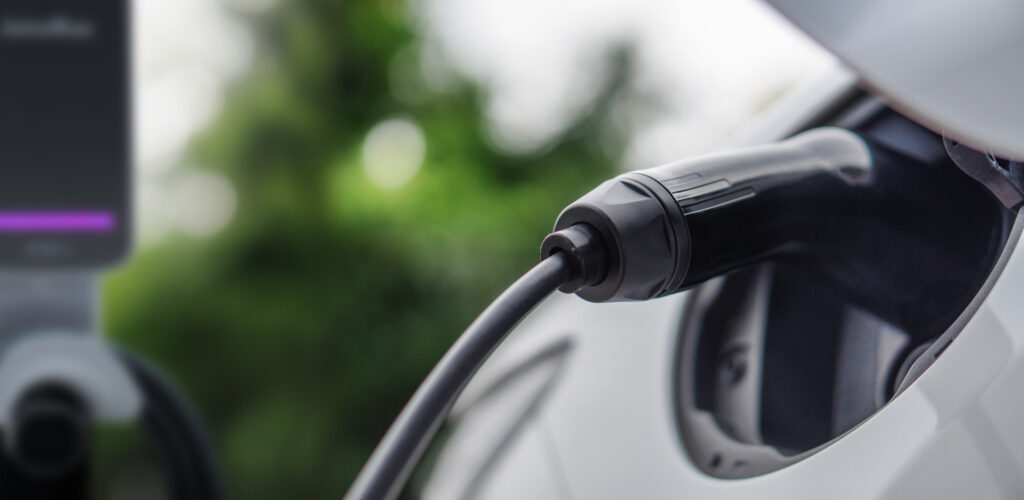
Level 1 uses the portable EVSE cord that comes included with most electric vehicles and plugs directly into a standard NEMA 5-15 household outlet, the same type of outlet your lamps and phone chargers use. No installation is required beyond having a functioning outlet near where you park.
The limitation is straightforward: at 3 to 5 miles of range per hour, a typical commuter vehicle takes 40 to 80 hours for a full charge from near-empty. For someone who parks a Tesla Model 3, a Chevy Bolt, or a Ford Mustang Mach-E in the garage each evening after driving 50 miles, Level 1 charging will not fully replenish the battery overnight. You will start the next day with a partially charged vehicle and a deficit that compounds over time.
Level 1 is genuinely adequate for a narrow set of situations: very low daily mileage drivers who cover under 30 miles per day, renters or homeowners who cannot or do not want to install a dedicated circuit, and as a backup option when Level 2 is unavailable. For most Southwest Florida residents driving normally, Level 1 is not a long-term solution.
Level 2 Charging in Detail
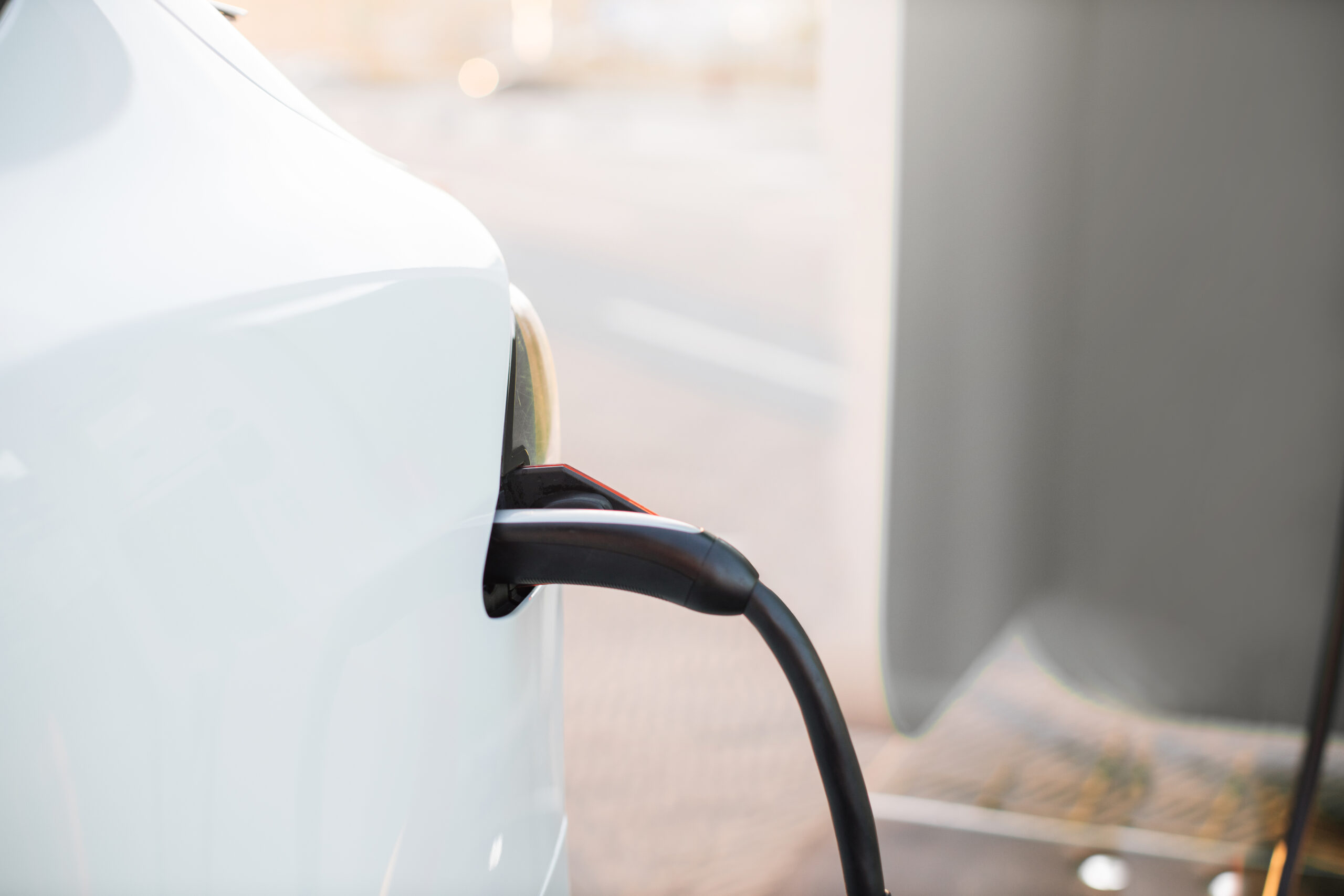
Level 2 operates on 240 volts, the same voltage as an electric dryer or central air conditioning system. It requires a dedicated circuit installed by a licensed electrician and either a hardwired charging station or a 240-volt outlet for a plug-in unit. The result is a charging rate that refills most vehicles overnight.
The actual speed depends on two things: the amperage of the circuit and charging unit, and the vehicle’s onboard charger capacity. A 32-amp Level 2 charger delivers up to 7.7 kW. A 40-amp unit delivers up to 9.6 kW. A 48-amp unit delivers up to 11.5 kW. These are the power delivery capabilities of the home charging side. What the vehicle actually accepts is limited by its own onboard charger.
How Charging Speed Varies by Vehicle Model
Understanding how different vehicles interact with Level 2 charging helps set accurate expectations before installation.
The Tesla Model 3 Standard Range has a 7.2 kW onboard charger and accepts a maximum of about 30 amps of Level 2 power, adding roughly 30 miles of range per hour. Installing a 48-amp circuit for a Standard Range Model 3 will not make it charge faster because the vehicle’s own hardware is the limiting factor. The Tesla Model 3 Long Range and Performance trims have an 11.5 kW onboard charger and will utilize a full 48-amp circuit, adding up to approximately 44 miles per hour. The Tesla Model Y Long Range and Performance similarly accept the full 11.5 kW.
The Chevrolet Bolt EV and Bolt EUV have 11.5 kW onboard chargers and can accept up to 48 amps on Level 2, adding roughly 25 miles of range per hour due to the battery chemistry and charging curve. The Ford F-150 Lightning is one of the most demanding home charging scenarios we install for. The standard range version accepts up to 19.2 kW and the extended range version up to 19.2 kW as well, making a 80-amp circuit the ideal home setup if the panel can support it. The Rivian R1T and R1S pickup and SUV accept 11.5 kW. The GMC Hummer EV can accept 11.5 kW on Level 2 at home.
In the luxury segment, the Lucid Air accepts up to 19.2 kW on Level 2, one of the highest home charging rates in the market. The Mercedes EQS accepts up to 9.6 kW. The BMW iX accepts up to 11 kW. The Audi Q8 e-tron accepts up to 11 kW. The Porsche Taycan has a dual-charging architecture and accepts up to 11 kW on Level 2 in the US market.
Among the Korean manufacturers, the Hyundai IONIQ 5 Standard Range accepts 10.5 kW and the Long Range accepts 10.9 kW. The Hyundai IONIQ 6 accepts up to 10.5 kW. The Kia EV6 Standard accepts 10.5 kW and the Long Range accepts 10.9 kW. These vehicles are very popular in Southwest Florida and are well-served by a 48-amp Level 2 installation. The Volkswagen ID.4 accepts up to 11 kW. The Nissan Ariya accepts up to 10.5 kW while the older Nissan LEAF is limited to either 3.6 kW or 6.6 kW depending on the trim, making Level 2 still beneficial but at a more modest rate.
Which Level Makes Sense for Your Situation
If you are driving a Lucid Air, an F-150 Lightning, or a Rivian R1T and want to utilize the full charging capability of those vehicles at home, the conversation about circuit amperage and panel capacity becomes even more important. Our team matches the installation to both your vehicle's capability and your home's realistic electrical capacity.

What About DC Fast Charging at Home?
DC fast charging, which is the high-speed charging available at commercial charging stations from Tesla Superchargers, Electrify America, EVgo, and ChargePoint locations, operates at voltages far beyond what residential wiring can support and is not available for home installation. For the fastest possible home charging, a properly sized Level 2 installation is the practical ceiling. Some homeowners assume they can replicate the speed they experience at a commercial fast charger at home, and we want to set accurate expectations: that is not possible with current home electrical infrastructure.
Recent Customer Reviews
EXCELLENTTrustindex verifies that the original source of the review is Google. Germayne T. was very professional, courteous, and extremely efficient replacing two ceiling fans for us. Will definitely use Mabry and Germaine again.Posted on GoogleTrustindex verifies that the original source of the review is Google. Just had a biannual service done to my AC, amazing work by Kirk, on time, professional, and efficient!!!Posted on GoogleTrustindex verifies that the original source of the review is Google. Our A/C system wasn’t cooling. Kirk was over to fix it in less than 2 hrs. Very friendly & efficient. Found 2 small leaks. Got system cooling. Went over all options & charges before proceeding. Very satisfied.Posted on GoogleTrustindex verifies that the original source of the review is Google. Amazing professional service! I had smoke detectors falsely alarming and when I called in the morning, Scott immediately had a tech rerouted to address the alarms. Germaine arrived with 15 minutes of my call. He was AWESOME! Knowledgeable, polite and so personable. 5 star🌟 . And that is what we have found with all Mabry Brothers service techs!!!!Posted on GoogleTrustindex verifies that the original source of the review is Google. I love using these guys when I need an electrician. Their prices are fair, service is always fast and on time, and they communicate really well. Today Germayne T came out to install an EV charger at our home. He was on time, worked hard trenching ~80’, and got creative to help minimize the amount of exposed PVC. His connections look great, and the charger is working perfectly. As I said, I really like working with Mabry, and I think you will too.Posted on GoogleTrustindex verifies that the original source of the review is Google. My AC randomly went out in the late afternoon and I thought it had to do with the battery on the thermostat or the filter needing to be changed but it ended up being 84 degrees in my house in the middle of the night and Kirk was able to get to me within an hour of me calling to fix my issue which happened to be the capacitor. He spotted the issue within 10 minutes, thank you so much!!!Posted on GoogleTrustindex verifies that the original source of the review is Google. Company was very responsive. Germayne was knowledgeable, efficient, and cleaned up after work. Very professional! I highly recommend Mabry Brothers for your electrical needs.Posted on GoogleTrustindex verifies that the original source of the review is Google. I was very pleased with the service call. Kirk arrived on time, was professional and knowledgeable about the problems we were having with our air conditioner. He explained in detail what was happening and the steps needed to correct them. I highly recommend Mabry Brothers.Posted on GoogleTrustindex verifies that the original source of the review is Google. We needed an outdoor low voltage circuit installed! Emailed Scott for a quote with quick turnaround and Martin showed up and did excellent install work! Can highly recommend Mabry Brothers from this first experience and will use again!Posted on GoogleTrustindex verifies that the original source of the review is Google. Troy from Mabry Brothers is extremely professional and truly knows 100% what he’s doing. He is very responsible and takes the time to explain every step of the process, including every part that needs to be replaced. After calling several different companies, nobody was able to repair my generator and I only ended up wasting money. Troy was the only one who actually solved the problem quickly, and now my generator is working perfectly just in time for the upcoming storms. I highly recommend Troy and Mabry Brothers to anyone looking for honest, knowledgeable, and reliable service.
Frequently Asked Questions
Need Service in Southwest Florida?
The licensed electricians and HVAC technicians at Mabry Brothers have served Fort Myers, Estero, Bonita Springs, Naples, Sanibel Island, and Captiva Island since 1995.
For immediate assistance, please call our office directly at (239) 482-1122.

